
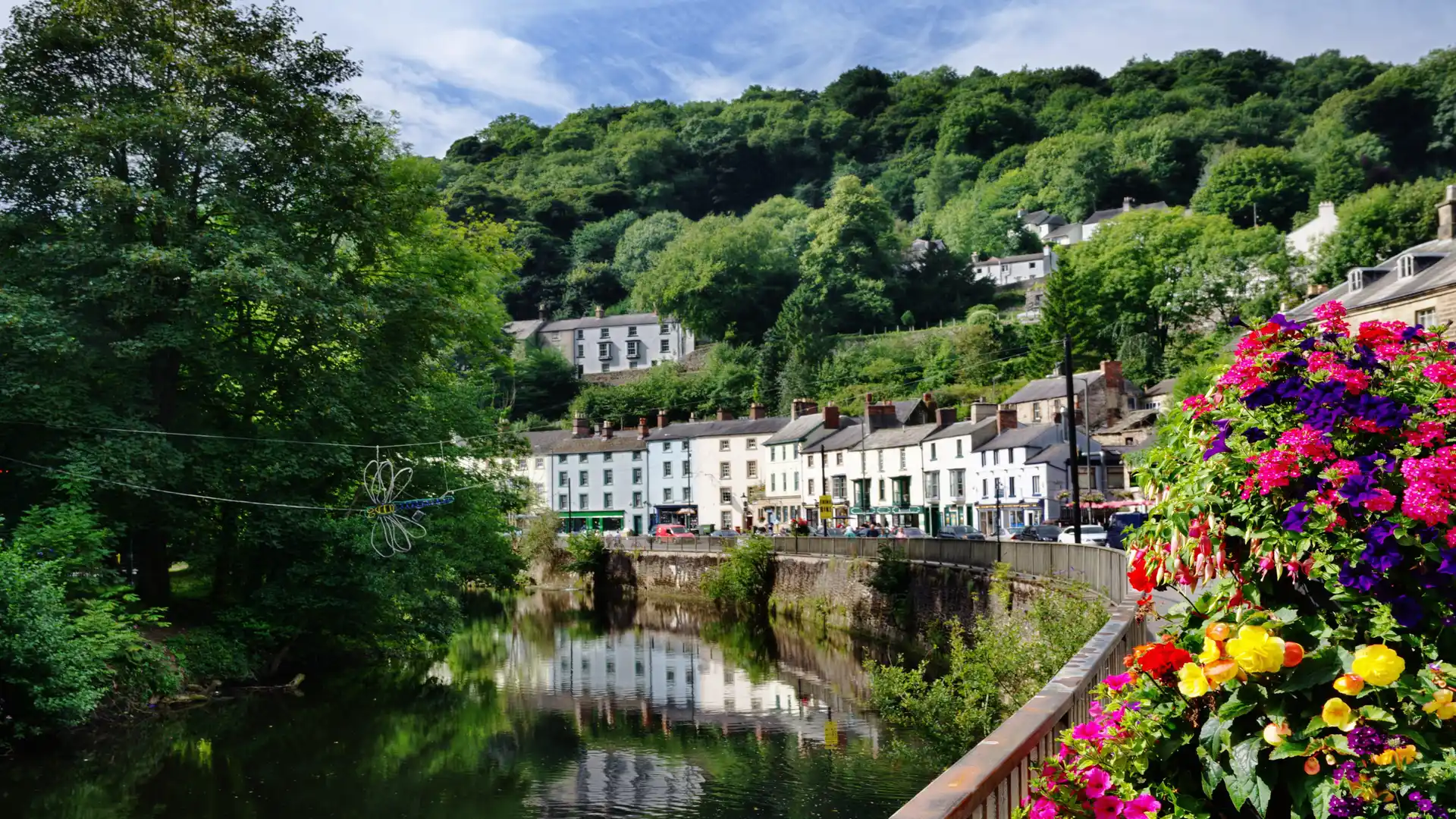
Limestone valleys and gritstone uplands across the Peak District, with river corridors and lower farmland toward Derby and the Trent
Derbyshire is a county of limestone dales, gritstone uplands, river valleys, and farmland in the Midlands of England. Walking routes cross the Peak District National Park and follow the Pennine Way, Limestone Way, Monsal Trail, High Peak Trail, and Tissington Trail, linking places such as Bakewell, Buxton, Matlock, Castleton, and Edale across valleys, ridgelines, and open moorland.
Much of the terrain is firm and varied underfoot. Stone paths, bridleways, field tracks, and former railway lines allow steady progress through valleys and onto higher ground, with frequent short climbs rather than long continuous gradients.
The landscape shifts between areas. The White Peak is mainly limestone with steep-sided dales and pasture, while the Dark Peak is mainly gritstone with edges, moorland, and peat plateau. Lower ground to the south and east becomes broader farmland and wooded river valleys.
Towns and villages are frequent along valley floors and at the edges of the uplands, creating regular access points for shorter walks and longer point-to-point routes across connected terrain.
Trails and Routes Through Derbyshire
Pennine Way
A National Trail running north from Edale across the Dark Peak on upland paths and moorland tracks.
Limestone Way
A long-distance route through the White Peak between Castleton and the Dove Valley using limestone dales and pasture.
Monsal Trail
A traffic-free former railway path through the Wye Valley between Blackwell Mill and Bakewell using tunnels and viaducts.
High Peak Trail
A former railway line between Cromford and Dowlow providing a wide, even surface across open upland countryside.
Tissington Trail
A traffic-free former railway route between Ashbourne and Parsley Hay linking the southern Peak fringe to the White Peak.
Derwent Valley Heritage Way
A riverside route following the River Derwent between the northern reservoirs and Derby through woodland and valley paths.
Walking Character
• Limestone dales and river valleys
• Gritstone edges and upland moorland
• Peat plateau and exposed ground
• Stone tracks and bridleways
• Traffic-free railway trails
• Frequent villages on valley floors
• Open and upland
Check availability
Select your dates to check current availability and prices.