
Cart
0
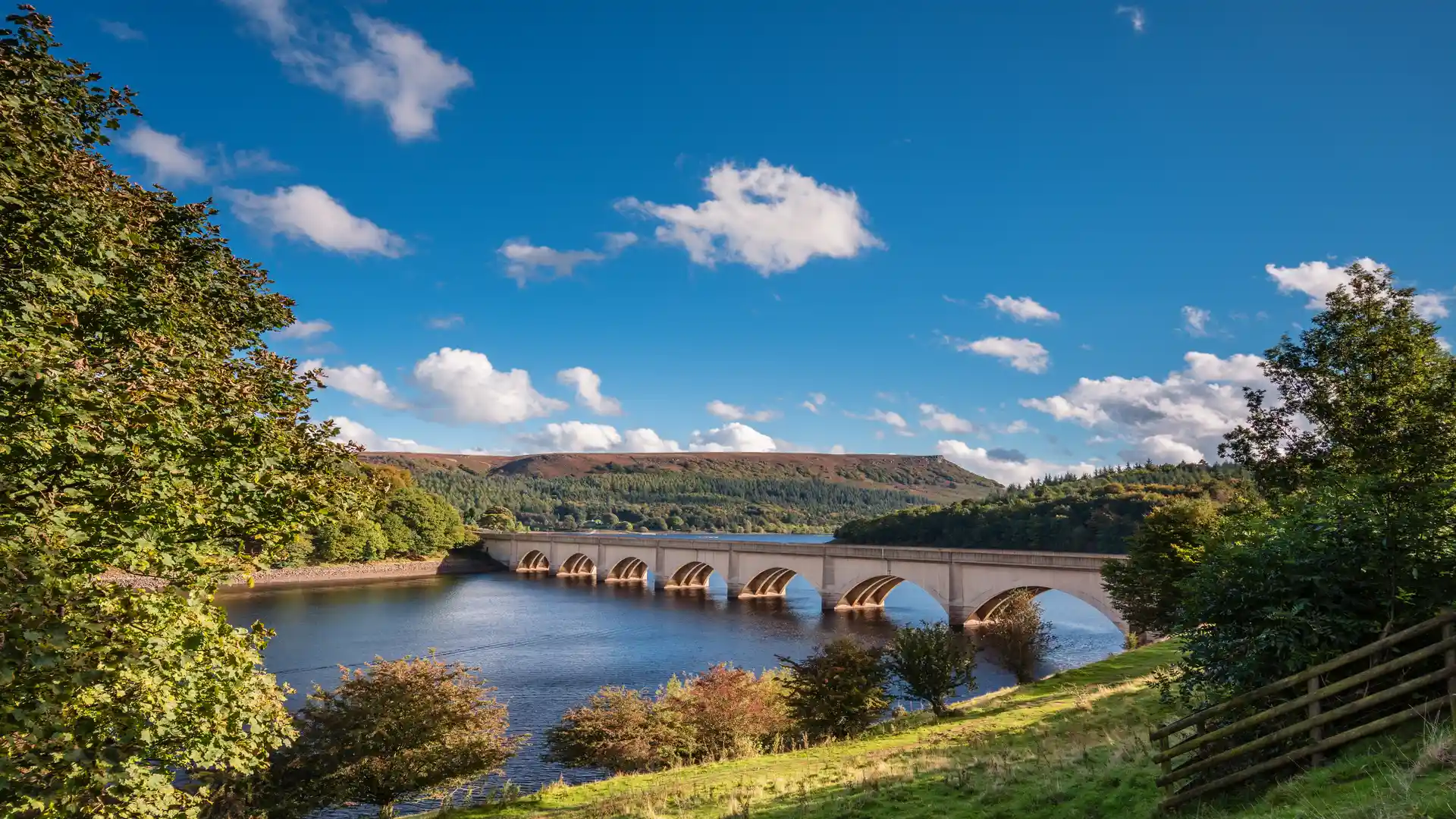
View of Ashopton Viaduct crossing Ladybower Reservoir, surrounded by woodland and moorland hills in the Peak District National Park, England.

Peak District National Park – Limestone Dales, Gritstone Moors, and Upland Valleys

Upland Landscapes Shaped by Limestone, Gritstone, and Long Human Use

Peak District National Park lies in England, spanning parts of the Midlands and northern England, and forming a broad upland landscape between major urban centres. Defined by a striking contrast between limestone lowlands and gritstone high moors, the park combines deep river-cut dales, open plateaus, and long-settled farmland into one of Britain’s most varied walking landscapes.

Walking journeys in the Peak District are shaped by geological contrast rather than height. Limestone areas offer enclosed dales, riverside paths, and sheltered valley walking, while gritstone moors provide open, windswept routes with wide horizons and a strong sense of exposure. This dual character allows walkers to combine intimate valley routes with expansive upland walking within a single journey.

The structure of walking across the park is set by this division. The White Peak forms the limestone heart of the park, where rivers such as the Dove, Wye, and Manifold cut through steep-sided valleys, creating classic dale walking. In contrast, the Dark Peak rises to the north and east, with broad moorland plateaus, edges, and escarpments defining a more open, elemental walking experience.

Limestone shapes much of the southern and central Peak District. Dry valleys, caves, and spring-fed rivers create varied underfoot conditions, while thin soils support flower-rich grassland and pasture. Paths often follow old packhorse routes, rivers, and valley bottoms, reinforcing a walking experience closely tied to natural lines of movement.

On the higher ground, gritstone dominates. Rough moorland, heather-clad slopes, and distinctive rock edges define the Dark Peak, with routes following escarpments and ancient tracks across open upland. Walking here is governed by weather, distance, and navigation rather than technical difficulty, offering a strong sense of space despite the park’s central location.

Human history is deeply interwoven with the landscape. Farming, quarrying, and long-established routes have shaped both dales and moors, leaving behind stone villages, field systems, and rights of way that give the Peak District its dense network of accessible paths. Walking routes frequently pass through working landscapes, reinforcing continuity between land use and movement.

Beyond walking, the Peak District supports a wide range of low-impact outdoor activities. Cycling and trail running thrive on the park’s varied terrain, while climbing and bouldering are closely tied to gritstone edges. Wildlife watching and photography benefit from the contrast between enclosed valleys and open moors, and from the park’s strong seasonal changes.

Accommodation is spread throughout villages and small towns across the park, from traditional inns and guesthouses to rural stays set close to trails. These bases allow flexible itineraries that combine day walks, linked routes, and longer multi-day journeys without long transfers.

For walkers seeking geological variety, strong contrasts, and a landscape where accessibility meets depth and history, Peak District National Park offers one of England’s most rewarding and adaptable walking environments.

Where to Walk and Explore

Limestone Dales and River Valleys

Sheltered walking through steep-sided dales, riverside paths, and classic limestone scenery.

Gritstone Moors and Edges

Open upland routes across moorland plateaus and along rocky escarpments with wide views.

Village-to-Village Routes

Paths linking stone-built villages, farmland, and historic trackways across the uplands.

Adventure Highlights

  • Distinct contrast between limestone dales and gritstone moors
  • Deep river valleys and classic dale walking
  • Open upland moors with wide horizons
  • Dense network of public footpaths and historic routes
  • Gritstone edges associated with climbing and high-level walking
  • One of England’s most accessible national parks

Frequently Asked Questions

Where is Peak District National Park located?

It lies in England, spanning parts of the Midlands and northern England.

What defines walking in the Peak District?

Strong geological contrast, with sheltered limestone dales and open gritstone moors offering varied walking experiences.

Is the terrain mountainous?

No. The landscape is upland rather than alpine, with rolling plateaus and valleys rather than sharp peaks.

Are there options for multi-day walking?

Yes. The park’s villages, dales, and uplands support flexible multi-day itineraries.

When is the best time to visit?

Late spring to early autumn offers the best balance of weather and access, though the Peak District is rewarding year-round.