

Wildlife along the Norfolk Coast Path
The Norfolk Coast Path passes through a succession of coastal habitats within the Norfolk Coast National Landscape.
Beaches, dunes, saltmarshes, reedbeds, grazing marshes and tidal creeks support a wide range of wildlife, with several important nature reserves lying directly beside or close to the trail.
Around Cley-next-the-Sea and Blakeney, these habitats form part of an extensive coastal landscape used by resident and migrating birds as well as grey and common seals.
Seals at Cley Beach
This sequence was filmed at high tide on Cley Beach, beside the Norfolk Coast Path.
A large grey seal had come ashore to rest close to the water's edge. Later, a younger seal moved along the tideline, repeatedly surfacing before disappearing beneath the water.
Seals are regularly encountered at different locations along the Norfolk Coast, particularly around Blakeney Point and the wider coastal waters between Cley and Blakeney.
Seals should be given space, particularly when resting on beaches or around breeding areas.
Reedbeds and coastal marshes
Behind the beaches, large areas of reedbed, saltmarsh and grazing marsh create another set of habitats.
Cley Marshes lies immediately inland from the coast at Cley-next-the-Sea, with reedbeds, lagoons and marshland extending between the village and the sea.
These wetlands support resident birds as well as species moving along the Norfolk coast during seasonal migrations.
Marsh harrier at Cley-next-the-Sea
This marsh harrier was filmed hunting over the reedbeds at the edge of Cley-next-the-Sea.
The bird moved low over the reeds before continuing across the wider marsh, with the village immediately behind.
Marsh harriers are closely associated with wetlands and reedbeds and can be seen at several reserves along the Norfolk coast.
Nature reserves along the coast
Several protected sites lie along or close to the Norfolk Coast Path.
Cley Marshes protects an extensive area of reedbed, freshwater marsh, pools and grazing marsh near Cley-next-the-Sea.
Further west, Blakeney Point extends into the North Sea as a long shingle spit and dune system. The reserve supports an important grey seal colony as well as breeding and migrating birds.
Titchwell Marsh combines reedbeds, freshwater lagoons, saltmarsh and beach habitats, while Holme Dunes protects dunes, grazing marsh, scrub and freshwater habitats close to Holme-next-the-Sea.
Together, these reserves form part of a much larger network of coastal habitats extending along the Norfolk coast.
Walking through a changing coastal landscape
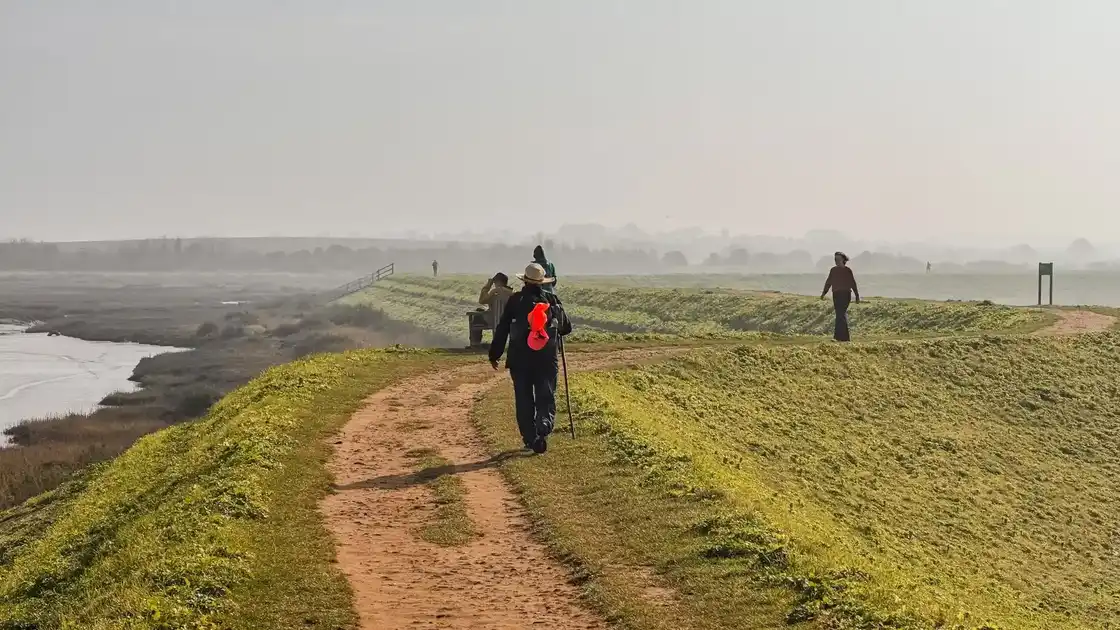
The Norfolk Coast Path provides a continuous route through many of these environments.
The character of the coast changes repeatedly between Hunstanton and Hopton-on-Sea, passing beaches, dunes, tidal harbours, saltmarshes, reedbeds and areas of grazing marsh.
Wildlife encountered along the trail changes with those habitats and with the seasons, tides and migration.
.webp)