
Coastlines, upland ridges, and long-established paths shaped by history, weather, and open space
Wide beaches, open moorland, and long historic corridors shape North East England, where routes such as the Hadrian’s Wall Path and the Northumberland Coast Path link Roman frontier country with market towns including Hexham, Alnwick, and Bamburgh, creating one of England’s most spacious and lightly settled landscapes for steady, self-guided journeys on foot.
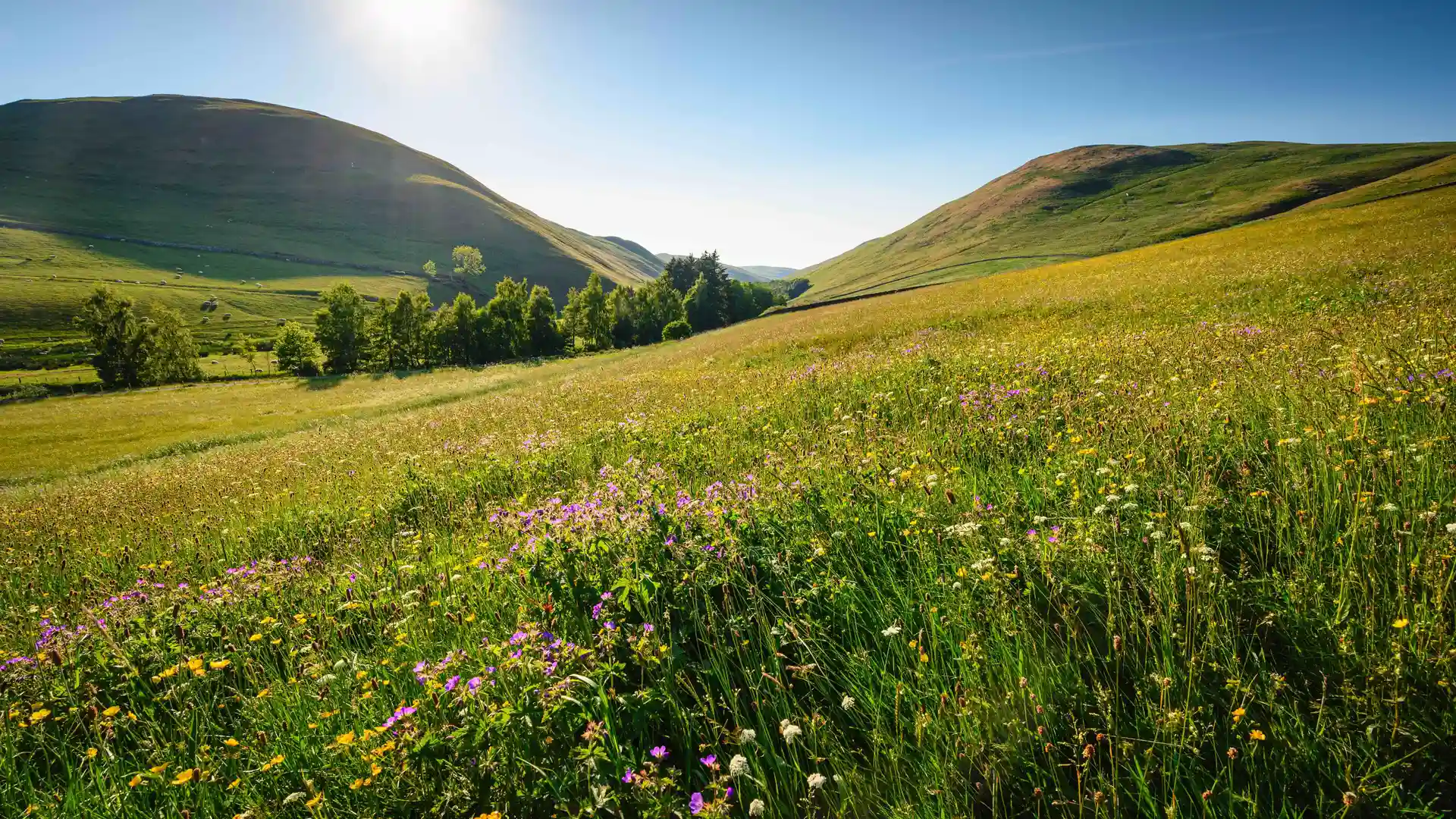
The geography feels broader and more exposed than much of England. Along the coast, wide beaches, dunes, and rocky headlands stretch between fishing villages and castle ruins. Inland, open moorland and grassy ridges rise toward the Cheviot Hills, while quieter river valleys shape the countryside of the Durham Dales. The land unfolds gradually rather than steeply, with long horizons and big skies defining the experience of movement across the region.
Much of this landscape is protected. Northumberland National Park safeguards extensive upland walking across the Cheviot Hills and border country, while the Northumberland Coast National Landscape preserves dunes, cliffs, islands, and estuaries along one of England’s most undeveloped shorelines. Together these areas protect wildlife habitats and historic sites while maintaining working farmland and small settlements, with footpaths passing naturally between field, fell, and coast.
Movement through the North East often follows historic lines. Roman roads, frontier tracks, and drove routes continue to guide modern trails across the land. The Hadrian’s Wall Path traces the remains of the Roman frontier across crags and moorland, while the Northumberland Coast Path links harbours, beaches, and tidal causeways between Cresswell and Berwick-upon-Tweed. Inland routes such as the Weardale Way follow riverside corridors through the Durham Dales. These paths reveal how closely walking here is tied to history, landscape, and settlement.
Walking here is defined by rhythm and distance. Villages, churches, and stone bridges appear at intervals across wide stretches of open country, creating natural pauses without breaking the sense of space. Coast, upland, and valley feel closely connected, encouraging longer days on foot through landscapes that feel calm, expansive, and quietly atmospheric.
This is a region best understood step by step: along castle-lined shores, across open moorland, and between historic towns where land and history remain closely interwoven.
Routes & Landscapes Across the Region
The Hadrian’s Wall Path follows the Roman frontier across crags, forts, and open moorland between Wallsend and the Solway, with some of its most dramatic sections crossing the Northumberland hills.
The Northumberland Coast Path traces beaches, dunes, and tidal headlands past places such as Bamburgh, Craster, Alnmouth, and Lindisfarne, linking villages and nature reserves along the shoreline.
Northumberland National Park offers quieter upland walking across the Cheviot Hills and border valleys, while the Durham Dales provide gentler riverside routes along the Wear and Tees, including the Weardale Way.
Counties of North East England
Northumberland, County Durham, and Tyne and Wear each offer distinct variations of coast, upland, and river valley landscapes, providing natural bases for longer regional journeys.
Beginning to explore North East England
North East England’s trails, protected landscapes, and historic routes form a connected network rather than a single destination. Following its coastline, uplands, and river valleys reveals how land, history, and settlement continue to shape movement through one of England’s most open and atmospheric regions.