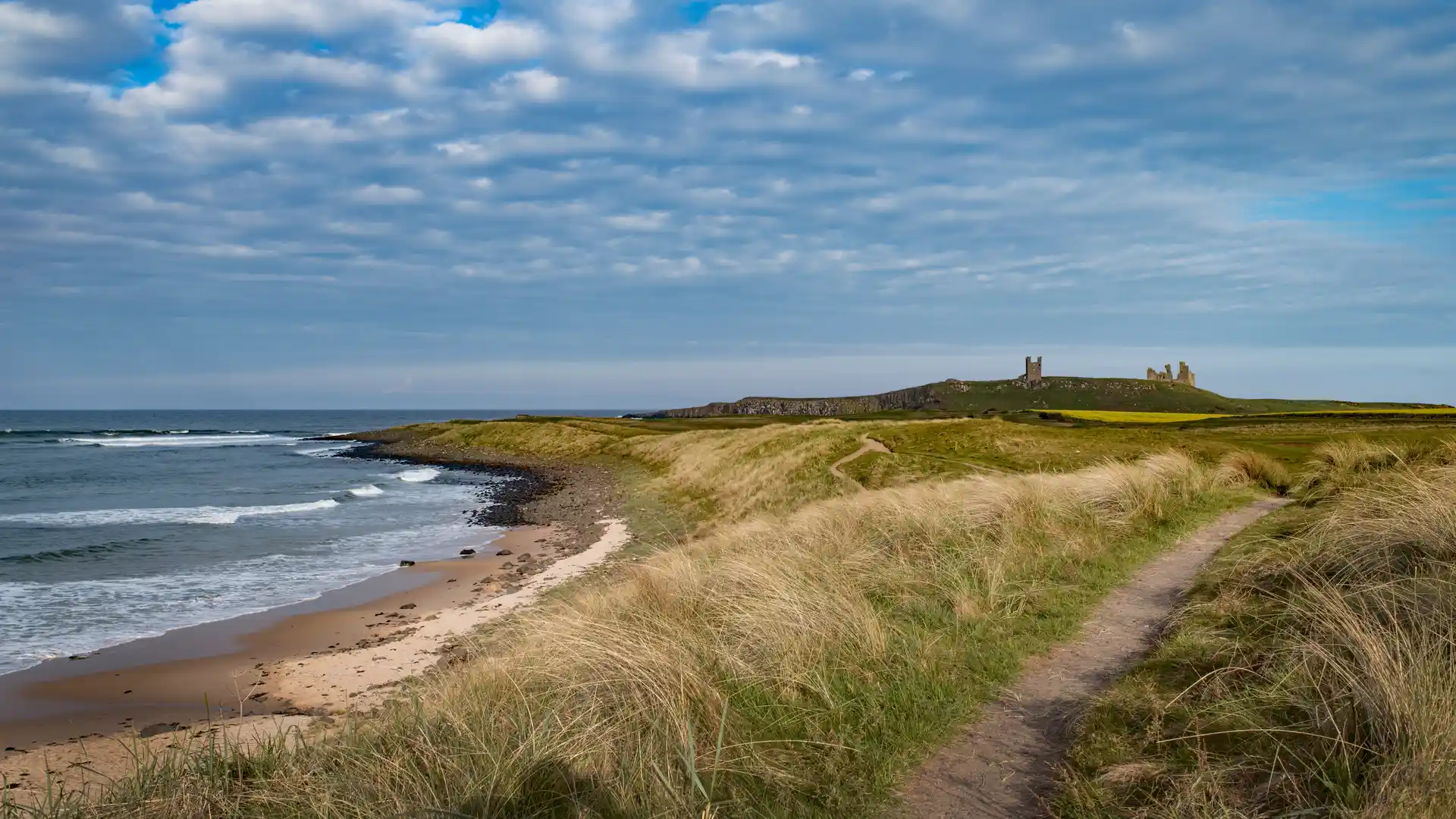
Coastal walking path through sand dunes with views to Dunstanburgh Castle along the Northumberland Coast Path.

Northumberland Coast Path – Walking England’s Northern Coast

Type of trail?
National Trail
Is it for me?
Easy-going long-distance walk
Gentle terrain with minimal ascent, well suited to first-time long-distance walkers or those looking for a calm, steady route.
What will I see?
Wide sandy beaches and dune systems
Low cliffs and open coastal edges
Castle-topped headlands and island views
Historic fishing villages and harbours
Saltmarsh, seabird cliffs, and big skies
What’s the vibe?
Peaceful and Relaxed
Quietly historic
Gentle and rhythmic
Exposed without being extreme

Wide beaches, island views, and slow coastal walking along England’s northern shore

The Northumberland Coast Path follows England’s northern shoreline through North East England, running along the coast of Northumberland between Cresswell in the south and Berwick-upon-Tweed near the Scottish border. Much of the route passes through the Northumberland Coast National Landscape, where protected beaches, dune systems, low cliffs, and historic coastal settlements shape a coastline defined by space, light, and continuity rather than dramatic relief.

Walking here is defined by steadiness rather than effort. The terrain is largely gentle, with minimal ascent, allowing the character of the coast to unfold gradually on foot. Long beaches, wide horizons, and open skies create a calm, sustained rhythm, where progress is measured in headlands passed and villages reached rather than elevation gained. This makes the route particularly well suited to first-time long-distance walkers or those seeking an unhurried coastal journey.

The landscape changes subtly as the path moves north. From the wide sands and dune-backed shoreline near Druridge Bay and Amble, the route passes river mouths and low headlands before reaching a more castle-studded coast around Alnmouth, Craster, Seahouses, and Bamburgh. Offshore island views become a defining feature, culminating in the tidal crossing to Holy Island (Lindisfarne), one of the most atmospheric and historically significant places on the route, shaped by tides, isolation, and early Christian settlement.

Beyond Lindisfarne, the path continues through dune systems, saltmarsh, and open coastal edges before arriving in Berwick-upon-Tweed, a fortified border town whose walls and streets reflect centuries of movement, conflict, and trade along the North Sea coast. Throughout, the Northumberland Coast Path remains a route where landscape, history, and settlement are encountered gradually, with space and atmosphere playing as central a role as individual landmarks.

Trail Overview

Distance
62 miles / 100 km

Typical time on foot
4–6 days (often walked in sections)

Start
Cresswell, Northumberland

Finish
Berwick-upon-Tweed, Northumberland

Terrain
Beaches, dune systems, low cliffs, farmland tracks, coastal paths, occasional road sections

Frequently Asked Questions

How difficult is the Northumberland Coast Path?

The route is mostly easy walking with gentle gradients, making it accessible to most walkers. A few longer stretches require moderate stamina but there are no sustained climbs.

When is the best time to walk the trail?

Late spring through early autumn offers the best conditions, with long daylight hours, seabird activity, and changing coastal light shaping the experience.

Can I walk it in shorter sections?

Yes. Coastal villages, bus services, and rail access make it easy to break the route into manageable day walks.

What kind of accommodation is available?

Expect small guesthouses, coastal inns, locally run B&Bs, and self-catering cottages, many located directly on or close to the trail.

Are there good public transport links?

Yes. Buses connect most coastal settlements, and Berwick-upon-Tweed has a mainline rail station with national connections.