
Cart
0
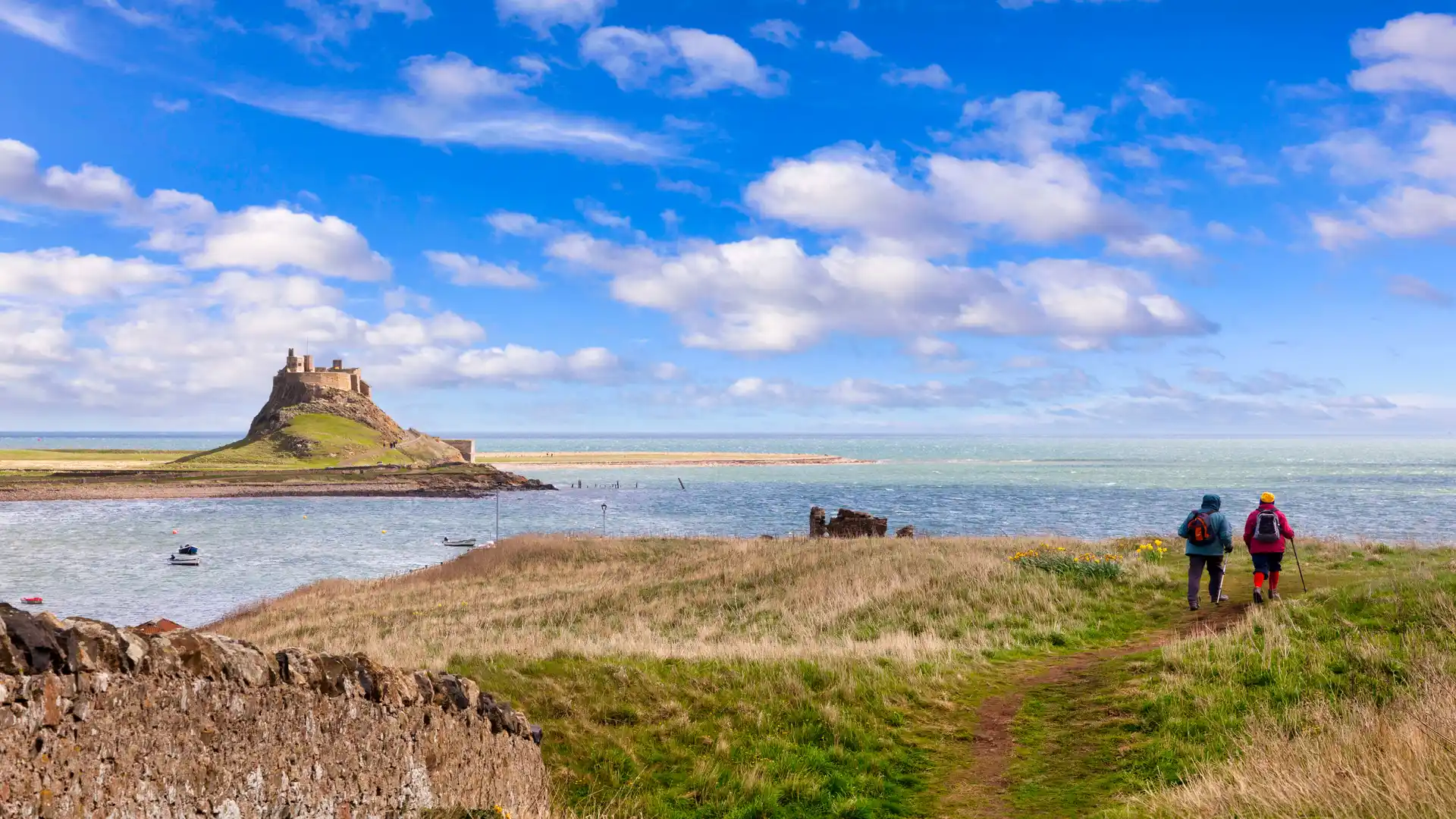
Walkers on a coastal path approaching Lindisfarne Castle on Holy Island, with blue skies, grassy dunes, and the Northumberland Coast National Landscape.

Northumberland Coast National Landscape – Dunes, Wide Beaches, and Castle Headlands

Coastal Landscapes Shaped by Sand, Wind, and Long Maritime History

The Northumberland Coast National Landscape lies along England’s north-east coast in Northumberland, stretching from the Coquet Estuary in the south to the Scottish border. Defined by wide sandy beaches, rolling dune systems, tidal flats, and a scattering of historic castles and islands, it is one of England’s most open and uncluttered coastal landscapes.

Walking journeys along the Northumberland Coast are shaped by space and exposure rather than elevation. Long beach sections allow uninterrupted movement beside the sea, while dunes, rocky headlands, and tidal inlets introduce variation and rhythm. This is coastal walking on a grand scale, where horizons are wide, landmarks are distant, and progress is measured by light, tide, and weather.

The structure of walking across the landscape is set by the coastline itself. Routes move fluidly between firm sand, dune-backed paths, and clifftop edges, with frequent transitions between land and sea. Tidal causeways and estuary crossings introduce natural pauses, reinforcing a walking experience shaped as much by timing as by distance.

Sand dominates much of the terrain. Extensive dune systems roll inland behind the beaches, creating soft-edged walking through marram grass and wind-sculpted ridges. In contrast, sections of rock and headland add firmness and texture underfoot, anchoring the coast and framing long views along the shoreline.

Human history is visible throughout the landscape, but never overwhelming. Castles, fishing villages, and old harbour towns sit lightly against the coast, acting as markers rather than focal points. Walking routes often pass close to these places before returning quickly to open shore, maintaining a strong sense of continuity between landscape, movement, and long maritime use.

The sea plays a constant role in shaping the walking experience. Changing tides, shifting light, and fast-moving weather systems bring continual variation, while seabirds, seals, and coastal flora add life to the shoreline. The openness of the coast creates a powerful sense of immersion, with little to interrupt the relationship between walker, land, and sea.

Beyond walking, the Northumberland Coast supports a range of low-impact coastal activities. Wildlife watching is exceptional along beaches and estuaries, while photography benefits from the coast’s clarity, big skies, and minimal development. Calm conditions allow for paddling and shoreline exploration, while windier days emphasise the coast’s raw, elemental character.

Accommodation is concentrated in small villages and towns set just back from the shore. Inns, guesthouses, and coastal stays provide natural stopping points along the coast, supporting multi-day walking itineraries that move steadily north or south without losing the sense of remoteness.

For walkers seeking open beaches, big skies, and a coastline shaped by wind, sand, and long history rather than resort development, the Northumberland Coast National Landscape offers one of England’s most atmospheric and rewarding coastal walking environments.

Where to Walk and Explore

Wide Beaches and Open Shores

Long, uninterrupted beach walking with expansive views and firm sand underfoot.

Dune Systems and Coastal Paths

Rolling dune-backed routes offering shelter, texture, and changing perspectives along the shore.

Headlands, Castles, and Estuaries

Routes linking rocky points, tidal crossings, and historic coastal landmarks.

Adventure Highlights

  • Vast sandy beaches and uninterrupted coastal walking
  • Rolling dune systems shaped by wind and tide
  • Castle-backed headlands and historic shoreline landmarks
  • Tidal estuaries and causeway crossings
  • Big skies, open horizons, and strong sense of space
  • One of England’s least developed and most atmospheric coastlines

Frequently Asked Questions

Where is the Northumberland Coast National Landscape located?

It lies along England’s north-east coast in Northumberland, from the Coquet Estuary to the Scottish border.

What defines walking along the Northumberland Coast?

Long beach sections, dune-backed paths, tidal crossings, and wide, open horizons.

Is the terrain challenging?

The terrain is generally gentle, but exposure, wind, and distance can make walks demanding.

Can walks be influenced by the tides?

Yes. Some sections involve tidal estuaries and causeways, making timing an important part of planning.

When is the best time to visit?

Late spring to early autumn offers the best balance of weather, daylight, and wildlife interest, though the coast is powerful year-round.