
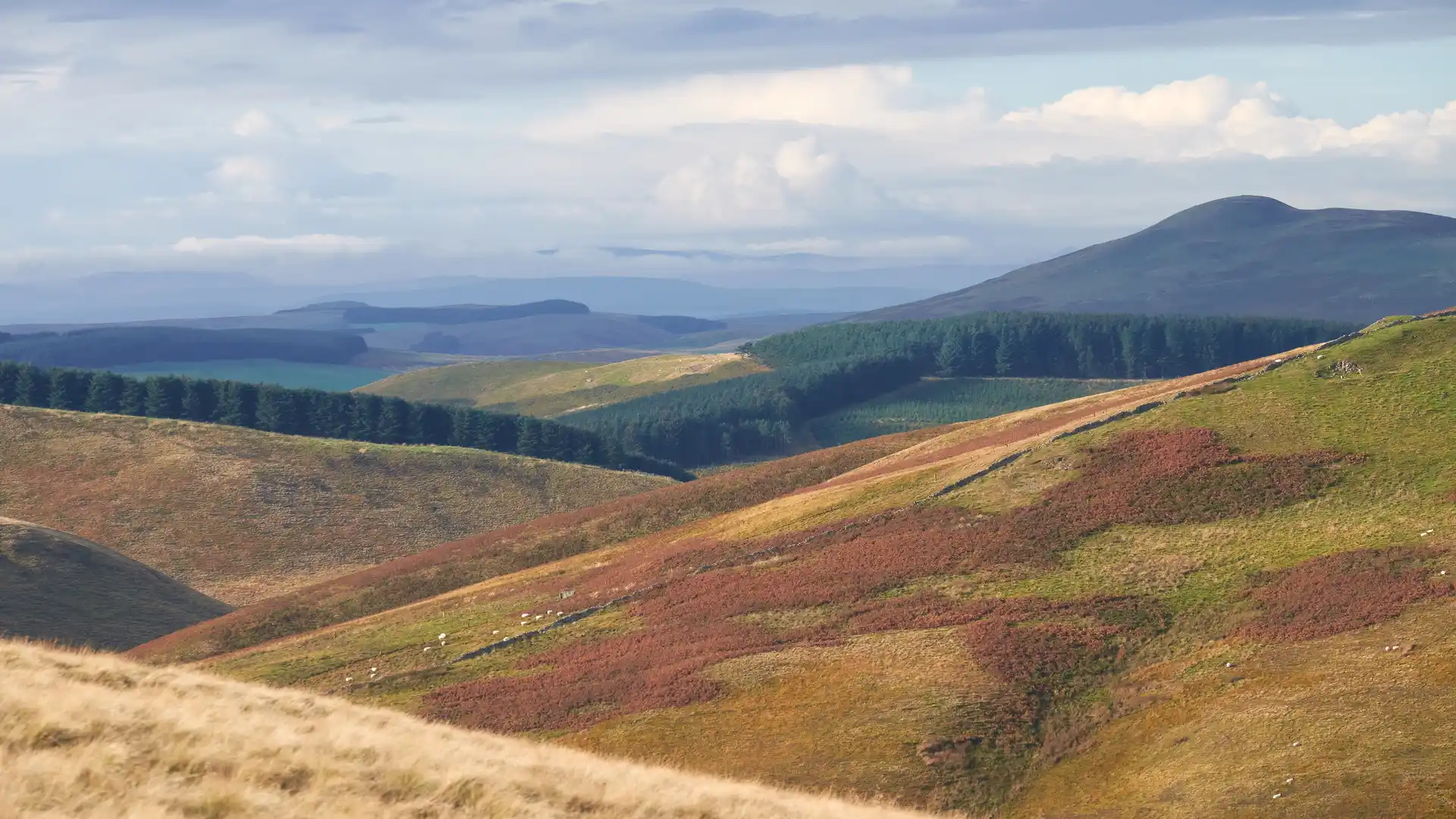
Wide beaches, open moorland, and quiet border country between the North Sea and the Cheviot Hills
Sand dunes, tidal flats, rolling farmland, and upland hills shape Northumberland, where walking routes cross Northumberland National Park and the Northumberland Coast National Landscape and follow the Hadrian’s Wall Path through the Frontiers of the Roman Empire – Hadrian’s Wall UNESCO World Heritage Site between Berwick-upon-Tweed, Bamburgh, Alnwick, Rothbury, and Hexham across beaches, heather moorland, and historic border landscapes.
Much of the terrain is firm but varied underfoot. Coastal paths, grassy tracks, riverside trails, and upland bridleways allow steady progress, with longer climbs and rougher ground appearing in the hills and national park.
The landscape changes across the county. The coast is broad and open with beaches, dunes, and offshore islands, while inland farmland gives way to the Cheviot Hills and remote moorland. To the south and west, rolling ridges and river valleys follow the line of Hadrian’s Wall and the Tyne valley.
Towns and villages are widely spaced, creating longer, quieter stretches between settlements and a stronger sense of remoteness than many English counties.
Trails and Routes Through Northumberland
Hadrian’s Wall Path
A National Trail running coast to coast alongside the Roman wall between Wallsend and Bowness-on-Solway, crossing central Northumberland through open hills and historic sites.
Northumberland Coast Path
Follows the shoreline between Cresswell and Berwick-upon-Tweed linking beaches, dunes, nature reserves, and castle headlands.
St Oswald’s Way
A long-distance route combining coastal and inland sections between Holy Island and Heavenfield near Hexham through farmland and hills.
Pennine Way
Touches the western edge of the county across higher moorland near the Scottish border.
Simonside and Cheviot Hill paths
Upland walking across open heather moorland, ridgelines, and remote hill country within the national park.
Walking Character
• Wide sandy beaches and dunes
• Castle headlands and coastal cliffs
• Remote moorland and heather hills
• Historic Roman frontier landscapes
• Long distances between villages
• Quiet, open, and exposed terrain
Check availability
Select your dates to check current availability and prices.