
Exploring Cumbria
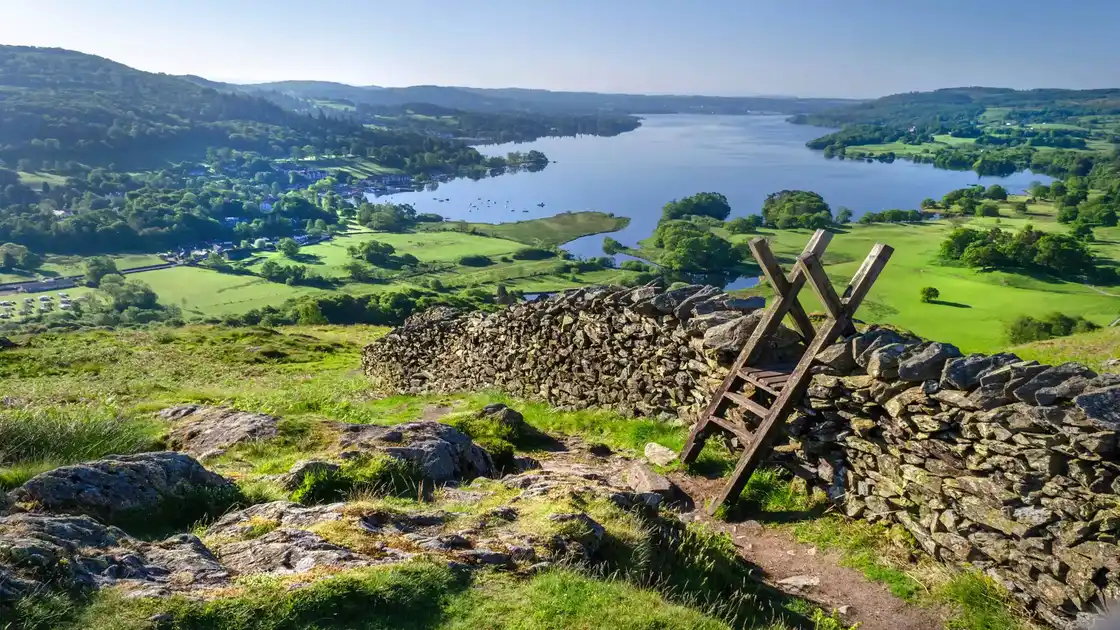
Cumbria stretches from the mountains and lakes of the Lake District National Park to the coastline of the Solway Coast National Landscape and the valleys and uplands of the western Pennines. Across the county, mountain fells, wooded valleys, rivers, lakes and historic settlements create a varied landscape for walking and independent exploration.
The Lake District National Park, also recognised as a UNESCO World Heritage Site, forms the mountainous heart of Cumbria. Its landscapes include England's highest fells, glacial valleys, lakes and traditional farming communities, with walking routes ranging from gentle lakeside paths to demanding mountain ascents. Beyond the national park, the Arnside & Silverdale National Landscape protects a distinctive landscape of limestone hills, woodland, wetlands and coastal scenery around Morecambe Bay.
Long-distance trails connect many of Cumbria's landscapes. The Cumbria Way crosses the Lake District between Ulverston and Carlisle, while the Coast to Coast Path travels east from St Bees through the Lake District and towards the Pennines. Further north, Hadrian's Wall Path follows the historic Roman frontier across northern Cumbria, and the Pennine Way explores the uplands along the county's eastern edge.
The Solway Coast National Landscape extends along the northern coastline, where saltmarshes, mudflats, dunes and coastal settlements provide a contrast to the mountains inland. To the east, parts of the Yorkshire Dales National Park extend into Cumbria, adding limestone valleys, upland countryside and traditional villages to the county's walking landscapes.
Away from the longer trails, Cumbria's market towns, lakeside villages, historic sites and nature reserves provide opportunities for shorter walks and slower exploration. From Keswick, Ambleside and Grasmere to the Eden Valley, Carlisle and the Cumbrian coast, the county offers a wide range of places to stay while exploring its landscapes on foot.
Check availability
Select your dates to check current availability and prices.