
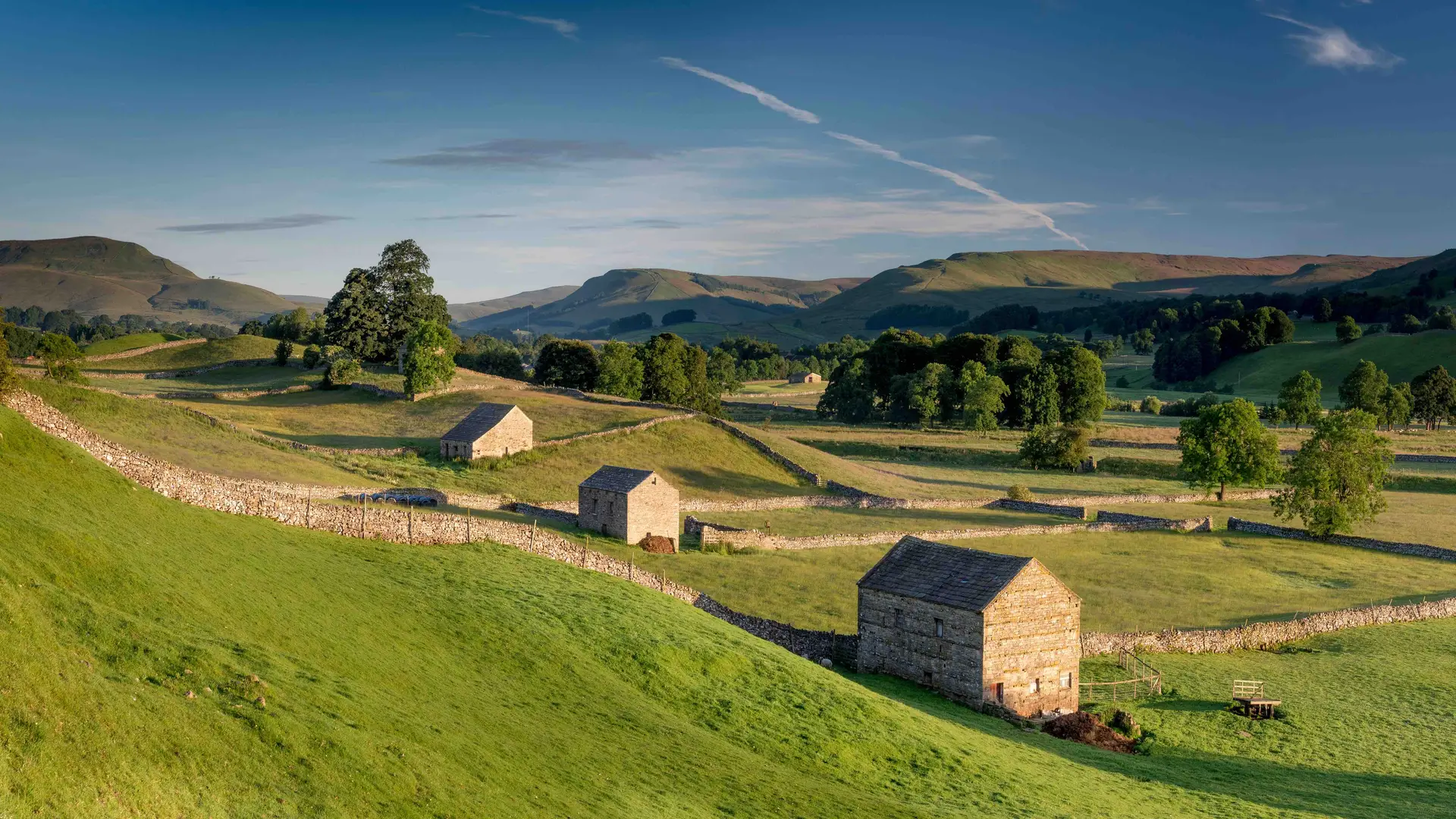
Limestone valleys, open moorland, and long-established paths across northern England
Yorkshire and the Humber is defined by its walking routes, varied landscapes, and the towns and villages connected by them. Long-distance trails cross limestone dales, heather moorland, chalk hills, and coastal cliffs, creating one of England’s most distinctive regions for self-guided travel and steady movement between upland, valley, and sea.
The geography changes quickly across short distances. In the west, the Yorkshire Dales rise into green valleys edged by limestone scars and dry-stone walls, where rivers cut through pasture and stone-built villages sit along valley floors. To the north and east, the North York Moors form broad expanses of open heather moorland and wooded dales, while the coastline beyond shifts to high cliffs, beaches, and fishing harbours. Further south, the softer chalk hills of the Yorkshire Wolds and the wide Humber Estuary provide quieter countryside shaped by farmland, river, and open horizon. Routes move naturally between these environments, allowing days on foot that feel varied without abrupt change.
Much of the region is protected. The Yorkshire Dales National Park and North York Moors National Park safeguard large areas of upland, valley, and moorland walking, while the Howardian Hills National Landscape and the Lincolnshire Wolds National Landscape protect rolling farmland, woodland, and chalk hills. Together these areas preserve both wildlife habitats and long-established rural life, with paths passing easily between field, forest, and settlement.
Movement through Yorkshire often follows historic lines. Packhorse routes, drove roads, and old trackways still shape today’s trails across the hills, while valley paths and riverside routes link market towns and villages. The Pennine Way crosses the region’s high ground through the Dales and moors, the Cleveland Way forms a loop across the North York Moors and along the coast, the Dales Way follows gentler riverside terrain, and the Wolds Way traces the chalk hills above the Humber. These routes reveal how closely walking here is tied to landscape, farming, and everyday life.
Walking is defined by rhythm and continuity. Villages, inns, and stone bridges appear regularly, creating natural pauses between stretches of open country. Terrain ranges from moderate valley paths to more exposed moorland sections, encouraging longer journeys through inhabited landscapes rather than remote wilderness.
This is a region best understood step by step: along limestone valleys, across heather moor, and between historic villages where landscape and settlement remain closely connected.
Routes & Landscapes Across the Region
The Yorkshire Dales National Park offers limestone valleys, waterfalls, and village-to-village walking, with routes including the Dales Way and sections of the Pennine Way.
The North York Moors National Park provides open moorland and wooded dale walking, while the Cleveland Way links upland ridges with clifftop coastal paths between Saltburn and Filey.
Further south, the Yorkshire Wolds and Humber countryside offer gentler terrain along the Wolds Way, with quiet farmland, dry valleys, and wide horizons above the estuary.
Counties of Yorkshire and the Humber
North Yorkshire, West Yorkshire, South Yorkshire, and the East Riding of Yorkshire each offer distinct variations of dales, moorland, coast, and farmland landscapes, providing natural bases for longer regional journeys.
Beginning to explore Yorkshire and the Humber
Yorkshire and the Humber’s trails, protected landscapes, and historic paths form a connected network rather than a single destination. Following its valleys, moors, and coastline reveals how land, settlement, and tradition continue to shape movement through northern England.