
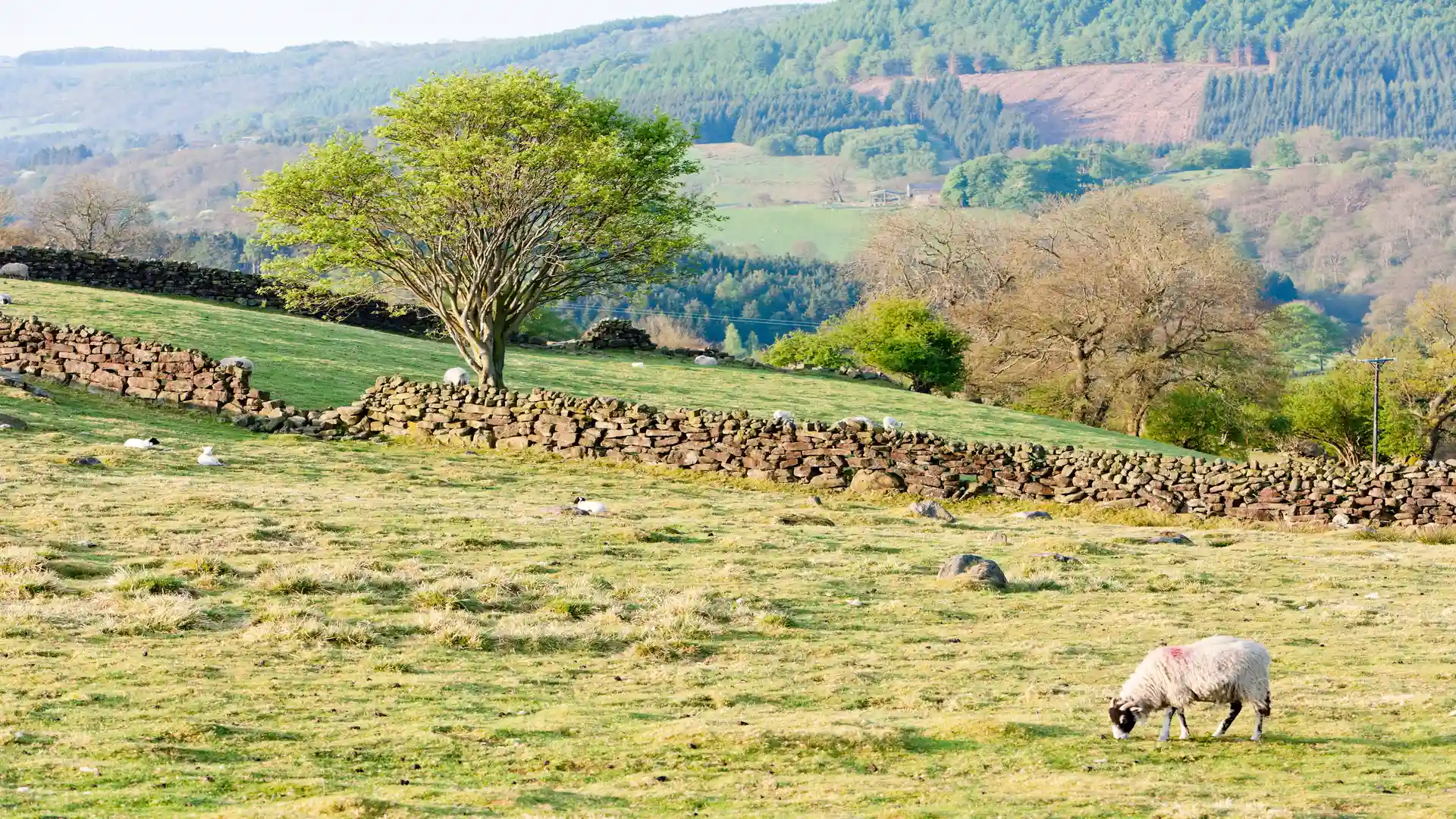
Peaceful hillside scene in the North York Moors with sheep, dry stone walls, and rolling green valleys.

North York Moors National Park – Heather Moorland, Deep Valleys, and Coastal Cliffs

Upland Landscapes Shaped by Moorland, Sandstone, and Long-Used Valleys

North York Moors National Park lies in northern England, covering a broad upland area of North Yorkshire between the Vale of Pickering and the North Sea coast. Defined by expansive heather moorland, deeply incised wooded valleys, and a dramatic cliff-backed coastline, the park combines open upland walking with strong valley structure and maritime influence.

Walking journeys in the North York Moors are shaped by scale and contrast rather than height. Vast areas of open moorland create a powerful sense of space and exposure, while sheltered dales cut deeply into the uplands, offering wooded paths, riverside routes, and a more enclosed walking experience. This interplay between openness and shelter defines much of the park’s walking character.

The structure of movement across the park is set by its moors and valleys. Broad heather plateaus dominate the high ground, crossed by long-established tracks and ancient routeways, while valleys such as Eskdale, Rosedale, and Farndale form natural corridors through the landscape. Walking routes often move gradually from valley floors onto open moor before returning again, reinforcing a steady rhythm rather than dramatic ascent.

Geology plays a quiet but consistent role. Sandstone underpins much of the landscape, shaping gentle escarpments, rounded hills, and steep-sided dales rather than sharp peaks. In places, ironstone seams and former mining areas add subtle texture and historical depth to upland routes, particularly across the central moors.

Heather defines the visual identity of the park. In late summer, vast swathes of purple transform the uplands, while outside the flowering season the moors retain a muted, elemental quality shaped by wind, weather, and wide skies. Walking here is strongly seasonal, with light, colour, and weather playing a central role in how the landscape is experienced.

Human history is deeply embedded but lightly worn. Farming, monastic settlements, and centuries of moorland management have shaped the land without overwhelming it. Stone villages, abbeys, and long-used tracks sit naturally within the terrain, and walking routes often follow historic lines of movement across the uplands and through valleys.

Along the eastern edge of the park, the landscape meets the sea. High cliffs rise directly from the North Sea, creating a striking transition from open moorland to exposed coastal walking. Clifftop paths offer long views and strong maritime character, adding a coastal dimension rarely found in upland national parks.

Beyond walking, the North York Moors support a range of low-impact outdoor pursuits. Cycling and trail running suit the long gradients and open terrain, while wildlife watching is particularly rewarding in valleys and along the coast. The park’s dark skies and relative remoteness enhance its appeal for longer, slower journeys.

Accommodation is concentrated in valleys, villages, and small towns around the moors. Inns, guesthouses, and rural stays provide bases that align closely with walking routes, supporting both day walks and multi-day itineraries that combine moorland, valley, and coastal sections.

For walkers seeking wide open moors, strong seasonal character, and a landscape shaped by weather, history, and quiet scale, North York Moors National Park offers one of England’s most distinctive and atmospheric walking environments.

Where to Walk and Explore

Open Heather Moorland

‍Long-distance upland walking across expansive moors with wide horizons and strong sense of space.

Eskdale, Farndale, and Rosedale

‍Sheltered valley walking through woodland, riverside paths, and long-settled landscapes.

Coastal Cliffs and Headlands

‍Exposed clifftop routes where moorland meets the North Sea, offering dramatic coastal walking.

Adventure Highlights

  • Vast heather moorland and open upland walking
  • Deep wooded valleys cutting through the moors
  • Seasonal colour and dramatic changes in light
  • Cliff-backed coastline and maritime views
  • Long-established tracks and historic routeways
  • One of northern England’s most atmospheric landscapes

Frequently Asked Questions

Where is North York Moors National Park located?

It lies in northern England, covering large parts of North Yorkshire between the Vale of Pickering and the North Sea coast.

What defines walking in the North York Moors?

Open moorland, sheltered valleys, gentle gradients, and strong seasonal character.

Is the terrain mountainous?

No. The landscape is upland rather than mountainous, with broad moors and valleys rather than sharp peaks.

Can coastal walking be combined with moorland routes?

Yes. The park uniquely combines inland moorland walking with dramatic clifftop coastal paths.

When is the best time to visit?

Late summer is popular for heather bloom, while spring and autumn offer quieter trails and changing light; walking is rewarding year-round.