
Historic streets, maritime heritage and the River Deben
Woodbridge is a historic market town in Suffolk, situated on the western bank of the River Deben, close to the protected coastal landscapes of the Suffolk & Essex Coast & Heaths National Landscape. Known for its maritime heritage, historic buildings, independent shops and attractive waterfront, the town combines a lively market town atmosphere with the quieter landscapes of the Deben estuary. Across the river lies Sutton Hoo, one of Britain's most significant archaeological sites.
At the heart of Woodbridge, Market Hill is surrounded by historic buildings reflecting the town's development as a centre for trade and commerce. The distinctive sixteenth-century Woodbridge Shire Hall stands prominently in the market square, while nearby St Mary's Church, with its medieval tower and impressive architecture, reflects the town's prosperity during the Middle Ages. Narrow streets lined with timber-framed houses and Georgian buildings lead towards the Thoroughfare, where independent shops, delicatessens, galleries, restaurants and cafés contribute to the character of the town.
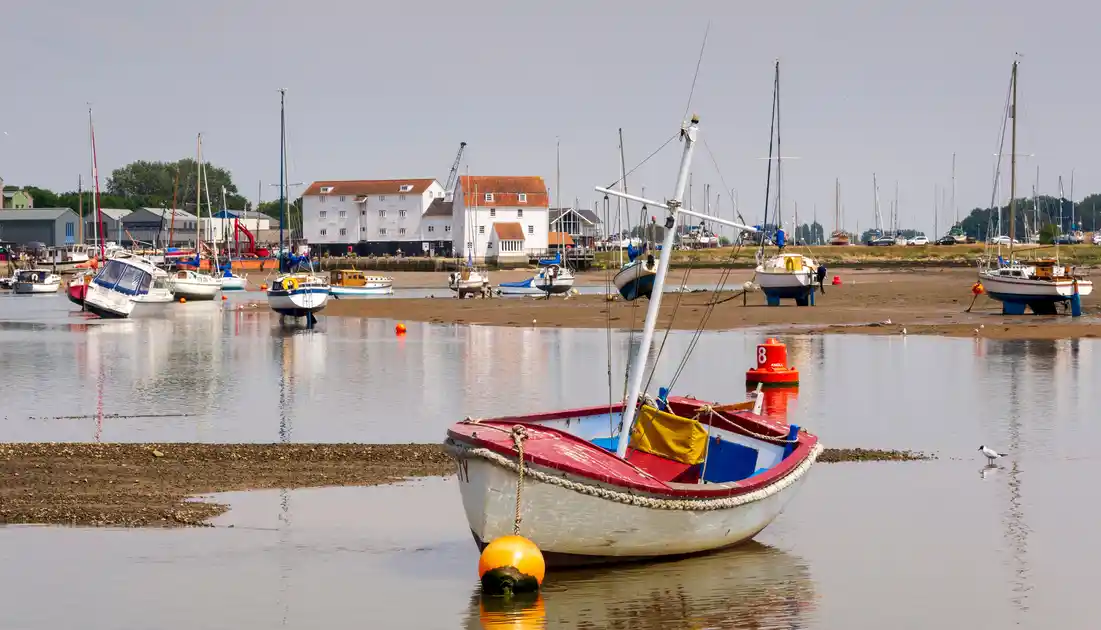
Woodbridge has a long association with shipbuilding, boatbuilding and maritime trade, industries that helped shape its character over several centuries. Along Woodbridge Waterfront, traditional boatyards, sailing boats and former industrial buildings provide reminders of this working past. The Woodbridge Tide Mill, one of the country's few surviving working tidal mills, is the town's most recognisable waterfront landmark. Visitors can explore its historic machinery and discover how the movement of the tides is harnessed to produce flour.
Close to the waterfront, the Riverside Theatre and Cinema is an independent cultural venue offering a programme of films and live entertainment. Together with the town's restaurants, traditional pubs and independent cafés, it provides opportunities to spend time in Woodbridge beyond its historic buildings and riverside walks.
The River Deben forms one of Suffolk's most distinctive estuary landscapes, with tidal mudflats, saltmarsh, wooded banks and open countryside extending towards the North Sea. Riverside paths from Woodbridge lead south towards Kyson Hill and Martlesham Creek, and north towards Melton, passing boatyards, moorings and stretches of quieter shoreline. The changing tides attract wading birds and wildfowl, while the open views across the water provide a particularly attractive setting for early morning and evening walks.
Across the River Deben, Sutton Hoo is the site of an extraordinary Anglo-Saxon ship burial discovered in 1939. The burial mounds overlook the river from an elevated area of sandy ground and woodland, where archaeological discoveries revealed remarkable treasures associated with early Anglo-Saxon England. Managed by the National Trust, the estate includes exhibition spaces, historic Tranmer House and walking paths through the surrounding landscape, with views towards Woodbridge and the estuary.
Beyond Sutton Hoo, the surrounding countryside forms part of the distinctive Suffolk Sandlings landscape. Sutton Heath offers open heathland, sandy paths and areas of woodland, while Rendlesham Forest provides an extensive network of walking and cycling routes through pine woodland and forest clearings. These landscapes offer a contrast to the tidal waters of the Deben, revealing the diversity of the countryside lying between Woodbridge and the coast.
Woodbridge is connected to the wider coastal walking network through the King Charles III England Coast Path East of England Section, which follows the landscapes of the Deben estuary. Although the Suffolk Coast Path does not pass through Woodbridge itself, the town is well placed for exploring sections of the route around Bawdsey, Shingle Street and Orford, where shingle beaches, saltmarsh and historic coastal settlements characterise the Suffolk coastline.
Further south, Felixstowe Ferry overlooks the mouth of the River Deben, with fishing boats, traditional cottages and a seasonal foot ferry connecting the settlement with Bawdsey. Nearby Felixstowe offers a contrasting seaside experience, with Victorian seafront gardens, beaches and the historic coastal defence buildings of Landguard Fort. Together, these destinations reveal the changing landscapes of the southern Suffolk Coast, from sheltered tidal estuaries to open beaches overlooking the North Sea.
Woodbridge is particularly well suited to a two- or three-night break combining historic places, riverside walks, independent dining and time exploring the surrounding countryside. The town's railway station forms part of the East Suffolk Line, connecting Woodbridge with Ipswich, Saxmundham and Lowestoft, making it an accessible destination for visitors travelling without a car.
For visitors staying in Woodbridge, The Station Guest House occupies the former stationmaster's house, with en-suite guest rooms overlooking the River Deben and breakfast available at the adjoining Whistle Stop Café. Its waterfront location beside the railway station provides a convenient base for exploring the town, with Woodbridge Tide Mill, riverside walks, independent restaurants and the historic town centre within easy walking distance.
Featured Stay

The Station Guest House, Woodbridge
Stay at The Station Guest House in Woodbridge, a family-run guest house occupying the former stationmaster's house, with three en-suite guest rooms overlooking the River Deben and breakfast available at the adjoining Whistle Stop Café, close to Woodbridge Tide Mill and the town's historic waterfront.
Check availability
Select your dates to check current availability and prices.


