
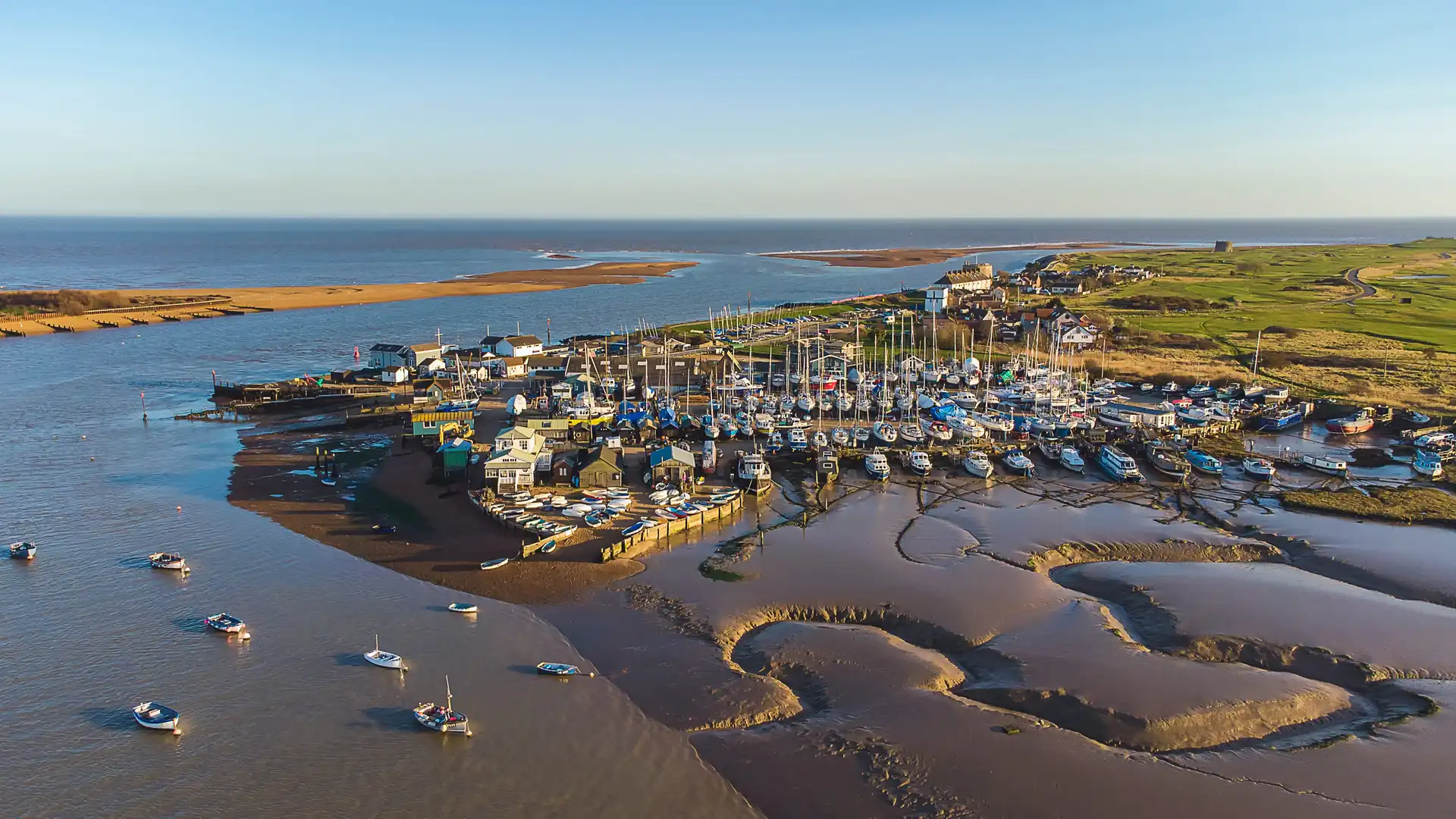
Estuary shore, sea walls, and open views where river meets sea
Felixstowe Ferry sits directly on the Suffolk Coast Path at the mouth of the River Deben within the Suffolk Coast & Heaths National Landscape. The route follows raised sea walls and embankment paths beside tidal marsh and shingle, linking the estuary crossing with the open coast toward Felixstowe.
The settlement stands on low ground between river and sea. Underfoot, progress is mostly level and firm along gravel tracks, flood banks, and compacted paths, with short stretches of shingle near the beach. Views are broad and open, looking across the Deben toward Bawdsey and out along the North Sea coast.
Felixstowe Ferry has a small, quiet character centred around cottages and a green, with a nearby Martello tower along the shore. A seasonal foot ferry connects directly across the estuary to Bawdsey, providing a practical crossing point for continuing north along the coast.
From the hamlet, the Suffolk Coast Path heads north toward Bawdsey and Shingle Street, following sea walls and estuary edges, or south toward Felixstowe, where promenade and town frontage begin along the seafront. The terrain remains largely flat in both directions, creating a steady and accessible stretch of shoreline.
Check availability
Select your dates to check current availability and prices.