


Stay in a former stationmaster's house overlooking the River Deben
The Station Guest House stands on Station Road in Woodbridge, a historic market town on the banks of the River Deben in Suffolk. Occupying the former stationmaster's house beside Woodbridge railway station, this family-run guest house combines railway heritage with riverside accommodation. Its position between the waterfront and the town centre makes it particularly convenient for visitors exploring Woodbridge and the surrounding countryside without a car.
The guest house offers three en-suite bedrooms, comprising king, twin and family accommodation, each with views across the River Deben. All three rooms are situated upstairs and accessed by stairs, with tea and coffee-making facilities, televisions and Wi-Fi. From the guest rooms, visitors can watch the changing tides and the movement of sailing boats along the river.
The adjoining Whistle Stop Café occupies the former railway station waiting room, retaining a connection with the building's original purpose. The family-run café serves cooked breakfasts, lunches, homemade cakes and speciality coffees, with outdoor seating during the warmer months.
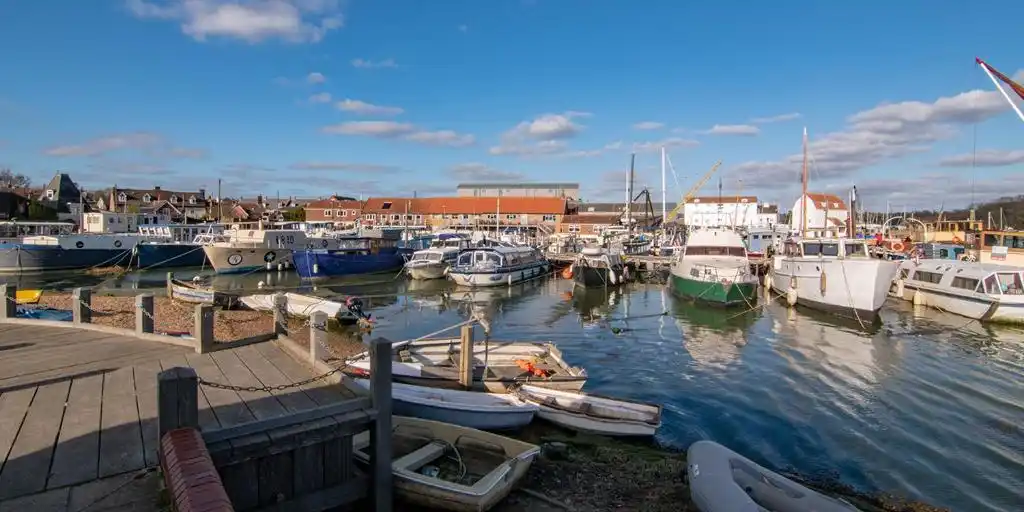
Just beyond the railway station, Woodbridge Waterfront reflects the town's long association with sailing, boatbuilding and maritime trade. Traditional boatyards, moored sailing boats and former industrial buildings line the riverbank, with the historic Woodbridge Tide Mill standing as one of the town's most distinctive landmarks. The restored working mill harnesses the movement of the tides to grind grain, preserving an important part of Woodbridge's industrial heritage.
Next to the railway station, the Riverside Theatre and Cinema offers an independent programme of films and live entertainment. A short walk into the town centre leads to the Thoroughfare and Market Hill, where independent shops, restaurants, historic inns and cafés occupy streets shaped by centuries of commercial activity. Woodbridge Shire Hall and St Mary's Church stand among the town's most prominent historic buildings.
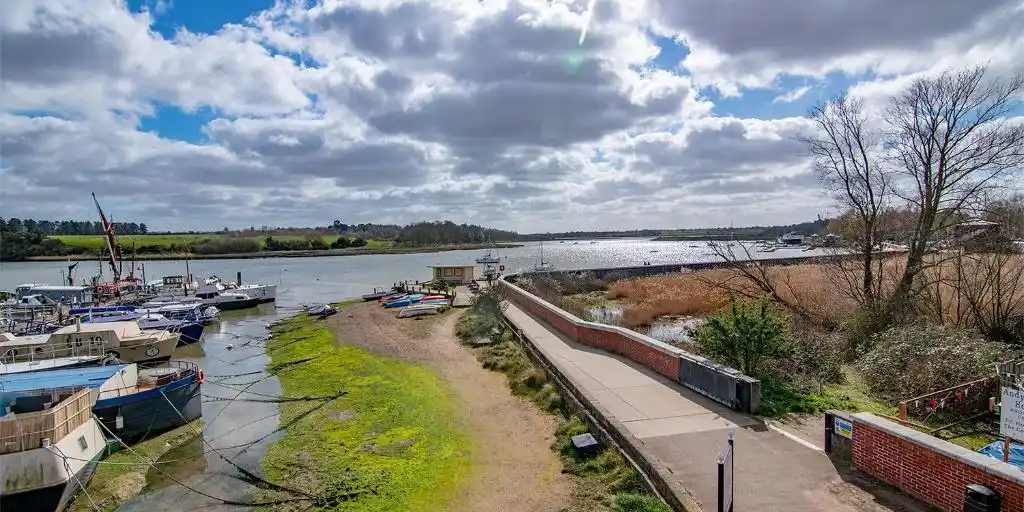
From the guest house, riverside paths lead south towards Kyson Hill and Martlesham Creek, where tidal mudflats, grazing marshes and wooded riverbanks provide a quieter setting for walking and wildlife watching. In the opposite direction, paths towards Melton follow the changing landscapes of the Deben estuary, with opportunities to observe wading birds, wildfowl and sailing boats.
Across the river, Sutton Hoo preserves the remarkable Anglo-Saxon burial landscape associated with the discovery of a seventh-century ship burial in 1939. Woodland walks, open countryside and archaeological exhibitions reveal the history of the site and its relationship with the surrounding river landscape. Further east, Sutton Heath and Rendlesham Forest offer contrasting walks through open heathland, sandy paths and extensive woodland.
Woodbridge is connected to the wider coastal walking network through the King Charles III England Coast Path East of England Section, which follows the landscapes of the River Deben. Nearby coastal settlements including Bawdsey, Shingle Street and Orford provide access to sections of the Suffolk Coast Path, passing through shingle beaches, saltmarsh and the open coastal landscapes of the Suffolk & Essex Coast & Heaths National Landscape.
Woodbridge railway station forms part of the East Suffolk Line, connecting the town with Ipswich and Lowestoft through the countryside of eastern Suffolk. Stations at Melton, Wickham Market, Saxmundham and Darsham provide further opportunities to explore the villages, market towns and walking routes of the Suffolk Coast by public transport.
Walk • Stay • Explore
Walk beside the River Deben, discover the tidal landscapes of Martlesham Creek and explore the woodland and heathland paths of Rendlesham Forest and Sutton Heath. Stay at The Station Guest House, with riverside guest rooms, railway heritage and breakfast at the adjoining Whistle Stop Café. Explore Woodbridge Tide Mill, Sutton Hoo and the historic streets of Woodbridge, with convenient railway connections to the surrounding Suffolk countryside and coast.