
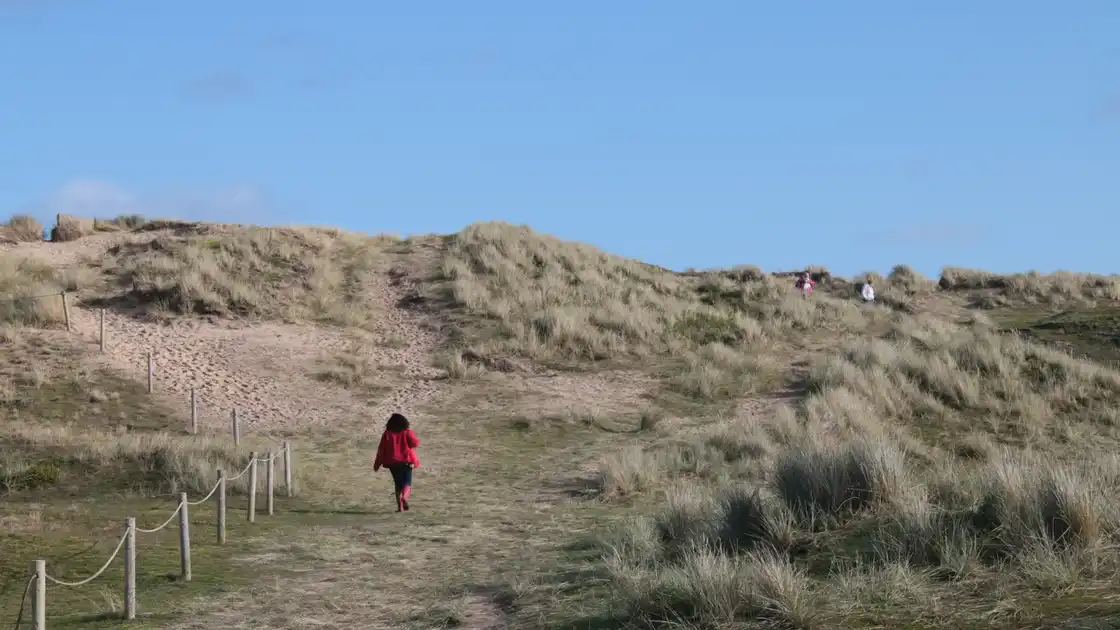
Dunes, heathland and open coast
Winterton Dunes National Nature Reserve lies immediately north of Winterton-on-Sea, within the Norfolk Coast National Landscape on the eastern Norfolk Coast. Stretching towards Horsey, the reserve protects an extensive system of sand dunes, dune heathland, grassland and freshwater pools, forming one of the most distinctive coastal landscapes in Norfolk.
Unlike many dune systems elsewhere in Britain, Winterton is particularly notable for its acidic dune heath, a habitat more commonly associated with northern Europe. The combination of sandy ridges, low-growing heathland vegetation, dune slacks and open beach supports an unusual range of plants and animals, making the reserve important for nature conservation.
The dunes provide habitats for rare wildlife, including natterjack toads, which breed in shallow freshwater pools, and ground-nesting birds such as nightjars and skylarks. Little terns have also traditionally nested along this coastline during spring and summer. These sensitive habitats are vulnerable to disturbance, particularly during the breeding season, so visitors should keep to established paths and follow local wildlife guidance.
The Norfolk Coast Path passes through this stretch of coastline, connecting Winterton-on-Sea with Horsey to the north and Hemsby and Great Yarmouth to the south. Walkers can explore the dune landscape and surrounding beach, with wide views across the North Sea and opportunities for shorter walks from Winterton village. The exposed coastline, shifting sands and changing weather give this section of the path a particularly wild and open character.
To the north, the beaches around Horsey Gap are known for their grey seal colonies. Grey and harbour seals can be seen along the coastline throughout the year, while large numbers of grey seals gather to breed during the autumn and winter. Visitors should observe seals from a safe distance, keep dogs under control and respect any seasonal restrictions or designated viewing areas.
Winterton Dunes forms part of the eastern section of the Norfolk Coast National Landscape, where the sand dunes and open shores of Winterton Beach contrast with the low-lying wetlands of The Broads National Park. Further inland, Horsey Mere and Hickling Broad National Nature Reserve offer opportunities to explore reedbeds, waterways and freshwater wildlife habitats, creating a varied landscape for coastal walking, birdwatching and nature exploration.
Overview
Type: National Nature Reserve
County: Norfolk
Region: East of England
National Landscape: Norfolk Coast National Landscape
Landscape: Coastal sand dunes, acidic dune heath, grassland, dune slacks and freshwater pools
Key Trail: Norfolk Coast Path
Best For: Coastal walking, dune landscapes, rare wildlife, birdwatching and beaches
Check availability
Select your dates to check current availability and prices.