


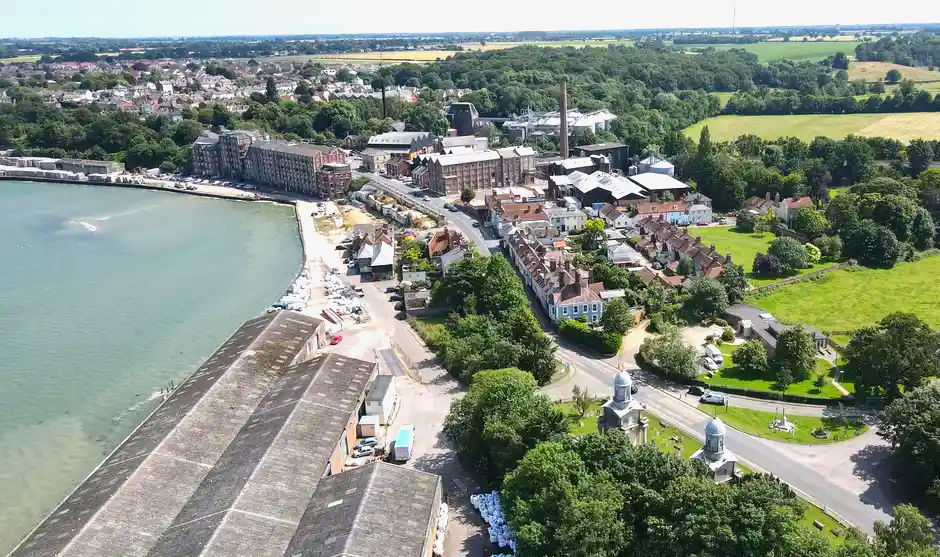
Stay beside the River Stour in historic Mistley
The Mistley Thorn stands on the High Street in Mistley, a historic Essex village overlooking the tidal waters of the River Stour. Originally built as a coaching inn in the early eighteenth century, the hotel combines individually styled guest accommodation with a well-regarded restaurant specialising in seasonal cooking and local seafood. Its position opposite the estuary makes it an appealing place to stay along the Suffolk–Essex border, with waterfront walks, historic buildings and the neighbouring town of Manningtree close at hand.
The hotel occupies a characterful historic building dating from around 1723, with accommodation extending into neighbouring rooms and mews cottages. Its individually designed guest rooms combine contemporary furnishings with traditional architectural details, while some offer views towards the Stour estuary. The restaurant is an important part of The Mistley Thorn's identity, with menus developed around seasonal produce, locally caught fish and shellfish. Oysters from the Essex coast are among its specialities, alongside changing dishes that reflect the agricultural and maritime character of the surrounding area. The combination of accommodation and dining makes the hotel particularly attractive for visitors who want to spend time exploring the Stour Valley without travelling far for an evening meal.
Mistley has a distinctive history shaped by its position beside the river. During the eighteenth century, the village developed as a centre for maritime trade, malting and agriculture, with warehouses, quays and industrial buildings established along the waterfront. Its historic streets and surviving buildings reflect this period of prosperity, while the broad estuary remains central to the village's character. The most recognisable landmark is Mistley Towers, the surviving twin towers of a church designed by Robert Adam, standing close to the waterfront and providing an unusual reminder of the village's ambitious Georgian development.
The riverside landscape changes considerably with the tides. At low water, extensive mudflats are exposed along the River Stour, attracting wading birds and wildfowl, while at high tide the estuary becomes a broad expanse of water reflecting the surrounding countryside. Walking west towards Manningtree offers views across the river and opportunities to explore the historic waterfront, with its narrow streets, independent shops and buildings associated with the town's maritime past. Together, Mistley and Manningtree provide an interesting contrast between the industrial heritage of the estuary and the quieter countryside further upstream.
The surrounding landscape also provides opportunities for longer walks. The Stour Valley Path follows the river corridor through Essex and Suffolk, connecting historic towns, villages and open countryside, while the St Edmund Way offers another established route through the wider region. Inland from the estuary, the landscape gradually changes from tidal mudflats and riverside settlements to the water meadows, fields and wooded valleys of the Dedham Vale National Landscape. Nearby Stratford St Mary and East Bergholt offer access to countryside paths and historic village settings associated with John Constable.
At Flatford, the River Stour passes a collection of historic buildings closely connected with Constable's paintings. Flatford Mill stands beside the water, while Willy Lott's Cottage is internationally recognised from The Hay Wain. Nearby Bridge Cottage and Flatford Lock provide further connections to the river's agricultural and navigation heritage. The Flatford to Dedham Riverside Walk continues through open meadows towards Dedham, following one of the most recognisable landscapes in Constable Country.
Dedham's historic High Street, Georgian houses, galleries and independent shops provide a different setting from the estuary villages. The Dedham Vale Art & Craft Centre brings together independent makers and galleries, while the Munnings Art Museum, housed at Castle House, explores the life and work of Sir Alfred Munnings. Together, these destinations make an enjoyable excursion from Mistley, combining countryside walking with the artistic heritage of the Stour Valley.
Walk • Stay • Explore
Walk beside the River Stour between Mistley and Manningtree, explore sections of the Stour Valley Path and St Edmund Way, and discover the landscapes of the Dedham Vale National Landscape. Stay at The Mistley Thorn, with individually styled guest rooms, historic coaching inn character and restaurant dining specialising in seasonal produce and seafood. Explore Mistley Towers, East Bergholt, Flatford and Dedham, visit Flatford Mill, Willy Lott's Cottage and Flatford Lock, and discover the riverside villages, historic buildings and countryside of Constable Country.