
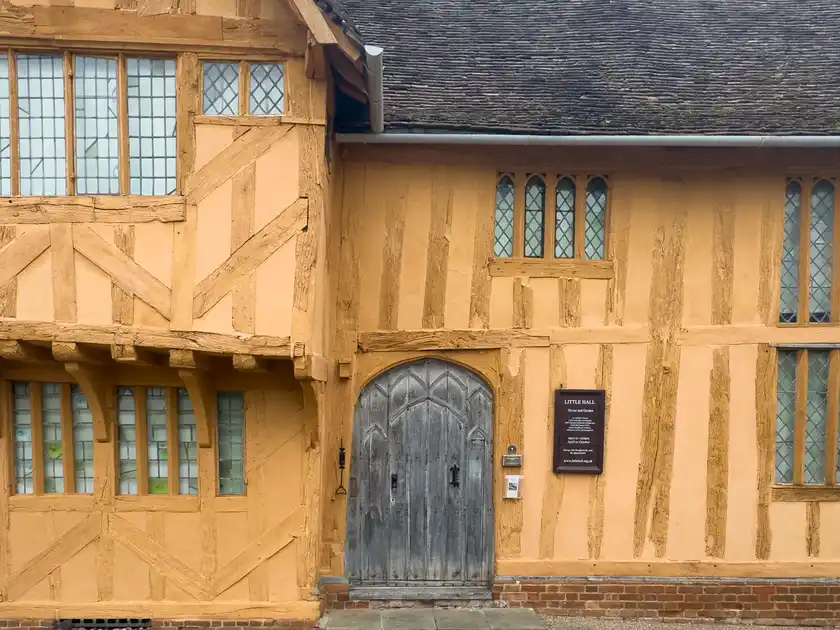
A medieval merchant's house in the heart of Lavenham
Little Hall stands on Market Place in the heart of Lavenham, one of Suffolk's best-preserved medieval villages. Built in the late 14th century, this remarkable timber-framed house offers a glimpse into domestic life during the village's prosperous wool-trading past. Its historic rooms, carefully preserved architectural features and collections of art and antiquities tell a story spanning more than six centuries.
The house was originally built in the 1390s for the Causton family, who were involved in Lavenham's thriving cloth industry. During the medieval period, the village became an important centre for the production and trade of woollen cloth, bringing considerable wealth to local merchants. Little Hall reflects this prosperity, combining the practical requirements of a merchant's household with the craftsmanship and architectural traditions of medieval Suffolk.
Originally constructed as a hall house, the building developed over several generations as the fortunes of its occupants changed. During the 15th century, it was enlarged and improved, while later Tudor alterations introduced additional floors, fireplaces and glazed windows. These changes transformed the original medieval living spaces and created the distinctive arrangement of rooms that visitors can explore today.
As Lavenham's cloth trade declined, the building entered a very different period of its history. By the 19th century, Little Hall had been divided into smaller dwellings, accommodating several families within the former merchant's house. Its changing use reflects the wider economic and social history of Lavenham, where once-prosperous medieval buildings were adapted to meet the needs of later generations.
In the 1920s, Little Hall was acquired by twin brothers Thomas and Robert Gayer-Anderson, who undertook an extensive programme of restoration. Both were enthusiastic collectors with interests in art, archaeology and cultures encountered during their travels. They restored the house as a residence and filled its rooms with paintings, furniture, decorative objects and antiquities, creating a distinctive collection that remains central to the visitor experience.
Today, Little Hall is cared for by Historic Suffolk and operates as a museum. Visitors can explore its historic interiors, including rooms displaying the Gayer-Anderson collections, exposed medieval timbers and architectural details that reveal the building's development. Particularly notable is the upper chamber with its impressive crown-post roof structure, an important surviving feature of medieval timber-framed construction.
Behind the house, a peaceful walled garden provides a quieter contrast to the historic buildings surrounding Market Place. Its traditional planting and Tudor-inspired knot garden create an inviting space to explore, offering another perspective on the house and its long history. The combination of historic interiors, collections and garden makes Little Hall one of Lavenham's most distinctive visitor attractions.
Little Hall stands on Market Place, close to Lavenham Guildhall, the magnificent 16th-century timber-framed building overlooking the historic square. Together, these buildings reveal different aspects of the village's medieval prosperity, from the domestic life of wealthy cloth merchants to the religious and charitable activities of the town's guilds. A short walk through the historic streets leads to St Peter and St Paul's Church, another landmark associated with Lavenham's wool-trading wealth.
Beyond Market Place, visitors can explore the village's independent shops, galleries, cafés and historic streets before continuing into the surrounding countryside. Lavenham Woodland and Circular Walk provides an opportunity to discover woodland paths and the rural landscape beyond the village, while the St Edmund Way passes through Lavenham, connecting its medieval heritage with a longer walking route across Suffolk.
The surrounding area offers further opportunities to explore Suffolk's historic towns and villages. Long Melford, with its medieval church, historic houses and attractive village streets, lies a short distance to the west, while Bury St Edmunds offers Abbey Gardens, St Edmundsbury Cathedral, the remains of its great medieval abbey and a lively historic centre. These nearby destinations make Lavenham an appealing place to spend several days discovering the county's architectural and cultural heritage.
Directly beside Little Hall on Market Place, The Great House Lavenham Hotel & Restaurant offers accommodation in a historic building with five individually styled guest rooms and restaurant dining. Its central location places visitors within moments of Little Hall, Lavenham Guildhall and the surrounding medieval streets, with easy access to Lavenham Woodland and Circular Walk and the St Edmund Way for exploring the countryside beyond the village.
Featured Stay

The Great House Lavenham Hotel & Restaurant
Stay at The Great House in Lavenham, a historic boutique hotel with five individually styled guest rooms and restaurant dining overlooking Market Place, close to Lavenham Guildhall, Little Hall and the St Edmund Way.
Check availability
Select your dates to check current availability and prices.
