
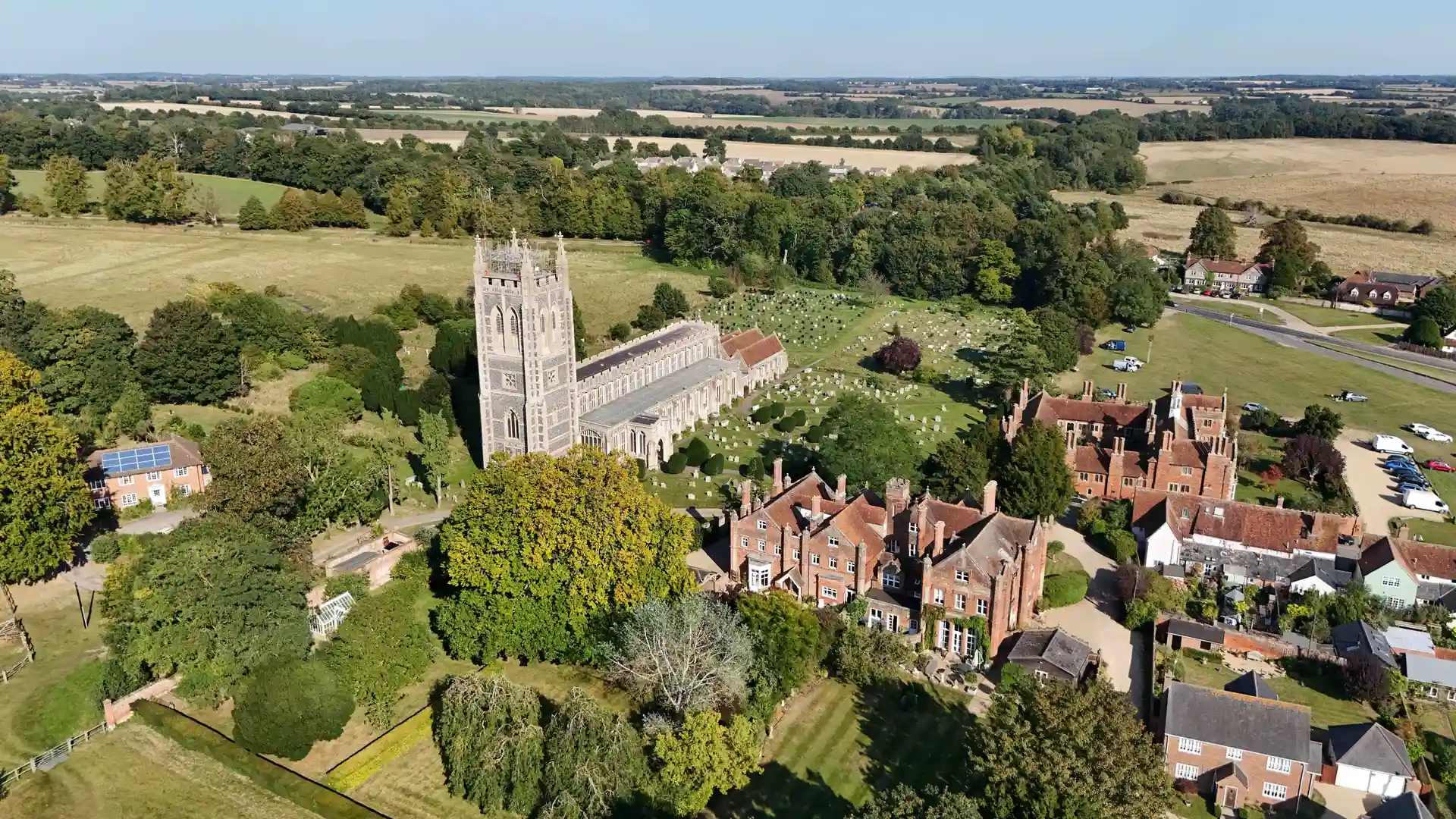
Historic houses, village greens and Suffolk countryside
Long Melford is one of the most distinctive historic villages in Suffolk, stretching along a broad high street towards an expansive village green, medieval church and grand country houses. Its prosperity grew through the wool and cloth trade during the fifteenth and sixteenth centuries, leaving a remarkable collection of buildings that continue to shape the village today. Set within the wider Stour Valley, Long Melford combines independent shops, traditional pubs, restaurants and countryside paths, making it an appealing destination for exploring on foot or spending a few days discovering southern Suffolk.
At the northern end of the village, Long Melford Green opens into a broad landscape framed by historic buildings, mature trees and views towards Holy Trinity Church. The church is one of Suffolk's finest medieval wool churches, built largely during the fifteenth century with wealth generated by local cloth merchants. Its elaborate stonework, medieval stained glass and impressive interior reflect the importance of Long Melford during this period. Nearby, the historic almshouses of the Hospital of the Holy Blessed Trinity add another layer to the village's architectural heritage, making the green and its surroundings a natural starting point for exploring.
Overlooking the green, Melford Hall is a magnificent Tudor house now cared for by the National Trust. Its red-brick architecture, historic rooms and surrounding grounds offer an opportunity to explore the lives of the families who occupied the house over several centuries. Melford Hall also has connections with Beatrix Potter, who visited the property through her family relationships. Together with Holy Trinity Church and Long Melford Green, it forms one of the most memorable historic settings in this part of Suffolk.
A little further north, Kentwell Hall provides another remarkable connection with Long Melford's Tudor past. The moated country house stands within extensive gardens and parkland and is particularly known for its historical re-creations, which bring different periods of English history to life. Its gardens, historic architecture and seasonal events make it a rewarding addition to a longer visit, particularly for those interested in the history of Suffolk's wealthy merchant families and the development of the surrounding countryside.
Returning towards the centre of the village, Hall Street is lined with historic buildings, independent shops, antique dealers, galleries and places to eat. Long Melford has a longstanding reputation for antiques and decorative arts, and its shops provide a different experience from the larger towns nearby. Traditional inns and restaurants offer opportunities to pause for lunch or spend an evening in the village, while the mixture of medieval, Tudor and later architecture makes the walk along Hall Street an attraction in itself.
Beyond the historic centre, Long Melford Country Park offers a quieter landscape of woodland, open spaces, ponds and paths following the former railway corridor. The park connects with the Valley Walk, Long Melford to Sudbury, which follows the old railway route south towards Sudbury, passing through the countryside of the Stour Valley. The nearby Stour Valley Path provides opportunities for longer walks through the surrounding landscape, connecting historic villages, farmland and riverside scenery. Shorter walks around the country park and surrounding fields offer an appealing way to spend a morning outdoors before returning to the village.
The St Edmund Way provides a further connection with the historic settlements and countryside of Suffolk. Around Long Melford, local footpaths lead through farmland, quiet lanes and landscapes shaped by centuries of agriculture and settlement. Nearby Lavenham is celebrated for its extraordinary collection of medieval timber-framed houses, historic Lavenham Guildhall and narrow streets, while Sudbury, beside the River Stour, offers riverside walking, Gainsborough's House and the open landscapes of Sudbury Water Meadows. Further north, Bury St Edmunds provides another destination for exploring Suffolk's medieval heritage, with Abbey Gardens, St Edmundsbury Cathedral and its historic streets.
Long Melford is particularly well suited to a short stay, with its historic attractions, countryside paths and independent businesses providing plenty to explore over two or three days. Visitors can spend a morning around Long Melford Green and Holy Trinity Church, discover Melford Hall or Kentwell Hall during the afternoon, and return to Hall Street for dinner. A second day offers opportunities for walking through Long Melford Country Park, following the Valley Walk, Long Melford to Sudbury or visiting the medieval streets of Lavenham. The combination of historic buildings, village life and accessible countryside makes Long Melford an appealing base for discovering southern Suffolk.
For visitors staying in Long Melford, The Black Lion offers historic accommodation overlooking the village green, with individually styled bedrooms and restaurant dining in a traditional village setting. Its position close to Holy Trinity Church and Melford Hall makes it a convenient base for exploring on foot, while Kentwell Hall, the surrounding countryside and nearby historic villages provide plenty to discover during a relaxed two- or three-night stay.
Featured Stay

The Black Lion, Long Melford
Stay at The Black Lion, a historic village inn overlooking Long Melford Green, with ten individually styled bedrooms, seasonal British dining and easy access to Holy Trinity Church, Melford Hall and the surrounding Suffolk countryside.
Check availability
Select your dates to check current availability and prices.


