
Medieval architecture and Lavenham's wool-trade heritage
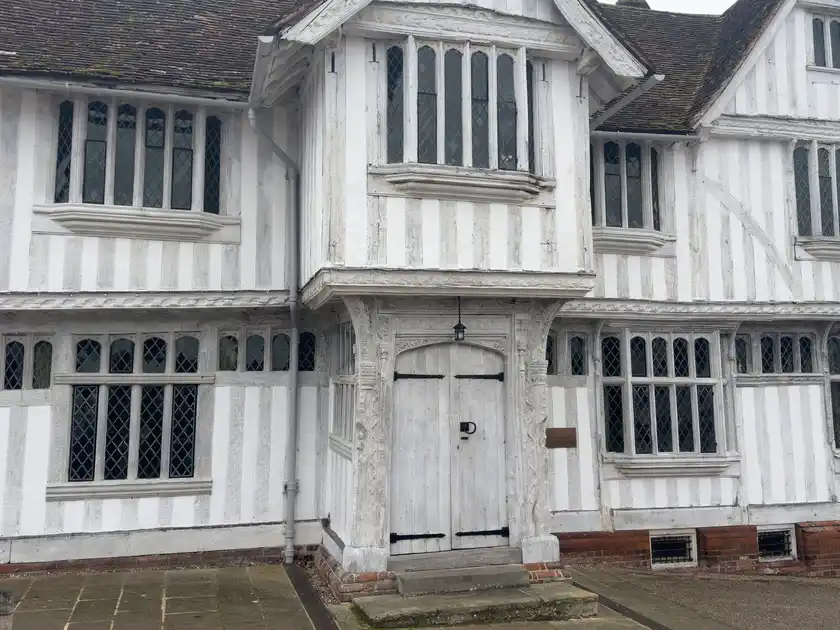
Lavenham Guildhall stands on Market Place in the heart of Lavenham, one of the best-preserved medieval villages in Suffolk. With its striking timber-framed façade, decorative plasterwork and prominent position among the surrounding historic buildings, the Guildhall is one of the village's most recognisable landmarks and an important reminder of the wealth generated by the medieval wool trade.
Built in the early 16th century for the Guild of Corpus Christi, the building reflects a period when Lavenham was among England's most prosperous cloth-producing centres. Merchants and craftspeople helped establish the village's reputation for fine woollen cloth, while the guilds played an important role in religious, charitable and social life. The Guildhall's scale and craftsmanship demonstrate the prosperity that once shaped Lavenham.
Today, the Guildhall is cared for by the National Trust and welcomes visitors to explore its historic rooms and exhibitions. Displays trace the building's changing uses and the lives of people connected with it, from its origins as a guild meeting place to later periods when it served as a workhouse and prison. These stories offer an insight into the changing fortunes of the village long after its medieval trading success.
The building's interiors, exposed timbers and historic architectural details are an important part of the visit. Its courtyard garden also provides a quieter space away from Market Place, while the surrounding streets offer further examples of the distinctive timber-framed houses that make Lavenham such an atmospheric place to explore on foot.
Directly opposite the Guildhall, Little Hall provides another opportunity to explore a historic timber-framed house, while St Peter and St Paul's Church stands a short walk away at the southern end of the village. Together with Market Place and the narrow streets connecting these landmarks, they form an appealing route through Lavenham's architectural heritage.
Beyond the village centre, Lavenham Woodland and Circular Walk offers an opportunity to explore the surrounding countryside, following paths through woodland and the rural landscape beyond the historic streets. The St Edmund Way also passes through Lavenham, connecting the village with a longer route across Suffolk's historic countryside. Together, these routes provide opportunities to combine the Guildhall's medieval history with walks through the landscapes that once supported the region's agricultural and wool-trading economy.
Lavenham is also well placed for exploring other historic Suffolk destinations. Long Melford, with its grand medieval church, historic houses and village streets, lies a short distance to the west, while Bury St Edmunds offers Abbey Gardens, St Edmundsbury Cathedral, medieval abbey ruins and a wider choice of cultural attractions. Together, these places provide plenty to explore during a longer stay in the area.
Overlooking Market Place, The Great House Lavenham Hotel & Restaurant offers accommodation in the historic centre of Lavenham, just moments from the Guildhall and Little Hall. With five individually styled guest rooms and restaurant dining, the hotel provides a convenient place to stay while exploring the village's medieval buildings, independent shops and surrounding countryside, including walks along the St Edmund Way.
Featured Stay

The Great House Lavenham Hotel & Restaurant
Stay at The Great House in Lavenham, a historic boutique hotel with five individually styled guest rooms and restaurant dining overlooking Market Place, close to Lavenham Guildhall, Little Hall and the St Edmund Way.
Check availability
Select your dates to check current availability and prices.
