
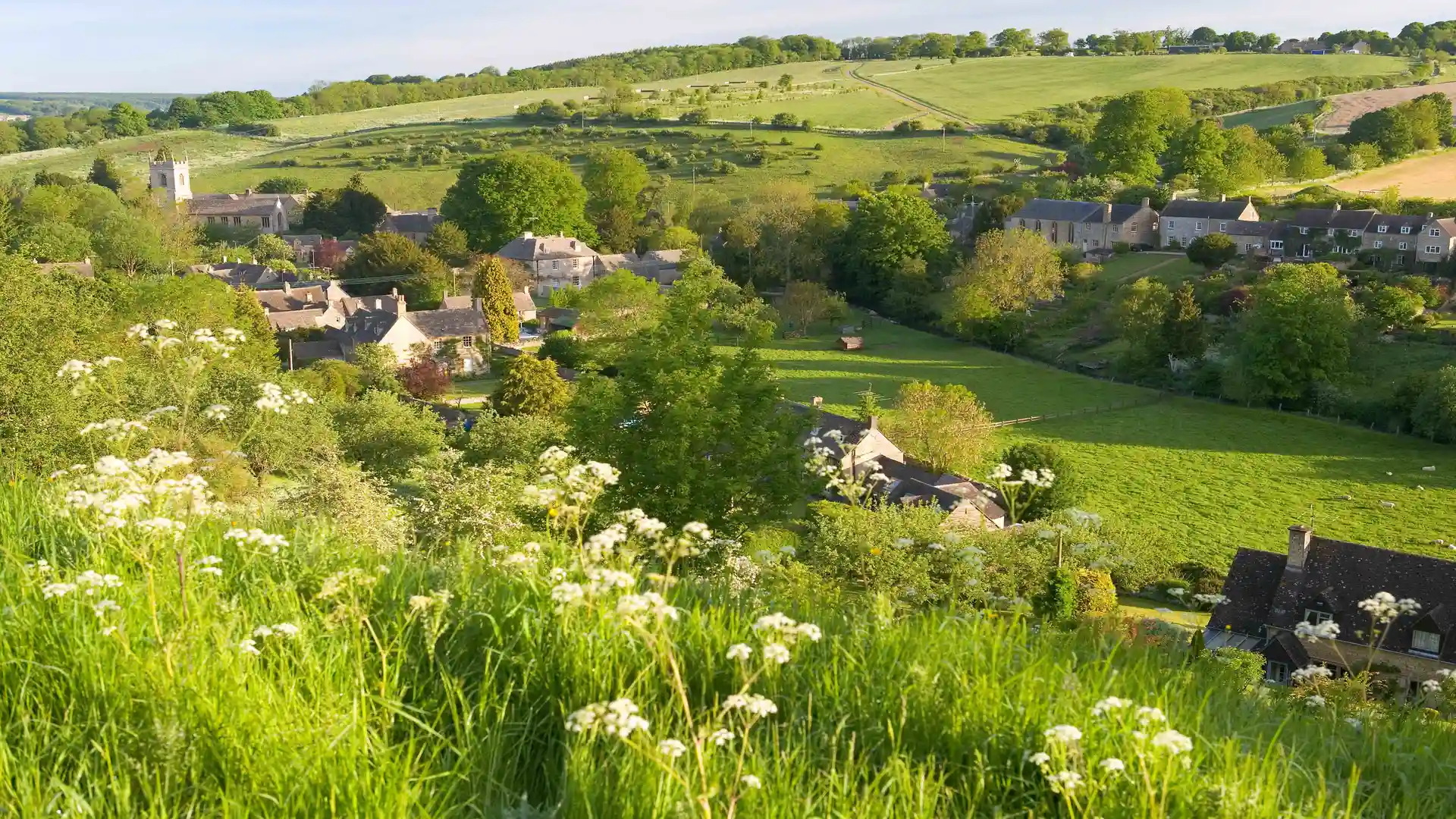
Rolling Cotswold uplands, wooded escarpments, and broad floodplains between the Severn Vale and the upper Thames
Gloucestershire is a county of limestone hills, wooded valleys, river floodplain, and pasture in South West England. Walking routes cross the Cotswolds National Landscape and follow the Cotswold Way, Severn Way, Winchcombe Way, and Gloucestershire Way, linking places such as Cheltenham, Stroud, Cirencester, Tewkesbury, and Gloucester across escarpment paths, farmland tracks, and riverside ground.
Much of the terrain is firm and gently rolling underfoot. Field paths, bridleways, woodland tracks, and canal towpaths allow steady progress with moderate gradients, while short, steeper climbs occur along the Cotswold escarpment.
The landscape shifts between areas. The eastern side is higher and mainly limestone with dry valleys and beech woodland, the Severn Vale is lower and flatter with pasture and wet meadows, and the Forest of Dean to the west becomes more wooded with mixed forest and enclosed tracks.
Towns and villages are frequent along valley floors and ridge lines, creating regular access points for shorter walks and longer point-to-point routes across connected countryside.
Trails and Routes Through Gloucestershire
Cotswold Way
A National Trail following the limestone escarpment between Chipping Campden and Bath with elevated views and hilltop villages.
Severn Way
A long-distance riverside route following the River Severn through Tewkesbury and Gloucester on towpaths, levees, and floodplain paths.
Winchcombe Way
A circular multi-day route linking Winchcombe with surrounding valleys, hills, and villages along the northern Cotswolds.
Gloucestershire Way
A county-length route crossing woodland, farmland, and hills between Chepstow and Tewkesbury.
Thames and Severn Canal Towpath
Traffic-free paths along the restored canal corridor between Stroud and the Thames basin.
Walking Character
• Limestone hills and escarpment edges
• Beech woodland and pasture
• River valleys and floodplain meadow
• Field paths and bridleways
• Canal and riverside towpaths
• Frequent villages and market towns
• Rural and inland
Check availability
Select your dates to check current availability and prices.