
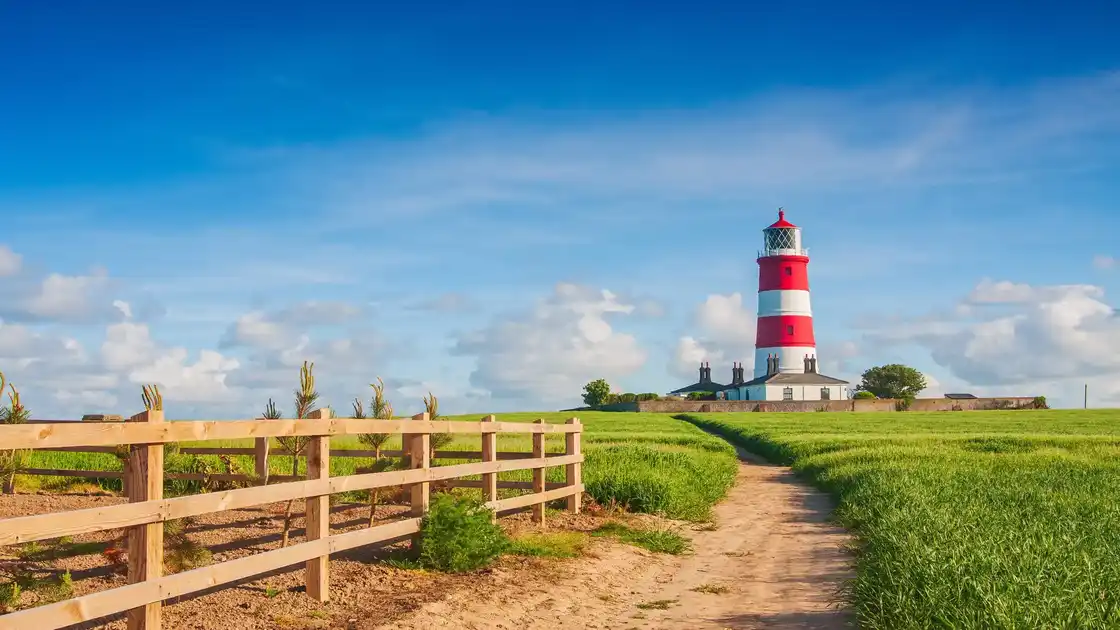
Happisburgh Lighthouse, coastal cliffs and the Norfolk Coast Path
Happisburgh is a coastal village on the Norfolk Coast, situated south-east of Mundesley and north of Sea Palling. Known for its distinctive red-and-white striped lighthouse, sandy beach and rapidly changing coastline, the village provides a base for exploring the coastal landscapes and walking routes of the Norfolk Coast Path.
One of the village's most recognisable landmarks is Happisburgh Lighthouse, built in 1790 and standing above the surrounding coastline. The lighthouse remains an important feature of the village, with its distinctive striped tower visible across the nearby countryside. The surrounding area offers opportunities for short walks and views towards the North Sea.
Below the village, Happisburgh Beach stretches along a coastline shaped by erosion, with sandy areas exposed at low tide beneath soft cliffs. The village is particularly known for the effects of coastal erosion, which have changed the shoreline and affected buildings, roads and access routes over time. Visitors should follow local signs and keep away from unstable cliff edges.
The Norfolk Coast Path passes through the Happisburgh area, connecting coastal settlements towards Mundesley to the north-west and Sea Palling further south-east. Walkers can explore sections of the route through farmland, coastal paths and villages, with views across the North Sea. Because of ongoing coastal erosion, the route may be subject to diversions or changes in access.
Happisburgh is also known for its archaeological significance, with discoveries along the coastline providing evidence of some of the earliest human activity in Britain. Ancient footprints and stone tools uncovered in the area's coastal sediments have contributed to our understanding of early human occupation, although the exposed archaeological deposits are vulnerable to erosion and changing sea conditions.
Beyond the immediate coastline, the surrounding countryside offers quiet lanes, agricultural landscapes and public footpaths connecting neighbouring villages. Further south-east, the beaches around Sea Palling provide additional opportunities for coastal walks, while the wider Norfolk coast offers a changing landscape of dunes, cliffs, beaches and coastal settlements.
For visitors staying in Happisburgh, the village offers access to Happisburgh Lighthouse, the beach and the Norfolk Coast Path, with accommodation in and around the surrounding area for walking breaks and exploring the Norfolk coastline.
Check availability
Select your dates to check current availability and prices.
