
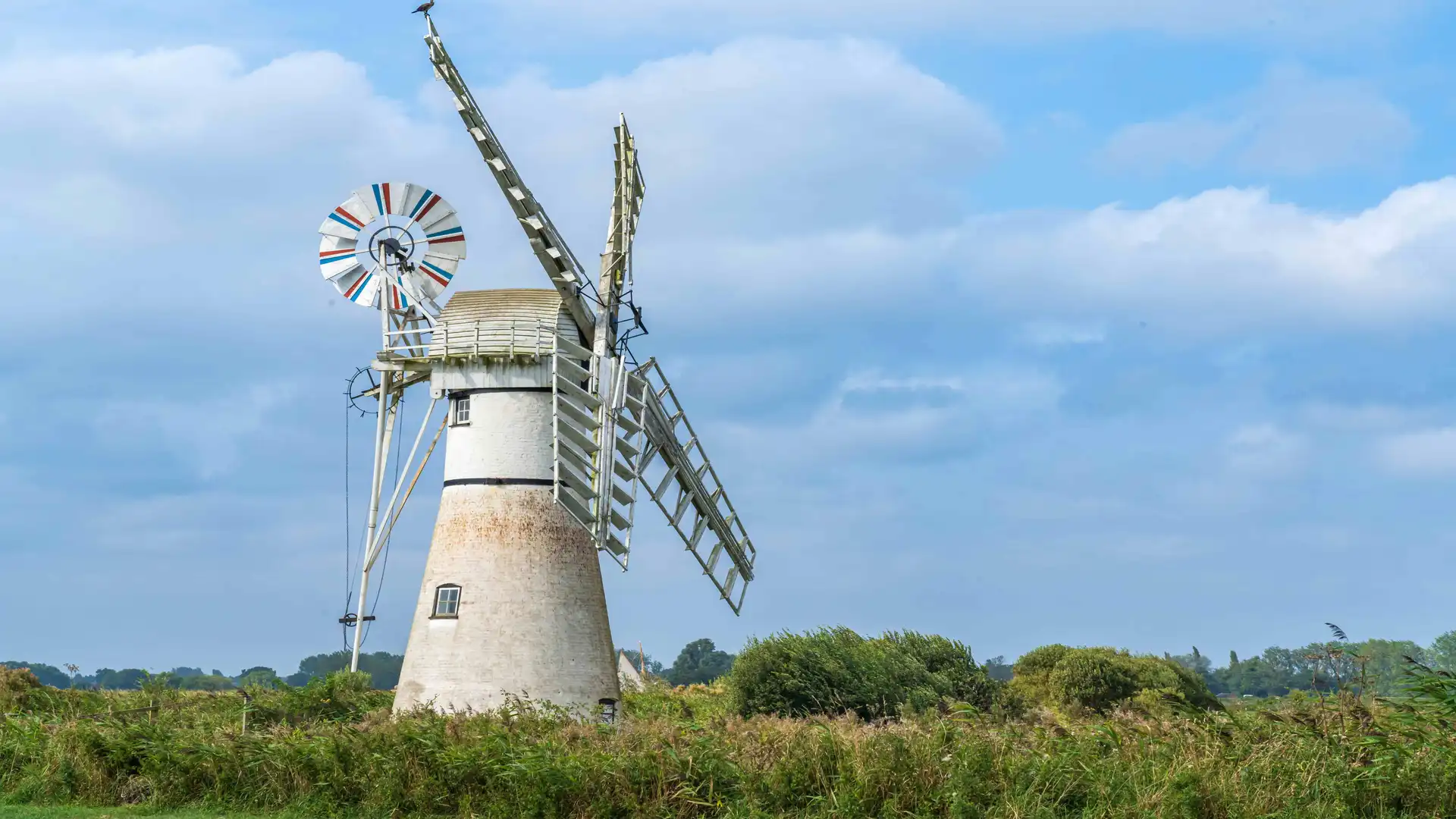

Thurne Windmill on the Weavers’ Way
Few landmarks on the Weavers' Way are as instantly recognisable as Thurne Windmill.
We first encountered it while exploring sections of the route between Potter Heigham and Great Yarmouth as part of our ongoing research into Norfolk's long-distance trails, landscapes, and future journey opportunities. Rising above the marshes beside the River Thurne, the white tower appears long before you reach it, standing out against the flat horizons and wide skies of the Norfolk Broads.
The Weavers' Way passes through a landscape shaped by water. Rivers, drainage channels, grazing marshes, reedbeds, and broad open skies define much of the route through Broadland. Thurne Windmill sits at the centre of that story.
Built in 1820, the mill was one of many drainage mills used to manage water levels across the low-lying marshes. Without structures like these, much of the surrounding land would have been unsuitable for farming. Today, the windmill remains one of the most visible reminders of how people have worked with the landscape for generations.
What makes the approach particularly memorable is the sense of openness. The paths leading towards Thurne often follow raised embankments beside rivers and drainage channels, providing uninterrupted views across the marshes. The landscape can feel almost limitless, especially when changing weather and shifting light move across the Broads.
During our visits, the windmill seemed to change character with the seasons. Summer brought sailing boats and vibrant reedbeds. Autumn turned the marshes shades of gold and bronze. In winter, the structure stood stark against wide grey skies, while spring brought fresh growth and increasing bird activity across the surrounding wetlands.
The wider area forms part of the Broads National Park, one of Britain's most distinctive wetland landscapes. Wildlife is never far away. Marsh harriers, geese, waders, and countless smaller species use the marshes, reedbeds, and waterways that surround the route.
Exploring places like Thurne helps explain why the Weavers' Way offers such a different experience from many other long-distance routes. Rather than climbing hills or crossing dramatic uplands, the trail follows a landscape shaped by water, engineering, wildlife, and centuries of human activity.
As Self Guided Travel continues developing route guides and future journeys across Norfolk, Thurne Windmill remains one of the landmarks we return to most often.
Not simply because it is photogenic, but because it captures something essential about Broadland itself.
The water, the marshes, the wildlife, and the history all seem to meet here beneath the turning sails.