

Discover the Cumbria Way
We arrived in Ulverston by train the afternoon before setting out on the Cumbria Way.
Like many journeys, the route began long before the first step on the trail itself. The train carried us north through increasingly rural landscapes before reaching the southern edge of Cumbria, where Ulverston would provide the starting point for the days ahead.
The following morning, we left the town and joined the route as it headed north towards Coniston and the Lake District.
One of the first things that stood out was how quiet it felt.
The Lake District is often associated with busy lakeshores, crowded viewpoints, and well-known mountain routes. Yet the Cumbria Way seemed to offer something different. Within a relatively short distance of leaving Ulverston behind, the crowds began to disappear and the landscape settled into a slower rhythm.
Fields replaced streets. Dry stone walls crossed the hillsides. Small farms sat quietly beneath the fells. The route felt less like a tourist trail and more like a journey through a working landscape.
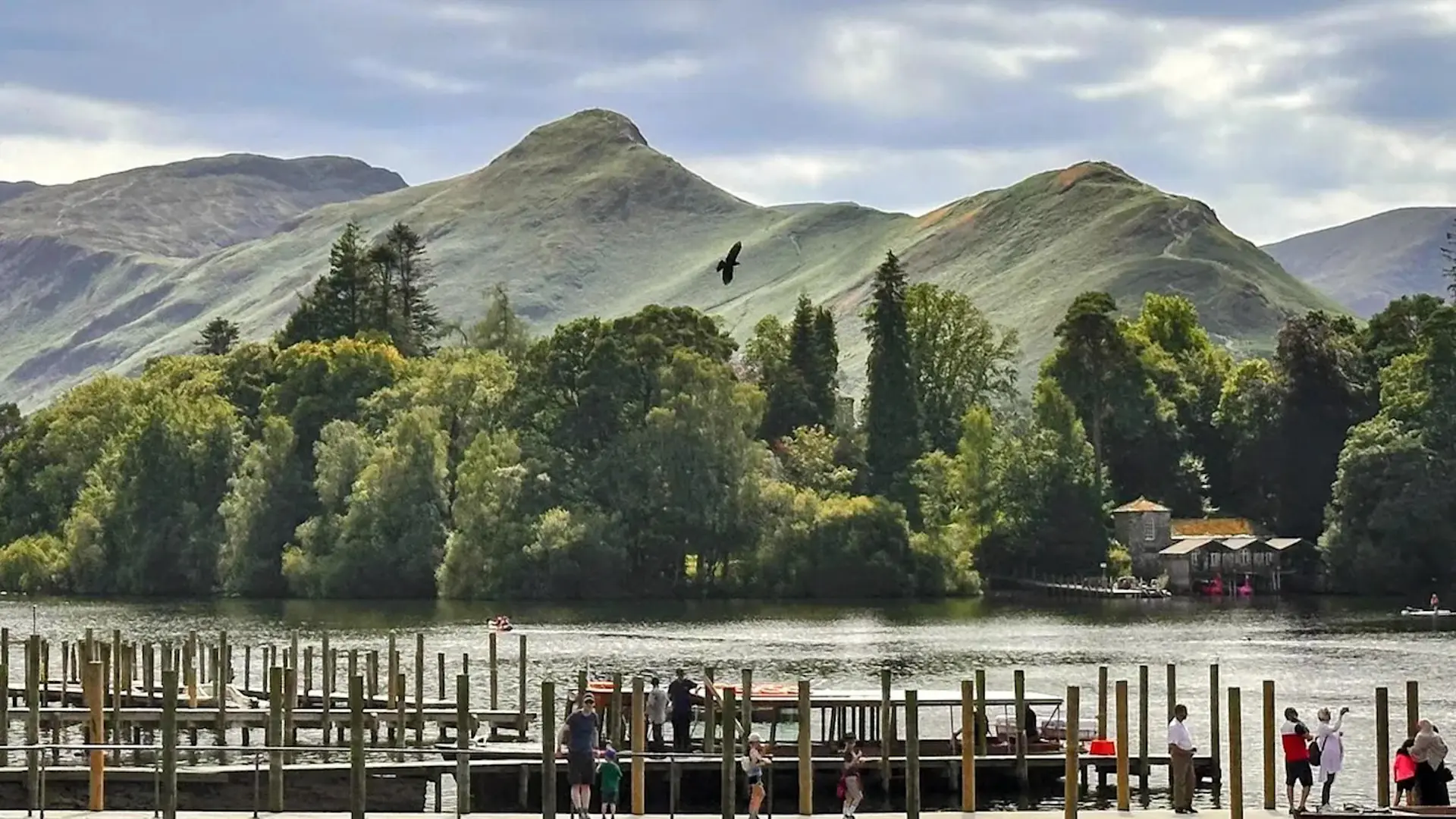
As the day progressed, views towards the higher fells gradually began to appear. The mountains were never far away, yet the route itself remained calm and unhurried, following paths, tracks, and quiet lanes towards the heart of the Lake District.
It was an unexpected contrast.
One of England's most visited national parks surrounded us, yet much of the walking felt remarkably peaceful.
Perhaps that's one of the Cumbria Way's greatest strengths. Rather than focusing solely on the most famous lakes and summits, it threads together valleys, villages, woodland, rivers, and lesser-known corners of the landscape, revealing a quieter side of Cumbria.
By the end of the first day, it already felt clear that this would be a very different experience from many of the Lake District walks we had done before.
Not less dramatic.
Just quieter.