
Cart
0
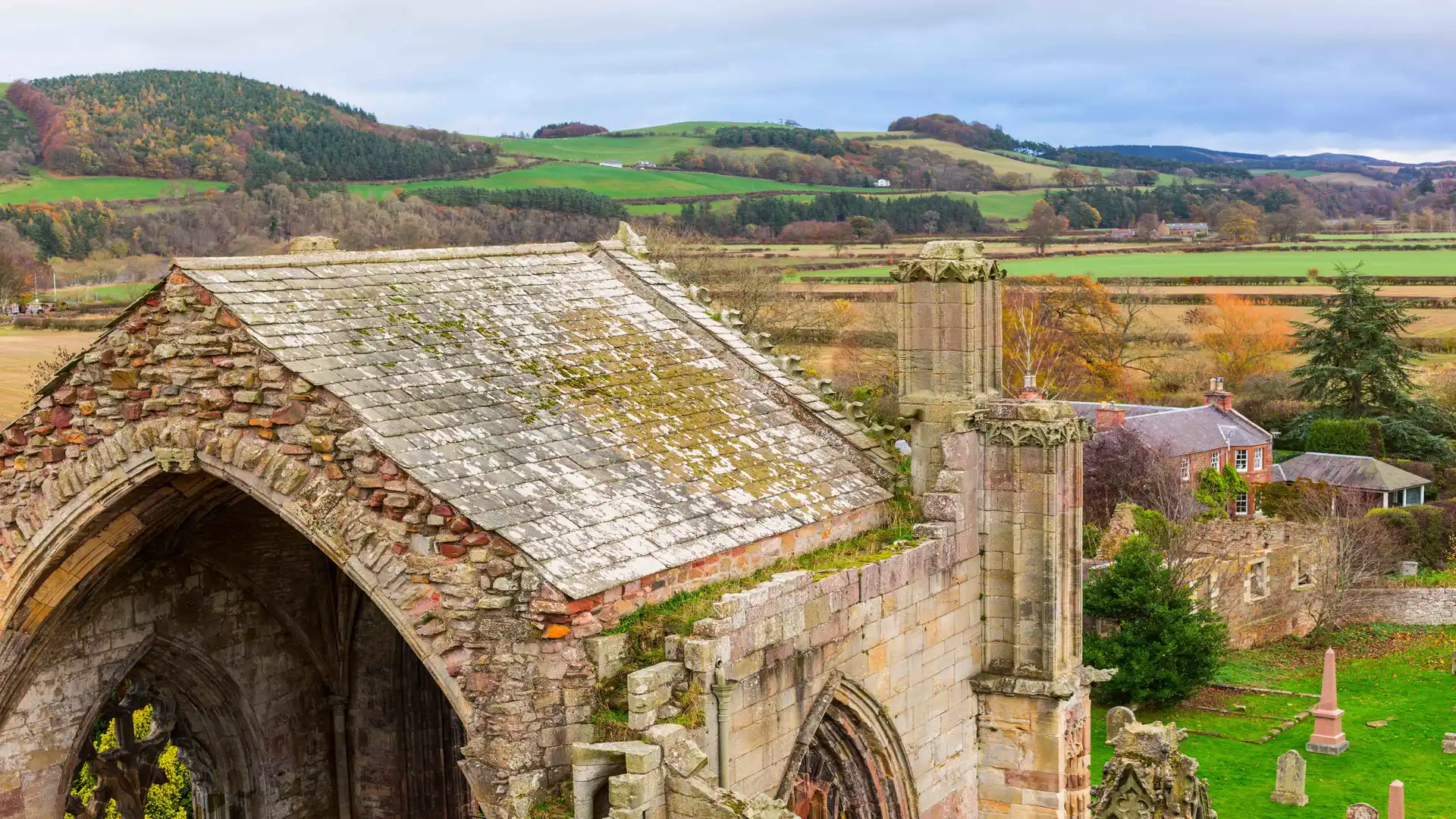
View over Melrose Abbey in the Scottish Borders, with stone ruins, nearby cottages, and rolling farmland under a soft autumn sky.

The Scottish Borders – Rolling Hills, Abbey Trails, and Riverside Paths

Soft uplands, river valleys, and historic paths shaped by story, stone, and open skies

Rolling hills and broad river valleys shape the Scottish Borders, where long-distance trails such as the Southern Upland Way and Borders Abbeys Way link historic towns including Melrose, Kelso, and Jedburgh. The Pennine Way reaches its northern end at Kirk Yetholm, anchoring the region within a wider network of self-guided routes that move easily between hill, valley, river, and settlement.

This is a meeting place between Lowland farmland and the first rise of the Southern Uplands. Rounded hills roll away from wide river valleys, hedgerows and woodland soften the slopes, and old drove roads and estate tracks provide natural lines across the land. Routes feel open and spacious rather than remote, with long views across pasture, moor, and distant ridgelines.

Much of the region’s character comes from its deep history. Medieval abbeys, castles, and Roman remains appear directly beside paths, often forming natural waypoints along the route. Around Melrose Abbey, Dryburgh Abbey, Jedburgh Abbey, and Kelso Abbey, riverside and farmland trails link these landmarks into continuous journeys where landscape and heritage sit side by side.

Water shapes many walks. The River Tweed and its tributaries guide gentle riverside paths through woodland, meadow, and small towns, offering steady, low-level routes that can be combined into longer days. Hills such as the Eildon Hills rise above the valleys, providing short climbs and wide views that contrast with the calmer ground below.

Gradients are generally moderate and distances flexible. Villages and market towns appear regularly, creating natural pauses between stretches of open country. Compared with more mountainous regions, progress here feels measured and accessible, making it easy to link routes together over several days without committing to demanding terrain.

This is a region best understood step by step: along quiet rivers, over rounded hills, and between historic towns where story and landscape remain closely connected.

Routes & Landscapes Across the Region

Sections of the Southern Upland Way cross the Borders between Galashiels, Melrose, Traquair, and Innerleithen, following moorland ridges, forest tracks, and open hill country.

The Borders Abbeys Way forms a circular route linking the four great abbeys at Melrose, Dryburgh, Jedburgh, and Kelso via farmland, riverside paths, and quiet lanes.

Routes around the Eildon Hills combine short hill climbs with Tweedside walking, passing woodland, archaeological sites, and wide lowland views.

Additional valley paths follow the Rivers Tweed and Teviot, connecting towns and countryside into easily combined day walks.

Areas of the Scottish Borders

Teviotdale, Tweeddale, the Eildons, and the Cheviot fringe each offer distinct combinations of hill, farmland, woodland, and river valley, providing natural bases for longer regional journeys.

Beginning to explore the Borders

The Scottish Borders form a connected network of trails, river paths, and historic settlements rather than a single destination. Following these routes reveals a landscape shaped by agriculture, heritage, and time, where travel feels calm, spacious, and closely tied to place.

Frequently Asked Questions

What defines walking in the Scottish Borders?

Rolling hills, riverside trails, historic abbey routes, and long-distance paths linking towns and villages.

Are there long-distance routes in the region?

Yes. The Southern Upland Way, Borders Abbeys Way, and the Pennine Way provide multi-day walking options.

Is the terrain challenging?

Most terrain is gentle to moderate, with steady climbs rather than steep ascents, making it accessible for longer days on foot.

Are there protected or historic landscapes?

Yes. The region includes extensive river valleys, upland habitats, and nationally important historic sites such as the Borders abbeys.

Can routes be linked together?

Yes. Trails frequently pass through towns and villages, allowing flexible itineraries built from shorter connected sections.