
Everyday life along the River Stour
One of the things that stood out while exploring Dedham Vale wasn't the landscape itself, but the way everyday life continues within it.
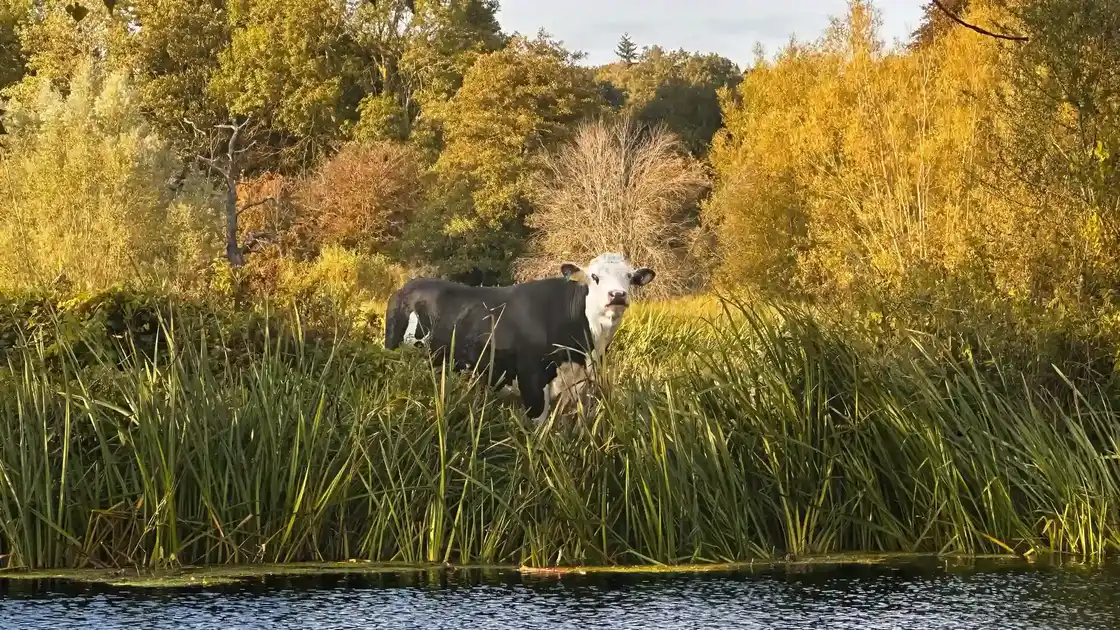
It's easy to think of a protected landscape as somewhere set aside to visit. Spend time walking beside the River Stour and a different picture emerges. The fields are still worked. Cattle graze beside the water. Boats move along the river. Footpaths cross farmland between villages that have grown around the valley over centuries.
We spent part of the day following riverside paths and sections of the Stour Valley Path and St Edmund Way. Rather than looking for particular viewpoints or landmarks, much of the time was spent following the river and seeing how the paths, villages and surrounding countryside fit together.
Following the River Stour
The river connects much of the landscape.
Footpaths follow its banks. Fields run down towards the water. Villages sit close to historic crossing points, while meadows and grazing land occupy the flatter ground beside the river.
In autumn, the landscape becomes quieter. Reeds line the water, leaves begin to turn and cattle remain in the riverside meadows as the paths pass between fields and woodland.
There is no single moment when Dedham Vale suddenly reveals itself. The character of the place comes from these smaller elements and the way they sit together along the river.
Walking through a working landscape
What makes Dedham Vale interesting on foot isn't difficult terrain or dramatic changes in scenery. It is the relationship between the paths and the landscape they cross.
A footpath follows a field boundary. A gate leads into grazing land. A village appears beyond the trees. The river disappears from view and then returns further along the path.
These aren't separate attractions. They are parts of the same working landscape.
That becomes particularly noticeable when walking rather than simply visiting an individual place. Moving slowly through the valley gives you time to see how farming, settlement, wildlife and access coexist within a protected landscape.
Long-distance paths through Dedham Vale
Both the Stour Valley Path and St Edmund's Way pass through the wider landscape around the River Stour.
St Edmund's Way continues from Manningtree through Dedham Vale and across Suffolk towards Bury St Edmunds, connecting river valleys, villages, farmland and historic places along the way.
The paths provide a way of experiencing Dedham Vale as a connected landscape rather than a collection of individual destinations.
But the thing I remember most from that autumn day wasn't a particular landmark or section of trail.
It was the river, the fields, the cattle and the paths between them, and the sense that everyday life was simply continuing around us.
Sometimes the most interesting part of a journey is watching a place be itself.