
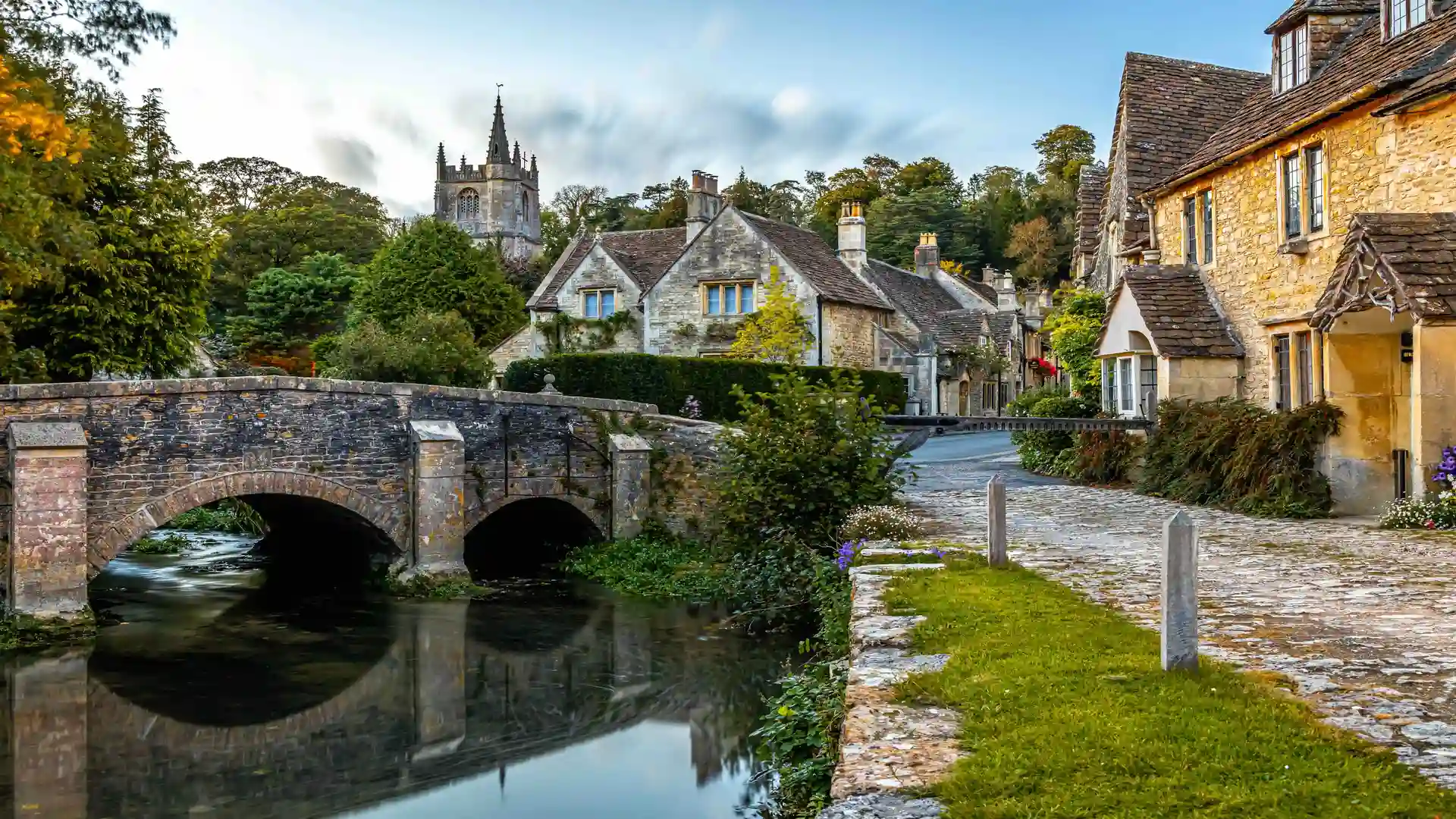
Chalk downland, broad valleys, and open plateau ground across the western edge of southern England.
Wiltshire is a county of chalk downland, open plain, and river valleys in South West England. Walking routes cross the Stonehenge, Avebury and Associated Sites UNESCO World Heritage Site and follow the Ridgeway and the Wessex Ridgeway, linking places such as Salisbury, Marlborough, Devizes, Bradford-on-Avon, and Swindon across chalk ridges, broad vales, and wide open plateau ground.
Much of the terrain is firm and generally rolling underfoot, with long stretches on chalk tracks, field-edge paths, byways, canal towpaths, and bridleways. Gradients are often moderate rather than sustained, with shorter climbs onto downs and ridgelines followed by longer, easier descents into valleys.
The landscape shifts between areas. North and east Wiltshire include chalk scarp and downland around the Marlborough Downs and Avebury, while central areas open out across Salisbury Plain. West Wiltshire becomes more broken by vales and river corridors around places such as Bradford-on-Avon and the western edge of the county.
Towns and villages are scattered rather than continuous, creating clear access points for shorter walks and longer point-to-point routes, with regular road and rail links on the county edges and stronger gaps across the central plain.
Trails and Routes Through Wiltshire
The Ridgeway
National Trail route starting at Avebury in Wiltshire and running north-east along chalk ridges toward Ivinghoe Beacon, with the Wiltshire section centred on the Avebury area and adjacent downland.
Wessex Ridgeway
Long-distance route running from Marlborough through Wiltshire and onward toward the Dorset coast, following chalk downland, the Vale of Pewsey, and the northern edge of Salisbury Plain.
White Horse Trail
Long-distance Wiltshire route linking chalk hills and downland sites via places including Pewsey, Marlborough, Devizes, and Westbury, with repeated climbs onto open scarp and ridge ground.
Kennet and Avon Canal Towpath
Level towpath walking along the canal corridor through west and north-east Wiltshire, linking towns and villages on a continuous waterside line between the Avon Valley and the Kennet Valley.
Walking Character
- Chalk downs and escarpments
- Open plain and wide plateau ground
- River valleys and lowland corridors
- Byways, bridleways, and chalk tracks
- Canal towpaths on level ground
- Settlements spaced between open areas
- Predominantly inland routes with big-sky visibility across higher ground
Check availability
Select your dates to check current availability and prices.