



Historic streets, riverside walks and the Stour Valley
Sudbury is a historic market town in southern Suffolk, set beside the River Stour and surrounded by the meadows and countryside of the Stour Valley. Known for its medieval wool trade, connections with the artist Thomas Gainsborough and traditional market-town character, Sudbury combines historic streets, independent shops, cultural attractions and accessible countryside. Its riverside setting makes it an appealing destination for exploring on foot, with places to stay in the town and nearby villages.
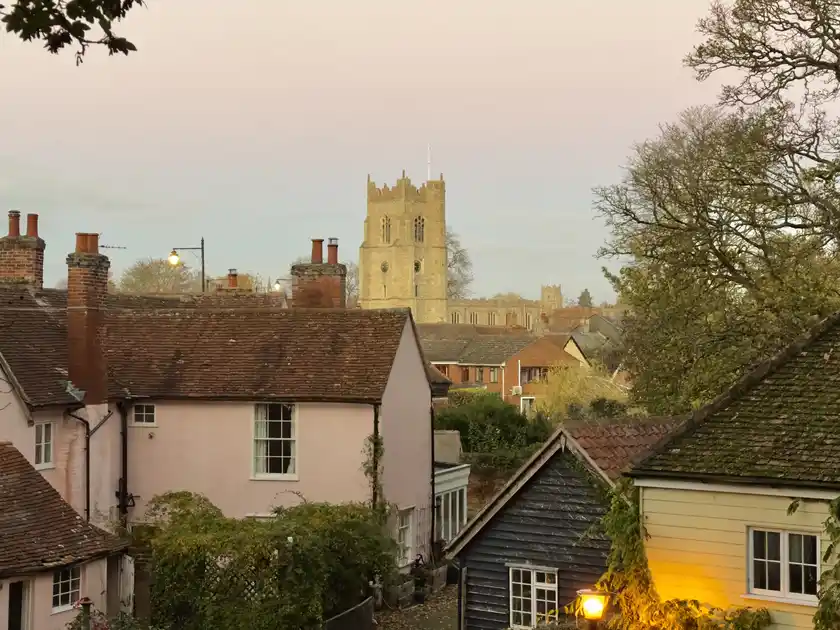
At the heart of Sudbury, Market Hill and the surrounding streets reflect centuries of trade and settlement. Historic buildings, traditional shopfronts, independent businesses and cafés create a lively town centre, while St Peter's Cultural Venue, housed within the former medieval Church of St Peter, stands as a reminder of the wealth generated by the cloth industry. The building now hosts exhibitions, performances and community events, with its historic architecture providing a distinctive landmark at the centre of the town. Nearby streets and smaller courtyards reveal Sudbury's development from a prosperous medieval settlement into a busy Suffolk market town.
One of Sudbury's most important cultural attractions is Gainsborough's House, the birthplace of the eighteenth-century artist Thomas Gainsborough. The museum combines his childhood home with galleries dedicated to his life, work and artistic legacy, including exhibitions exploring British art and the landscapes that inspired him. Gainsborough's paintings frequently reflected the countryside of Suffolk, and a visit provides an opportunity to understand the relationship between the artist, his hometown and the surrounding Stour Valley. The museum's historic garden and contemporary gallery spaces add to its appeal as a destination in its own right.
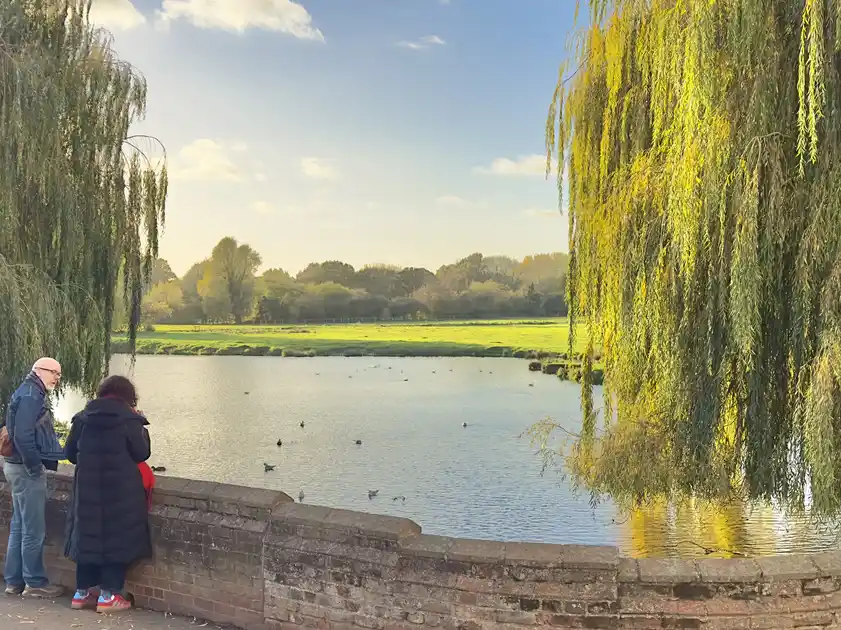
Beyond the town centre, Sudbury Water Meadows provide one of the most distinctive landscapes in the area. These traditional grazing meadows follow the River Stour around the western edge of the town, with footpaths crossing open grassland, riverside scenery and historic floodplain landscapes. The meadows have remained an important part of Sudbury's setting for centuries, and their open views, grazing cattle and changing seasonal character offer a peaceful contrast to the streets nearby. Local footpaths and riverside routes provide opportunities to explore the meadows before returning towards the town centre.
The River Stour is central to Sudbury's identity, shaping both its historic development and the landscape that surrounds it. Riverside paths lead past bridges, meadows and quieter stretches of water, while the town's connections with the river reflect its former importance for trade and transport. The Stour Valley Path provides opportunities for longer walks through the surrounding countryside, linking riverside settlements, farmland and historic villages along the valley. The Gainsborough Trail offers additional circular walking routes through the town's surrounding countryside, including woodland, riverside paths and open landscapes.
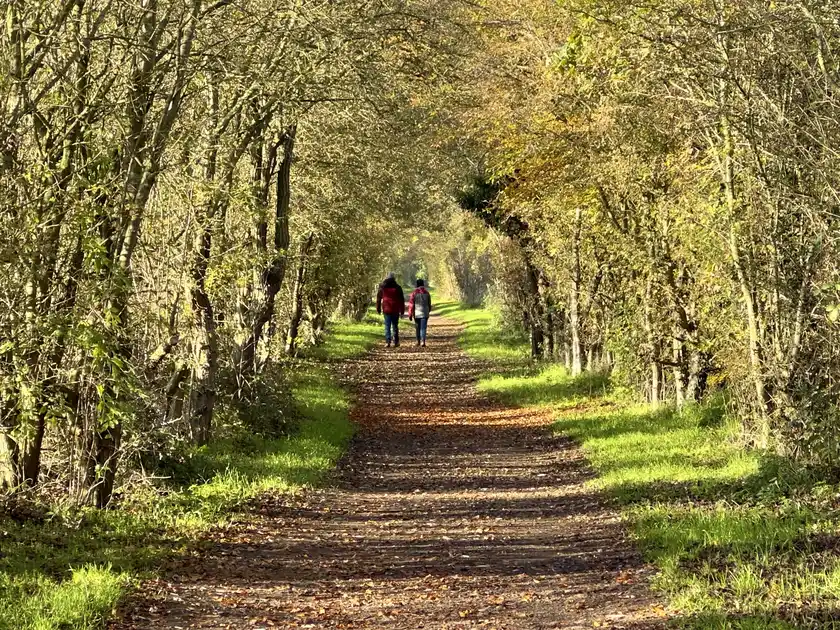
To the north, the Valley Walk, Long Melford to Sudbury follows a former railway corridor between the town and the historic village of Long Melford. The route passes through a mixture of woodland, open countryside and former railway landscapes, providing a relatively gentle walking connection between two of southern Suffolk's most interesting settlements. At Long Melford, visitors can explore Long Melford Green, Holy Trinity Church, Melford Hall and Kentwell Hall, with traditional pubs, restaurants and independent shops along the village's historic Hall Street.
Sudbury also offers opportunities to discover the wider landscapes and historic settlements of southern Suffolk. Nearby Lavenham is celebrated for its remarkable collection of medieval timber-framed houses, Lavenham Guildhall and historic village streets, while Long Melford provides a contrasting setting of grand Tudor houses, an expansive village green and one of Suffolk's finest medieval wool churches. Further along the valley, Dedham Vale National Landscape is known for its river scenery, historic villages and countryside associated with John Constable. The St Edmund Way provides another walking connection through this part of Suffolk, linking historic settlements and rural landscapes.
The town's independent shops, cafés, restaurants and traditional pubs provide plenty of opportunities to pause between exploring its historic streets and surrounding countryside. Sudbury's market-town character is particularly evident around Market Hill and the adjoining streets, where local businesses sit alongside historic buildings and cultural attractions. The combination of Gainsborough's House, riverside scenery and accessible countryside makes it possible to enjoy a varied visit without travelling far from the town centre.
Sudbury is particularly well suited to a short stay, with its cultural attractions, historic streets and riverside walks offering plenty to explore over two or three days. Visitors can spend a morning discovering Gainsborough's House and the town centre, follow paths through Sudbury Water Meadows during the afternoon, and enjoy an evening in one of the town's restaurants or traditional pubs. A second day offers opportunities to follow the Valley Walk, Long Melford to Sudbury, explore the Stour Valley Path or visit the medieval streets of Lavenham. With its mixture of art, history, countryside and local hospitality, Sudbury provides an appealing base for discovering southern Suffolk.
For visitors staying in Sudbury, The Mill Hotel Sudbury offers riverside accommodation beside the River Stour, overlooking the open landscape of Sudbury Water Meadows. Set within a converted historic mill, the hotel combines guest rooms, restaurant dining and views across the surrounding countryside, while the town's historic centre and Gainsborough's House are within walking distance. Its setting makes it an appealing base for exploring Sudbury, following the Stour Valley Path and discovering the surrounding Stour Valley.
Featured Stay

The Mill Hotel Sudbury
Stay at The Mill Hotel Sudbury, a restored historic watermill beside the River Stour, with comfortable bedrooms, riverside restaurant dining and a terrace overlooking Sudbury Water Meadows, just a short walk from the town's historic centre.
Check availability
Select your dates to check current availability and prices.

