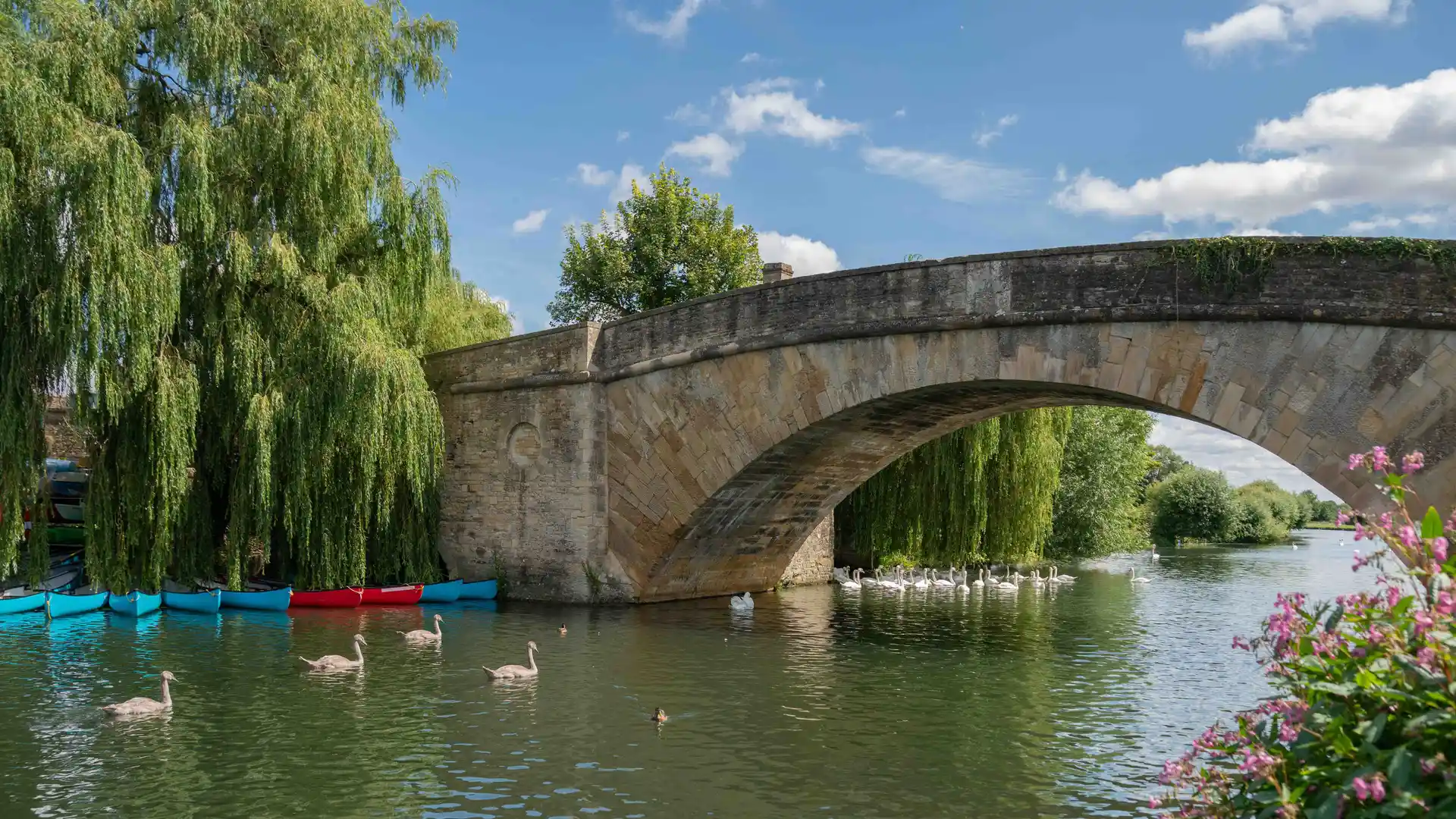
Halfpenny Bridge across the River Thames, at Lechlade, Gloucestershire, England, United Kingdom

Thames Path (Cotswolds) – Walking the River from Its Source

Type of trail?
National Trail
Is it for me?
Easy-going long-distance walk
Gentle terrain with minimal ascent, well suited to first-time long-distance walkers or those looking for a calm, steady route.
What will I see?
River meadows and water meadows
Open farmland and hedged fields
Historic stone villages and market towns
Locks, weirs, and quiet backwaters
Woodland stretches and grazing pasture
College meadows and riverside paths
What’s the vibe?
Peaceful and steady
Green and pastoral
Rural and reflective
Historic and place-led
Calm and unhurried

Meadows, stone villages, and the quiet beginnings of England’s most familiar river

The Thames Path (Cotswolds Section) is a long-distance self-guided walking route following the young River Thames from its source near Kemble through Gloucestershire and into Oxfordshire, linking gentle routes, landscapes, and places as the river gathers strength across meadowland and farmland. This opening stretch of the National Trail traces the river’s earliest course through the Cotswolds before it broadens into the Thames Valley.

Walking here is defined by ease and continuity. The terrain is largely flat, with grassy banks, towpaths, and riverside tracks allowing steady progress without effort. In places the river is little more than a stream, crossing fields and water meadows before slowly widening, shaping both the direction of travel and the rhythm of the day.

The character of the landscape is distinctly rural. Dry-stone walls, hedgerows, and honey-coloured stone villages sit lightly within open countryside. Small towns such as Cricklade and Lechlade appear at natural intervals along the water, connected by locks, bridges, and quiet lanes that reflect centuries of river use and settlement.

As the route approaches Oxfordshire, the valley opens further. Meadows widen, backwaters and grazing fields become more frequent, and the Thames begins to feel recognisably broad and slow-moving. The final miles into Oxford pass college meadows and historic bridges, marking a gentle transition from upland countryside toward the river’s larger journey east.

Unlike busier sections closer to London, this stretch feels inward-looking and calm. It is a route shaped by landscape, water, and small settlements — a steady beginning that reveals the Thames at its simplest and most rural.

Trail Overview

Distance
89 miles / 143 km (Thames Head to Oxford)

Typical time on foot
6–8 days (often walked in sections)

Start
Thames Head, near Kemble, Gloucestershire

Finish
Oxford, Oxfordshire

Terrain
Meadows, riverside paths, towpaths, farmland tracks, and quiet lanes

Frequently Asked Questions

How difficult is the Thames Path (Cotswolds Section)?

It is an easy section of the National Trail, with mostly flat ground and well-defined riverside paths suitable for most walkers.

When is the best time to walk the route?

Spring through autumn offers the most reliable conditions, with greener meadows and longer daylight hours.

Can I walk it in shorter sections?

Yes. Towns and villages along the river provide convenient access points for day walks or shorter stages.

Is the route well waymarked?

Yes. The Thames Path is clearly marked with the National Trail acorn symbol throughout.

What kind of places does the trail pass through?

The path links small villages, historic market towns, bridges, and riverside meadows, with Oxford marking the transition toward the wider Thames Valley.