

Clifftops, Surf Beaches, and Characterful Harbours
A dramatic Atlantic stretch of the South West Coast Path through North Devon.
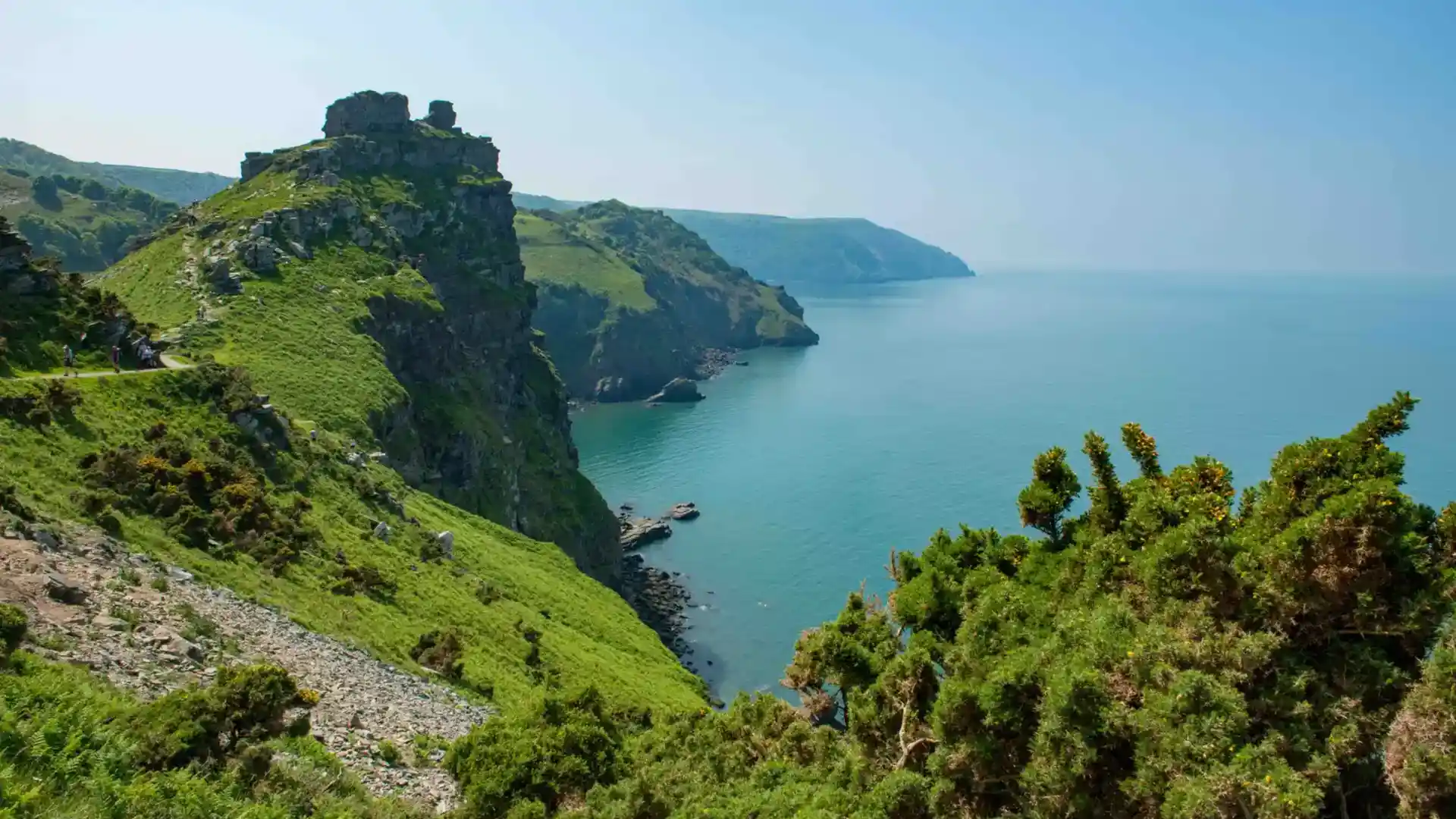
The North Devon section of the South West Coast Path runs from Combe Martin to the Cornwall border at Hartland, covering around 90 miles of rugged clifftops, sweeping bays, and deeply indented coastline. This is one of the most physically demanding and visually striking sections of the trail, ideal for walking holidays that combine dramatic coastal scenery with a strong sense of place.
Much of the route lies within the North Devon Coast National Landscape, formerly designated as an Area of Outstanding Natural Beauty, where high cliffs drop sharply into the Atlantic and long views open across open sea and shifting light. To the east, the trail skirts the edge of Exmoor National Park, linking exposed headlands with wooded combes and steep-sided valleys that cut down from the moorland above.
This stretch of coast is defined by contrast. Walkers pass some of England’s best-known surf beaches — including Woolacombe, Croyde, and Saunton — before climbing back onto narrow clifftop paths that twist and rise relentlessly above the sea. The physical effort is constant, but the rewards are substantial: hidden coves, remote headlands, seabird-rich cliffs, and a feeling of immersion rarely found elsewhere in southern England.
The trail also threads through a series of characterful coastal settlements and historic harbours. Fishing villages such as Clovelly cling to the cliffs, while small ports and estuaries provide natural pauses in the journey. These places reflect North Devon’s long maritime history and offer welcome shelter, food, and accommodation between demanding coastal stages.
Ecologically, the route borders the North Devon UNESCO Biosphere Reserve, where land, sea, and human activity are closely connected. This adds another layer to the walking experience, with wildlife-rich cliffs, dune systems, and tidal estuaries all encountered along the way.
Together, the North Devon coast forms a powerful link between Exmoor’s uplands and Cornwall’s wild Atlantic edge — a section of the South West Coast Path that feels remote, elemental, and deeply shaped by weather, geology, and time.
Trail Overview
- Distance: Approx. 90 miles (145 km)
- Start point: Combe Martin, Devon
- End point: Hartland Quay / Cornwall border
- Time required: 6–10 days (for the section)
- Waymarking: Acorn symbol (National Trail)
- Terrain: Clifftop paths, sandy beaches, estuaries, wooded valleys
- Accessibility: Strenuous in parts; easier beach and estuary options
Explore the Route
Combe Martin to Ilfracombe
A varied opening stretch combining wooded valleys with exposed clifftop paths and wide sea views. Ilfracombe marks a lively stopping point, with a historic harbour, an established art scene, and strong coastal character.
Ilfracombe to Woolacombe & Croyde
One of the standout sections of the entire South West Coast Path, passing golden surf beaches, high cliffs, and sweeping bays. This stretch blends energetic coastal walking with some of North Devon’s most iconic seaside landscapes.
Croyde to Braunton & Saunton Sands
Open coastal walking across expansive beaches backed by Braunton Burrows, a vast dune system within the North Devon UNESCO Biosphere Reserve, known for rare habitats and rich wildlife.
Braunton to Bideford
A gentler section following the Taw and Torridge estuaries, offering flatter walking, wide skies, and excellent birdlife, with historic riverside towns such as Barnstaple and Bideford along the route.
Bideford to Clovelly
Wooded cliffs and secluded bays lead towards Clovelly, a steep, cobbled fishing village where donkeys once hauled goods between harbour and homes, preserving a strong sense of maritime heritage.
Clovelly to Hartland
One of the wildest and most remote stretches of the South West Coast Path, with towering cliffs, exposed headlands, and wave-battered coves leading to Hartland Quay on the edge of Cornwall.
Stay and Explore
- Seaside towns: Ilfracombe, Woolacombe, Bideford
- Surf hubs: Croyde and Saunton Sands (perfect for combining walking and surfing)
- Historic villages: Clovelly (no cars, cobbled lanes), Appledore (maritime charm)
- Nature escapes: Farm stays and B&Bs around Braunton Burrows and the wooded Torridge valley
- Food & drink: Famous for Devon cream teas, fresh seafood, and surf-town cafes
Adventure Highlights
- Wild headlands between Combe Martin and Ilfracombe
- Surf beaches: Woolacombe, Croyde, Saunton Sands
- Braunton Burrows — part of the North Devon UNESCO Biosphere
- Estuary walking along the Taw and Torridge rivers
- Cobblestone village of Clovelly
- Remote cliffs at Hartland Quay
- Wildlife: dolphins, seabirds, orchids, and rare dune species
