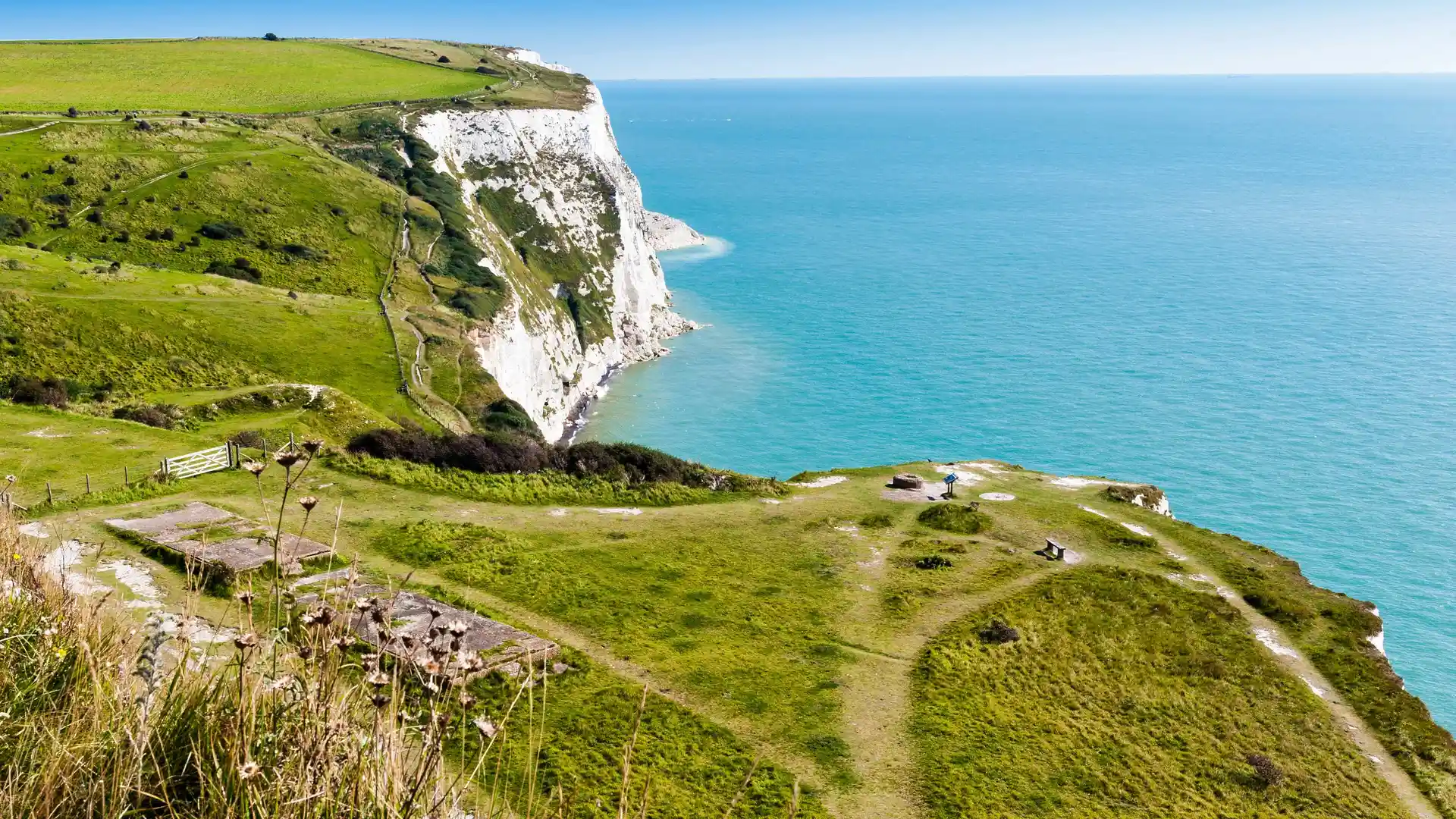
Walking trails along the White Cliffs of Dover, part of the England Coast Path in Kent, with dramatic chalk cliffs overlooking the English Channel.

England Coast Path (South East) – Walking the Shores of Southern England

Type of trail?
National Trail
Is it for me?
Steady long-distance walk
Gentle to rolling terrain with regular ups and downs, suited to walkers comfortable covering consistent daily distances at an unhurried pace.
What will I see?
Chalk cliffs and headlands
Shingle beaches and tidal estuaries
Historic harbours and coastal towns
Open farmland above the coast
Saltmarsh, mudflats, and birdlife
Promenades and quiet coastal paths
What’s the vibe?
Open and sea-shaped
Historic and place-led
Windy and expansive
Calm between towns
Calm and reflective

Chalk cliffs, tidal shores, and a steady walk along England’s Channel coast

The England Coast Path (South East sections) is a long-distance self-guided walking route following the shoreline of Sussex and Kent, linking coastal routes, landscapes, and places between Shoreham-by-Sea, Eastbourne, Rye, Folkestone, Dover, Deal, and the Isle of Thanet. As part of England’s National Trail network, it traces the edge of the English Channel through cliffs, beaches, estuaries, and working harbours, creating a continuous path along one of the country’s most varied coastlines.

Walking here is defined by openness and continuity. Much of the route stays close to the sea on promenades, cliff paths, and shoreline tracks, with generally easy terrain and steady gradients. Progress feels unhurried, shaped more by tide, wind, and distance than by elevation or technical ground.

The character of the coast shifts gradually along the way. In Sussex, the path rises onto chalk headlands and sweeping downland cliffs around the Seven Sisters and Beachy Head, where wide views stretch out across the Channel. Further east, the landscape softens into shingle beaches, estuaries, and nature reserves near Rye Harbour, before becoming more urban and historic around Folkestone, Dover, and Deal.

In Kent, the White Cliffs return, creating some of the most recognisable coastal scenery in England. Old ports, small harbours, and seaside towns sit naturally along the shore, connected by paths that often feel quieter than the roads above. Saltmarsh, mudflats, and tidal inlets attract birdlife and create long stretches where the dominant sounds are wind and water.

Unlike inland or upland trails, the appeal of the England Coast Path lies in its rhythm. It is a route shaped by the meeting of land and sea — a continuous coastal journey where settlements, history, and open shoreline unfold gradually, one headland at a time.

Trail Overview

Distance
Approx. 300+ miles / 480+ km across the South East (walkable in sections)

Typical time on foot
20–25 days for the full South East stretch, though commonly walked in shorter stages

Start
Shoreham-by-Sea, West Sussex

Finish
Isle of Thanet / Thames Estuary, Kent

Terrain
Clifftop paths, promenades, beach sections, estuary tracks, farmland, and seaside towns

Frequently Asked Questions

How difficult is the England Coast Path (South East)?

It is a steady long-distance route, with mostly good paths but regular cliff climbs, varied surfaces, and some exposed coastal sections.

When is the best time to walk the route?

Spring through autumn offers the most reliable weather and longer daylight, though the coast can be walked year-round.

Can I walk it in shorter sections?

Yes. Frequent towns and rail connections make it easy to divide the route into day walks or multi-day stages.

Is the route well waymarked?

Yes. As a National Trail, sections are marked with the acorn symbol and follow the shoreline closely.

What kind of places does the trail pass through?

The path links seaside towns, historic ports, nature reserves, and open coastline, including Eastbourne, Hastings, Rye, Dover, Deal, and Thanet.