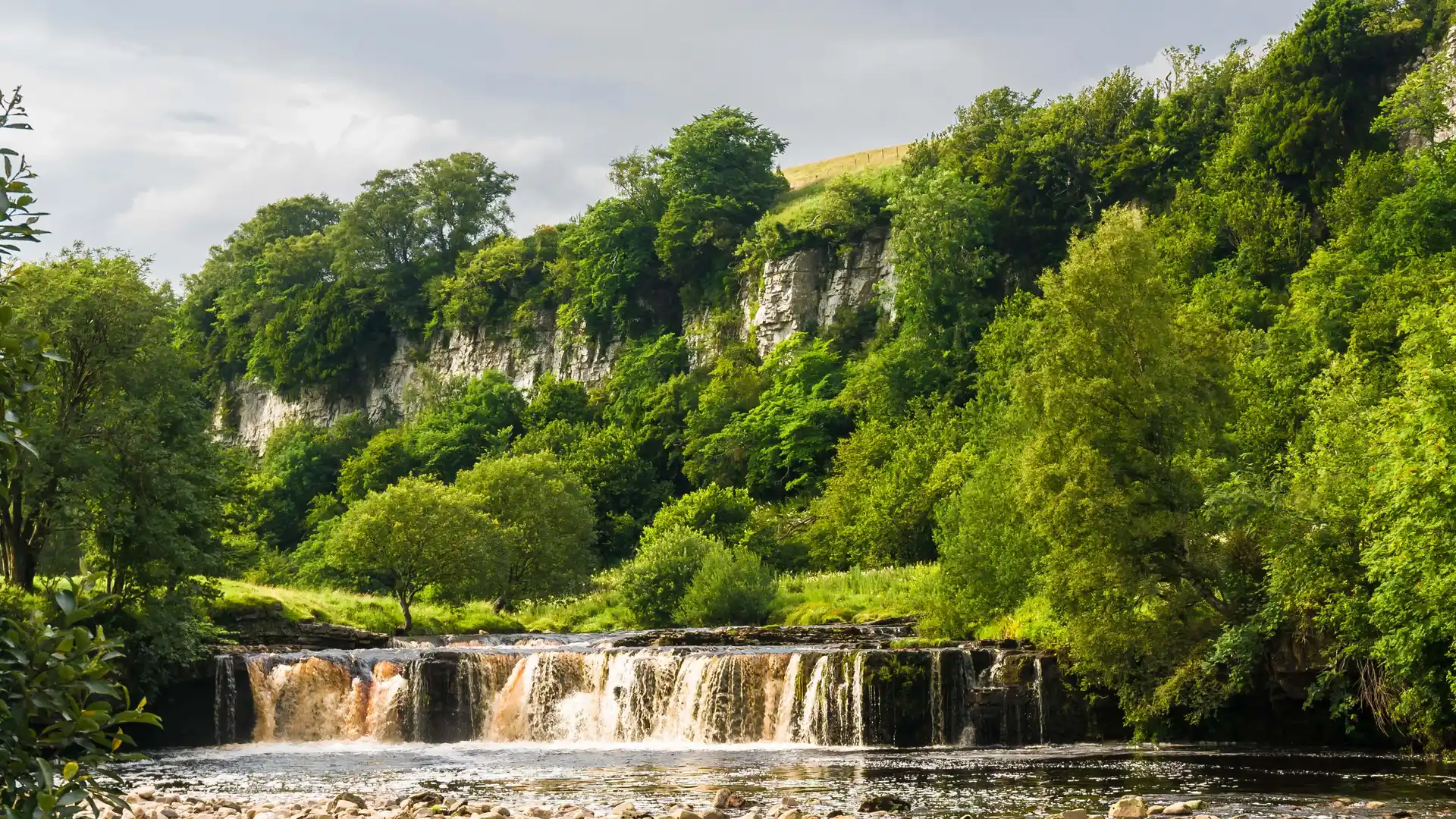
Wain Wath Falls / Wain Wath Falls on the river swale in the Yorkshire Dales National Park, Yorkshire, England.

Coast to Coast Path – Crossing England from Sea to Sea

Type of trail?
National Trail
Is it for me?
Challenging long-distance walk
Long days with sustained elevation change, repeated climbs and descents, and a demanding physical rhythm.
What will I see?
Mountain landscapes and high passes
Deep valleys and lake basins
Open moorland and upland ridges
Limestone dales and pastoral farmland
Rivers, reservoirs, and upland tarns
Historic market towns and villages
What’s the vibe?
Demanding and immersive
Historic and place-led
Remote in places, lively in others
Varied and transitional
Strong sense of achievement

Wainwright’s legacy, wild landscapes, and a journey across England

The Coast to Coast Path is a long-distance walking route crossing northern England from the Irish Sea to the North Sea, running between St Bees on the Cumbrian coast and Robin Hood’s Bay in North Yorkshire. Designed for self-guided travel, the trail links some of England’s most varied routes, landscapes, and places, connecting the Lake District, the Yorkshire Dales, and the North York Moors National Parks through a continuous cross-country journey. Created by Alfred Wainwright in 1973 and now designated as a National Trail, it remains one of Britain’s most recognisable long-distance routes.

Walking the Coast to Coast is defined by contrast and transition. The route moves from steep mountain passes and glacial valleys in the Lake District, across limestone dales and broad river valleys in Yorkshire, before rising again onto open moorland and long ridges in the North York Moors. Rather than following a single landscape type, the trail is shaped by continual change, with each section demanding a different rhythm, pace, and way of moving through the land.

The western stages are the most physically demanding. From the cliffs at St Bees, the route quickly enters the Lake District, crossing remote valleys such as Ennerdale and Borrowdale before climbing high passes around Grasmere, Patterdale, and Shap. Long ascents, rough ground, and exposure define this section.

Further east, the trail softens without becoming easy. In the Yorkshire Dales, wide limestone valleys, high moorland crossings such as Nine Standards Rigg, and long approaches between villages create days defined by distance rather than height. After crossing the Vale of Mowbray, the final stages rise onto the North York Moors, where open heather uplands and long ridge walks lead steadily toward the coast, finishing with a descent into Robin Hood’s Bay.

The appeal of the Coast to Coast Path lies in its completeness. It is a route that crosses England on foot, linking sea to sea through mountains, moors, farmland, and villages, offering a sustained, demanding journey shaped by landscape, weather, and movement rather than any single destination.

Trail Overview

Distance
192 miles / 309 km

Typical time on foot
12–16 days

Start
St Bees, Cumbria (Irish Sea)

Finish
Robin Hood’s Bay, North Yorkshire (North Sea)

Terrain
Mountain paths, high passes, valleys, moorland, farmland, villages, coastal paths

Frequently Asked Questions

How difficult is the Coast to Coast Path?

It is a challenging long-distance route, with sustained elevation change in the Lake District and long, committing days across moorland sections. Good preparation and stamina are essential.

When is the best time to walk the route?

Late spring to early autumn (May to September) offers the most reliable conditions and longer daylight hours.

Can I walk it in shorter sections?

Yes. Many walkers complete the route in stages over multiple trips, often linking sections via public transport or road access points.

Is the route well waymarked?

Yes. As a National Trail, the Coast to Coast Path is now fully waymarked with the acorn symbol, though maps or GPS are still recommended for remote upland sections.

Do I need to book accommodation in advance?

Yes. The route is popular, and accommodation in villages along the way can book up well in advance, particularly during peak summer months.