

The ruins of one of medieval England's greatest abbeys
Bury St Edmunds Abbey stands within Abbey Gardens in the historic centre of Bury St Edmunds, where the remains of a once magnificent Benedictine monastery reveal the town's medieval past. Founded in 1020, the abbey became one of the wealthiest and most influential religious houses in England, attracting pilgrims to the shrine of St Edmund and shaping the development of the surrounding town for more than five centuries.
The abbey was established under King Cnut, who introduced a community of Benedictine monks to care for the shrine of St Edmund, the Anglo-Saxon king of East Anglia who was killed in 869. His remains had been brought to Bury St Edmunds before the monastery was founded, and the growing importance of his shrine transformed the settlement into a major pilgrimage destination. Over time, the abbey acquired extensive estates, privileges and influence across Suffolk and beyond.
During the 11th and 12th centuries, the monastery expanded into an extraordinary complex of buildings, centred on an immense abbey church measuring more than 500 feet in length. Its towers, cloisters, chapter house and domestic buildings reflected the wealth and status of the Benedictine community. The surviving ruins still reveal something of this scale, with substantial stone piers, sections of walls and the remains of the great church standing among the gardens.
Bury St Edmunds Abbey also played a part in events leading to Magna Carta. In November 1214, leading barons gathered at the abbey and pledged to oppose King John's rule, an important episode in the movement that culminated in the sealing of Magna Carta at Runnymede in 1215. The abbey's influence extended well beyond religious life, making it a significant centre of medieval political and social history.
The monastery was dissolved in 1539 during the reign of Henry VIII. Much of the great abbey church and its surrounding buildings were subsequently demolished, with stone reused in buildings across the town. The surviving remains include parts of the church, its monumental west front and sections of the former monastic complex. Nearby, the 14th-century Abbey Gate and 12th-century Norman Tower survive as remarkable reminders of the abbey's former importance.
Today, visitors can explore the ruins on foot through Abbey Gardens, where landscaped paths connect the historic remains with open lawns, gardens and views towards St Edmundsbury Cathedral. The surviving stonework offers opportunities to discover the scale of the medieval monastery, while interpretation around the site helps explain the buildings and the people who lived and worked here. The abbey ruins are freely accessible during the gardens' opening hours.
The abbey is surrounded by some of the most interesting historic streets and landmarks in Bury St Edmunds. Angel Hill, Abbeygate Street and the nearby cathedral provide further opportunities to explore the town's medieval heritage, while independent shops, cafés, restaurants and cultural attractions make it easy to combine a visit to the ruins with a longer stay.
For visitors exploring Bury St Edmunds Abbey and the historic town centre, The Angel Hotel offers accommodation on Angel Hill, directly opposite Abbey Gate and moments from the gardens and medieval ruins. From here, visitors can discover St Edmundsbury Cathedral, explore the surrounding historic streets and enjoy evenings at Abbeygate Cinema or Theatre Royal.
Featured Stay
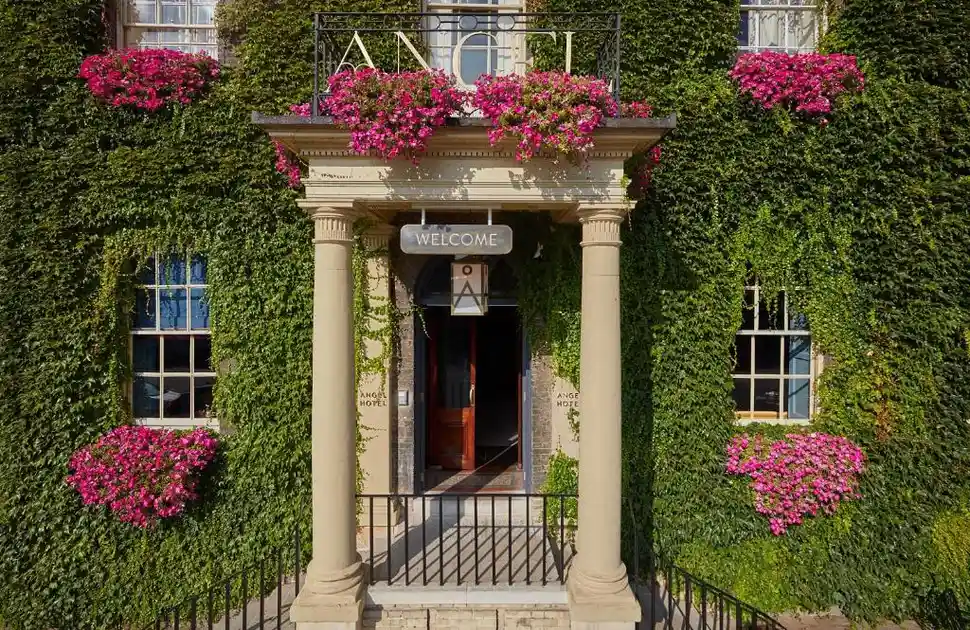
Angel Hotel, Bury St Edmunds
Stay at The Angel Hotel on Angel Hill in the historic centre of Bury St Edmunds, with elegant guest rooms, restaurant dining and the Abbey Gate, Abbey Gardens and historic streets just moments away.
Check availability
Select your dates to check current availability and prices.

