Cart
0
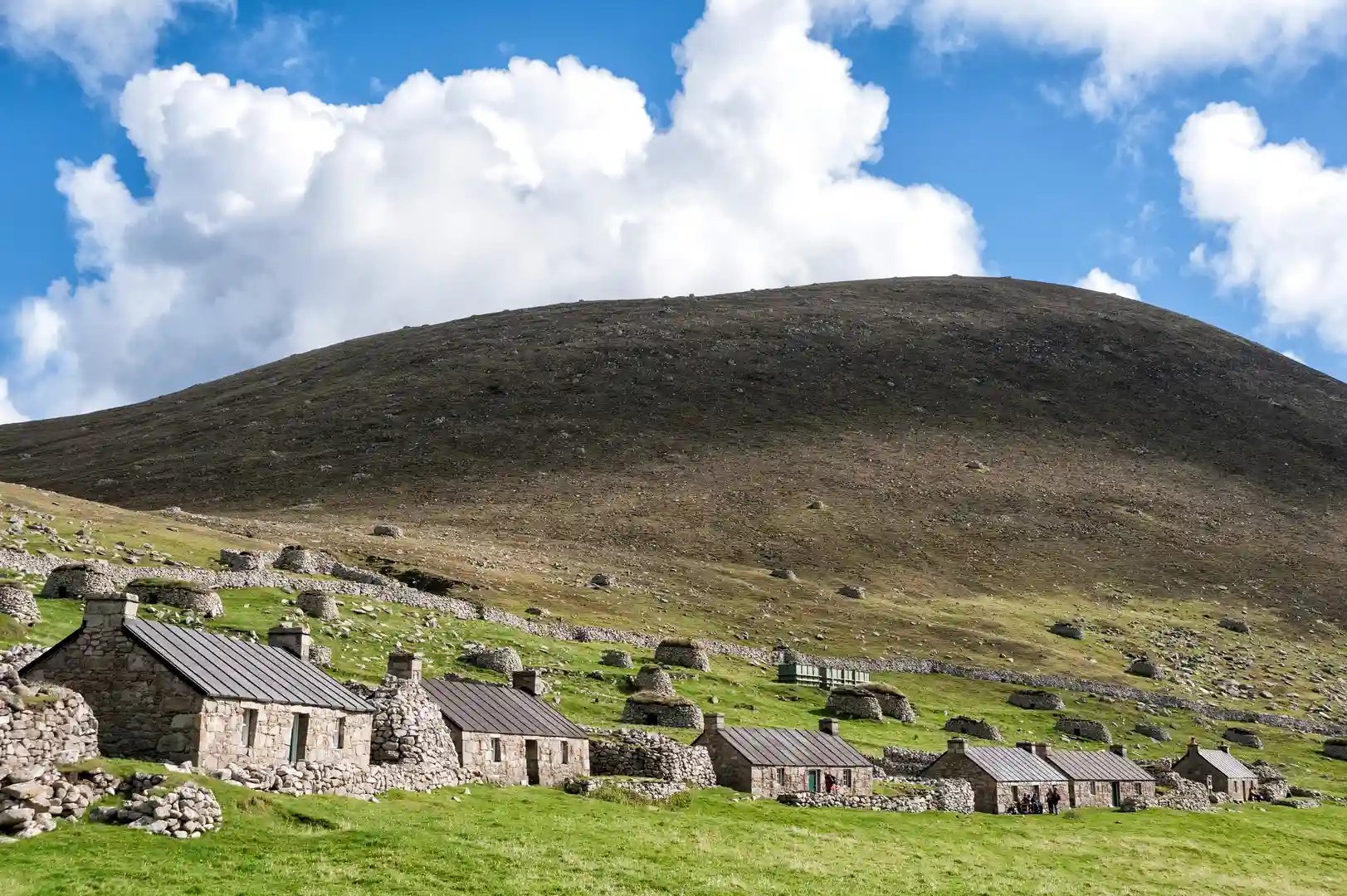
Stone cottages of the abandoned village on St Kilda, Scotland, set against a grassy hillside and wide Atlantic sky in the remote Outer Hebrides.

St Kilda UNESCO World Heritage Site – Volcanic Islands, Sea Cliffs, and Atlantic Isolation

Stone Ruins, High Cliffs, and Open Ocean Horizons

St Kilda is one of Scotland’s most remote and elemental places for self-guided travel, shaped by walking routes, exposed landscapes, and historic places set far out in the Atlantic Ocean west of the Outer Hebrides. Reached only by boat, the small archipelago rises abruptly from the sea, where grassy slopes, volcanic cliffs, and abandoned stone cottages define a landscape of wind and distance. Paths across Hirta, the main island, link the former village, steep hillsides, and high viewpoints, allowing walkers to move slowly through both natural and human history.

The terrain feels raw and spacious. Sheer cliffs fall directly to the ocean, seabirds fill the air, and the sound of wind and surf dominates the silence. Low stone walls and cleits scatter the hillsides, while narrow tracks climb steadily toward ridges overlooking stacks and outlying islands. Every step is shaped by exposure, weather, and the vastness of the surrounding sea.

Despite its small scale, St Kilda feels immense. The abandoned settlement, left in 1930, sits quietly beside Village Bay, and walking between the ruins reveals how closely life once depended on the land and the birds. Exploring on foot connects the physical effort of the landscape with the resilience of the people who lived here for centuries.

About the UNESCO World Heritage Site

St Kilda was inscribed as a UNESCO World Heritage Site for both its outstanding natural environment and its cultural heritage — one of the few places in the world to hold dual status. The islands are internationally important for their seabird colonies and dramatic geology, including some of the highest sea cliffs in Europe.

Alongside this natural significance, the remains of the St Kildan settlement preserve a rare record of life in extreme isolation. Stone houses, cleits, field systems, and paths remain largely intact, offering insight into a community that relied on the sea and the land until evacuation in the twentieth century.

Today, carefully managed visits help protect this fragile landscape while allowing people to experience it on foot.

Where to Walk

Village Bay & Settlement Paths

Gentle tracks through the abandoned village, past cottages, cleits, and the shoreline.

Conachair Slopes & Ridge Routes

Steeper climbs above the bay leading to high ground with wide views across Hirta and the Atlantic.

Gap of Dun & Cliff Paths

Exposed routes toward dramatic sea cliffs and stacks overlooking Soay, Boreray, and the surrounding ocean.

Highlights

  • Dual UNESCO World Heritage status for both natural and cultural value
  • Vast seabird colonies including gannets, fulmars, and puffins
  • Europe’s highest sea cliffs and dramatic Atlantic scenery
  • The preserved remains of the St Kildan village on Hirta
  • A rare sense of remoteness and quiet
  • Boat access only, reinforcing the island’s isolation

Frequently Asked Questions

Can you visit St Kilda?

Yes. Licensed boat trips operate from Harris, Skye, and nearby islands during the summer months, weather permitting.

Is it accessible year-round?

No. Landings are seasonal and entirely dependent on sea and weather conditions.

Can you stay overnight?

Public overnight stays are extremely limited. Most visits are day trips.

How difficult are the walks?

Terrain ranges from gentle village paths to steep, exposed slopes. Good fitness and sturdy footwear are recommended.

Why is St Kilda a UNESCO World Heritage Site?

It is recognised for its exceptional seabird populations, dramatic cliffs, and the preserved remains of a unique island community.