Cart
0
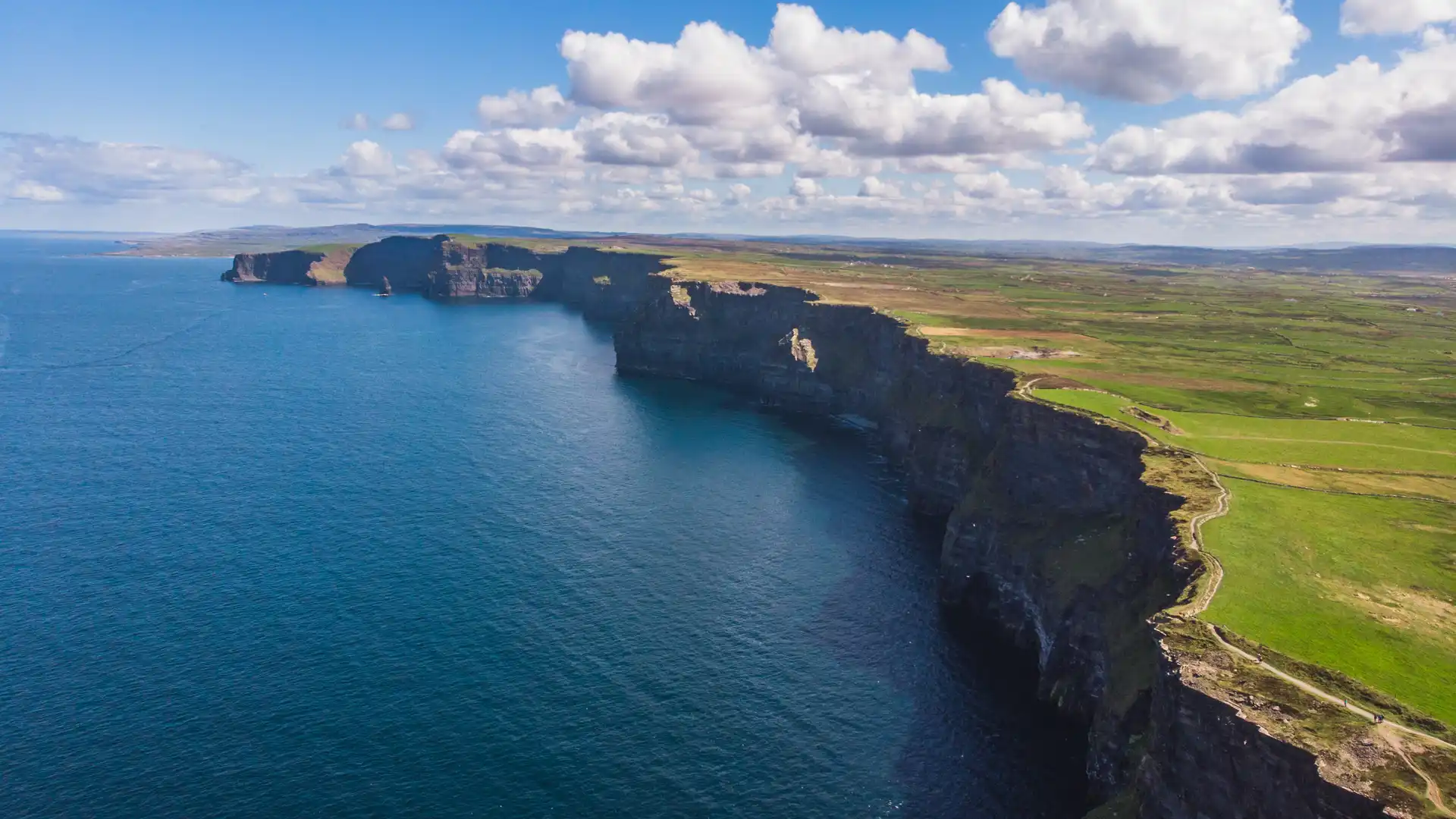
The Cliffs of Moher rising above the Atlantic Ocean with layered limestone cliffs, sea stack, and dramatic coastal views in County Clare, Ireland.

Burren & Cliffs of Moher UNESCO Global Geopark – Limestone Uplands, Karst Hills, and Atlantic Cliffs

Limestone Pavements, Atlantic Headlands, and Open Western Horizons

The Burren & Cliffs of Moher UNESCO Global Geopark is one of Ireland’s most distinctive places for self-guided travel, shaped by walking routes, exposed limestone landscapes, and small coastal places along the Atlantic edge of County Clare. Trails link the Cliffs of Moher, the rocky uplands around Mullaghmore, and villages such as Doolin, Ballyvaughan, and Lisdoonvarna, allowing walkers to move gradually between headlands, valleys, and high karst plateaux rather than focusing on a single viewpoint.

Stretching across much of the west Clare coast, the terrain feels stark and elemental. Flat limestone pavements fracture into deep fissures, low stone walls cross open hillsides, and narrow roads thread between green pastures and grey rock. Along the coast, sheer cliffs rise directly from the Atlantic, with long views north toward Galway Bay and south along the Wild Atlantic Way.

Walking here feels spacious and quiet. Routes cross bare rock, gentle upland slopes, and sheltered valleys dotted with prehistoric tombs and ruined churches. The landscape carries both geological drama and human history, where ancient monuments and rare wildflowers sit naturally within the stone.

About the UNESCO Global Geopark

The Burren & Cliffs of Moher was designated a UNESCO Global Geopark in 2011 in recognition of its exceptional geology, biodiversity, and cultural heritage. The region is internationally known for its karst limestone formations, created over hundreds of millions of years and shaped by glaciation and erosion.

Unlike a single protected monument, the Geopark represents an entire living landscape. Limestone pavements, caves, fossils, and underground rivers sit alongside archaeological sites, traditional farming, and long-established villages. Together they form a place where geology, ecology, and everyday life remain closely connected.

Today, maintained trails and local paths allow walkers to explore both the coast and uplands while protecting the fragile terrain.

Where to Walk

Cliffs of Moher Coastal Walk

A dramatic cliff-edge route between Liscannor and Doolin with wide Atlantic views and seabird colonies.

Mullaghmore Loop

A circular walk around the Burren’s best-known limestone hill, with panoramic views across the karst landscape.

Black Head & Fanore Routes

Coastal and upland paths linking quiet beaches with open limestone hills and traditional farmland.

Slieve Carran Nature Reserve

Gentle loops through woodland, caves, and archaeological sites with seasonal wildflowers.

Lough Gealáin Trails

Shorter lakeside paths combining classic Burren scenery with easier terrain.

Highlights

  • The Cliffs of Moher rising more than 200 metres above the Atlantic
  • Extensive limestone pavements and karst formations unique in Europe
  • Prehistoric sites including Poulnabrone Dolmen and ancient ring forts
  • Rare plant life where alpine and Mediterranean species grow side by side
  • Small coastal villages with traditional music and local culture
  • Wide horizons, open skies, and a strong sense of space

Frequently Asked Questions

What is the Burren & Cliffs of Moher UNESCO Global Geopark?

It is a UNESCO-designated landscape recognised for its geology, biodiversity, and cultural heritage across County Clare.

Can you walk along the cliffs?

Yes. The Cliffs of Moher Coastal Walk provides extended access along the cliff tops between Doolin and Liscannor.

Is the Burren suitable for longer walks?

Yes. Numerous loops and connecting routes allow for half-day or multi-day walking across both coast and uplands.

Are there easier trails available?

Yes. Shorter lakeside and valley routes offer gentler terrain, while upland sections are more exposed.

When is the best time to visit?

Late spring and early summer are ideal for wildflowers, while autumn and winter offer quieter paths and dramatic Atlantic weather.