
Steep-sided valleys, wooded slopes, and open moorland shaped by water, coal, and settlement
The Valleys stretch north of Cardiff and Newport into the uplands of South Wales, where self-guided travel follows walking routes along river corridors and former rail lines between towns such as Pontypridd, Merthyr Tydfil, Aberdare, Treorchy, and Abergavenny. Paths trace the Taff, Rhondda, Cynon, and Ebbw valleys, linking lowland settlements with the Brecon Beacons National Park and the open ridges of the surrounding hills, creating long, linear journeys through connected valley floors and higher ground.
The terrain is defined by contrast. Narrow rivers cut steep-sided valleys through wooded slopes and former industrial land, while broad moorland and grass-covered plateaux rise above the settlements. Towns sit closely spaced along the valley bottoms, often following the same lines as historic tramroads and railways, while the higher ground remains quieter and more exposed.
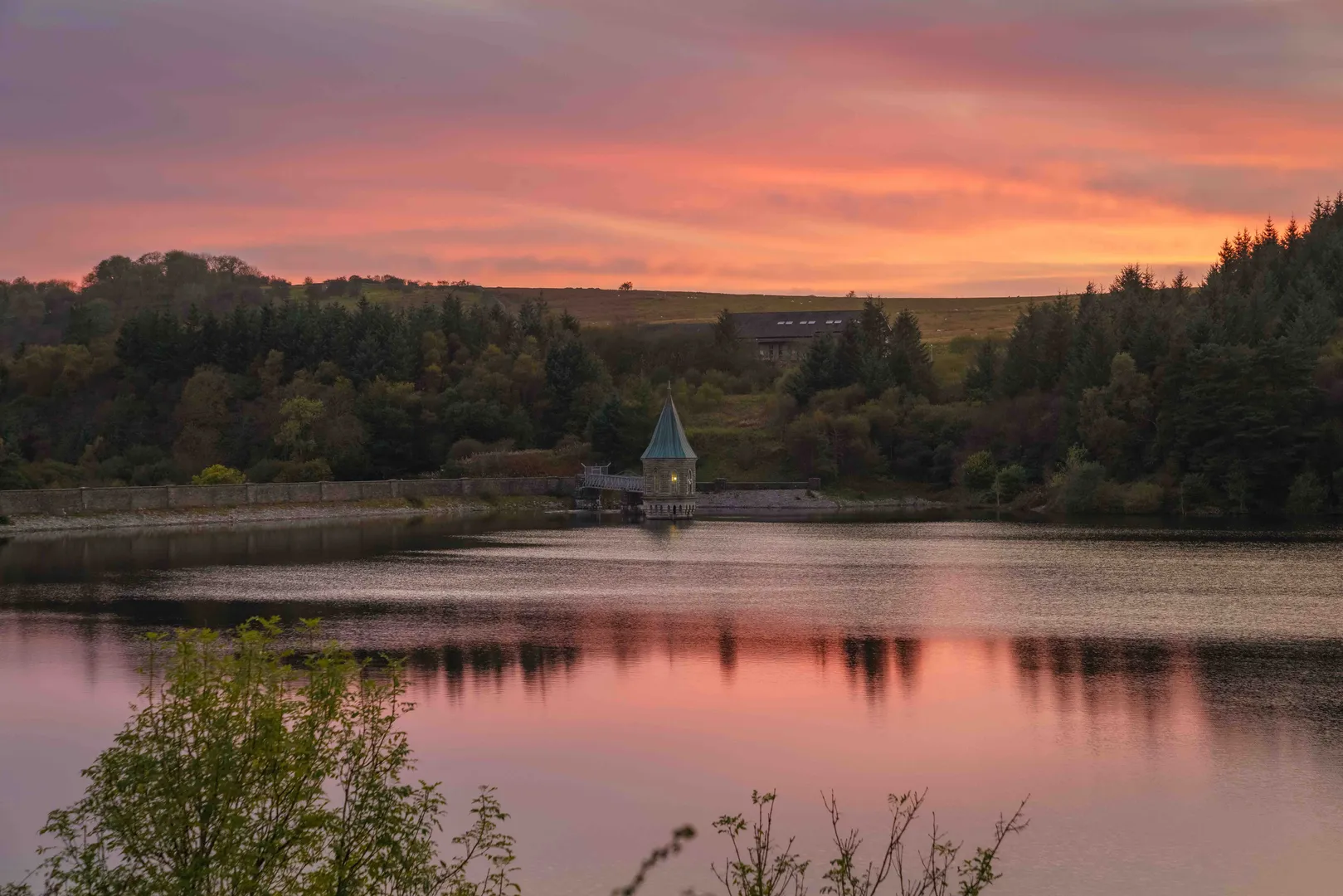
Much of the northern edge meets the boundary of Bannau Brycheiniog (Brecon Beacons) National Park, where open upland, reservoirs, and long-distance paths provide access onto wider hill country. Elsewhere, reclaimed railway corridors, canal towpaths, and forest tracks create level routes through the valleys themselves. These working landscapes combine woodland, water, and settlement, with footpaths passing easily between town centres, green spaces, and hillside tracks.
Movement through the Valleys tends to follow the direction of the rivers. Routes run north–south along valley floors before climbing onto ridges that connect one valley to the next. Gradients can be steep on these crossings, but distances between towns are short, allowing routes to be linked into continuous stages between settlements.
Bridges, stations, and town centres appear frequently, reinforcing a steady rhythm of connection rather than isolation.
Routes & Landscapes Across the Region
The Taff Trail follows riverside paths and former railway lines between Cardiff and Merthyr Tydfil before continuing north into the Brecon Beacons, providing a continuous valley-to-upland route through the heart of the region.
Further west, paths along the Rhondda and Cynon valleys use reclaimed rail corridors and woodland tracks to connect closely spaced towns beneath steep, wooded slopes, while upland crossings link neighbouring ridges and open moor.
To the east, the Ebbw Valley and Monmouthshire & Brecon Canal create gentler, level routes beside water, where towpaths and greenways provide steady progress between Abergavenny, Cwmbran, and the national park boundary.
Together, these river, rail, and ridge routes form a connected network that allows movement along the valleys or across them without long detours.
Areas of the Valleys
The Taff and Cynon valleys around Merthyr Tydfil and Aberdare, the Rhondda around Treorchy and Tonypandy, and the eastern Ebbw and Usk corridors each present distinct combinations of wooded slope, riverside path, and upland access while remaining closely linked by shared terrain and infrastructure.
Beginning to explore the Valleys
The Valleys form a series of parallel corridors rather than a single destination. Following rivers, rail paths, and ridge tracks reveals how water, industry, and settlement continue to shape movement through this compact upland landscape.