
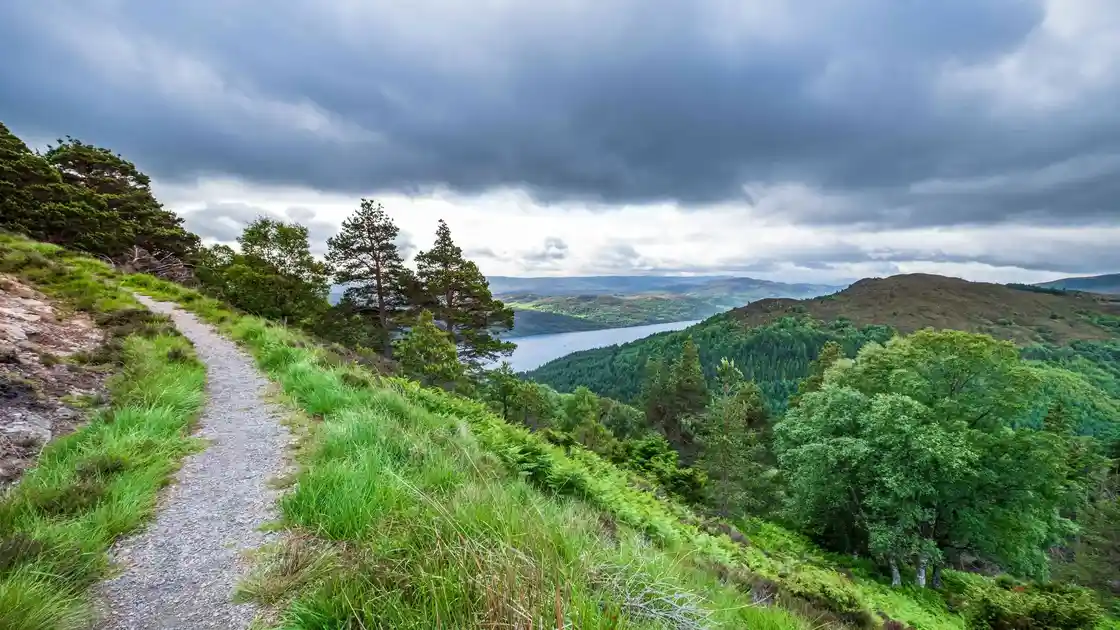
Exploring the Highlands
The Scottish Highlands encompass some of Britain's most extensive mountain and wilderness landscapes, stretching from the Cairngorms and Great Glen to the mountains of Lochaber, Wester Ross, Sutherland and Caithness. The region brings together high peaks, deep glacial valleys, freshwater lochs, ancient woodlands and rugged Atlantic coastline, with settlements ranging from Inverness and Fort William to remote villages and coastal communities. These landscapes reflect centuries of Highland history, crofting, fishing and movement through mountain passes and glens.
Protected landscapes preserve some of Scotland's most distinctive natural environments. Cairngorms National Park encompasses extensive mountain plateaux, Caledonian pinewoods, rivers and glacial valleys, while Glen Affric is known for its ancient forests, mountain scenery and freshwater lochs. Further west, the mountains of Knoydart, Torridon and Assynt rise above sea lochs, remote glens and exposed coastal landscapes. The North West Highlands UNESCO Global Geopark highlights the region's exceptional geological heritage, including ancient rock formations and dramatic mountain landscapes.
Long-distance walking routes connect many of these places. The West Highland Way approaches Fort William through the landscapes of Rannoch Moor and Glencoe, while the Great Glen Way follows the natural corridor between Fort William and Inverness, passing Loch Lochy, Loch Oich and Loch Ness. The Speyside Way explores the River Spey and surrounding countryside, connecting settlements, forests and mountain landscapes along the eastern Highlands. Together, these routes provide opportunities to experience the region through established paths and multi-day walking journeys.
Other routes explore the Highlands' more remote mountains, coastlines and historic landscapes. The Cape Wrath Trail crosses some of Scotland's wildest terrain between Fort William and the far north-west, passing remote glens, mountain ranges and sparsely populated countryside. The Affric Kintail Way connects Drumnadrochit with Morvich through forests, glens and Highland mountain landscapes, while the Rob Roy Way explores the southern approaches to the Highlands. Historic places such as Culloden Battlefield, Urquhart Castle and the settlements surrounding Loch Ness provide further connections between the region's walking routes, landscapes and cultural heritage.
Beyond the established long-distance routes, the Highlands offers opportunities to explore woodland paths, lochside trails, mountain valleys, nature reserves and coastal landscapes on foot. From the Cairngorms and Glen Affric to Glencoe, Torridon and the remote north-west coast, the region provides a varied setting for shorter walks, walking breaks and multi-day journeys, with places to stay in Highland towns, villages, country inns and rural accommodation.