
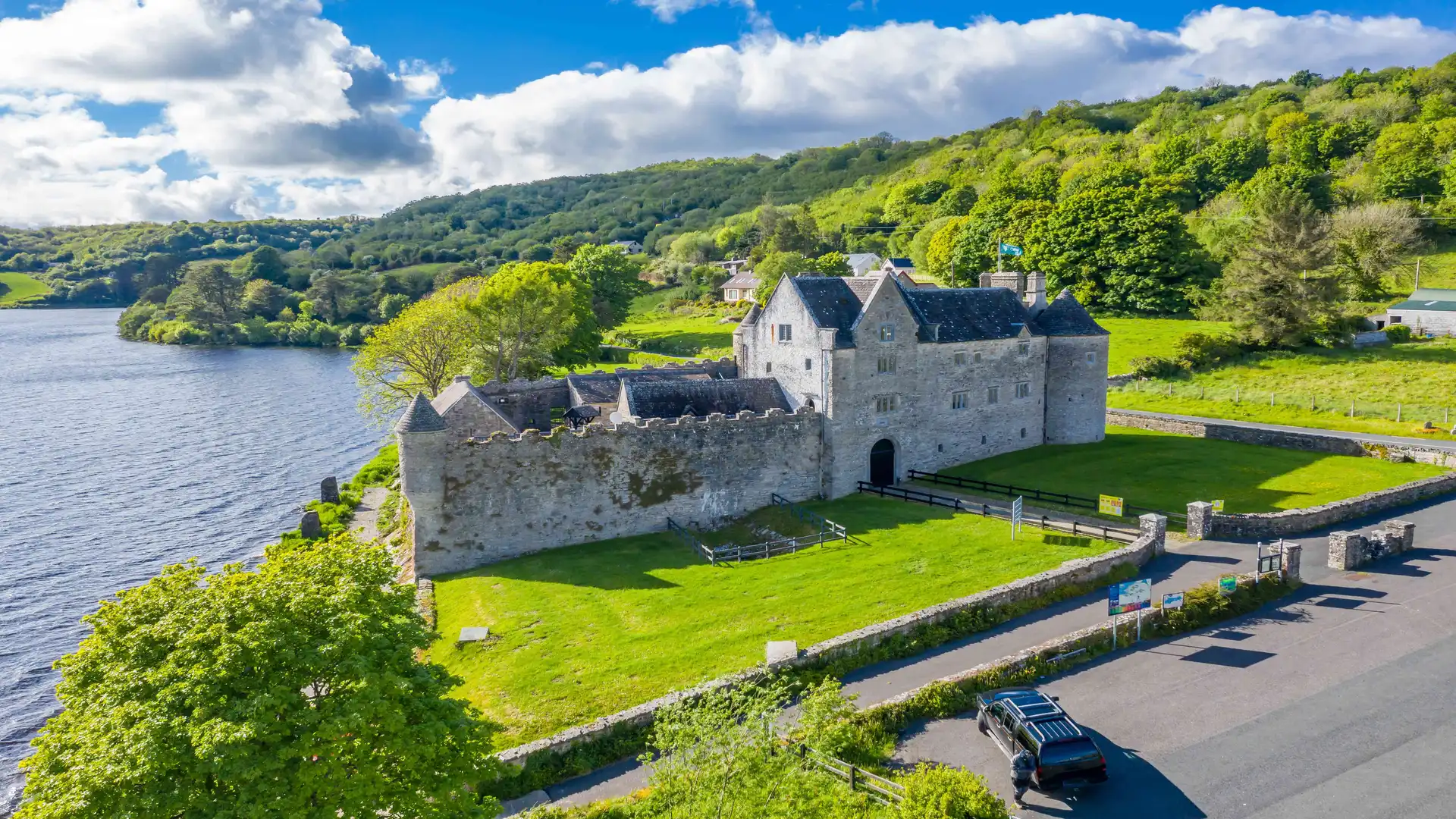
Rivers, forests, and soft horizons shaped by water, woodland, and long-settled places
Slow rivers, lakeshores, and wooded ridges shape Ireland’s Hidden Heartlands, where paths such as the Shannon Blueway follow the River Shannon between towns including Athlone, Portumna, and Banagher, while the Slieve Bloom Way crosses quiet upland forest and ridge, creating a landscape suited to gentle, self-guided movement between water, woodland, and village.
This is a landscape shaped not by drama but by stillness. Broad lakes widen into slow-moving channels, canals slip quietly through reed beds, and wooded hills rise gradually above farmland and pasture. Routes trace towpaths, forest tracks, and minor roads, offering steady progress through country that feels enclosed, calm, and unhurried.
Water defines the rhythm of the region. The River Shannon and its connected lakes form long natural corridors that guide both settlement and movement. Paths stay close to the water’s edge, crossing locks, bridges, and old harbour towns where boats, stone quays, and small streets reflect centuries of river life. Walking here often follows these historic lines, where everyday infrastructure becomes today’s route.
Woodland and upland provide contrast. Around Portumna Forest Park, loop trails pass through mixed woodland, meadow, and lakeshore, while the Slieve Bloom Way climbs through one of Ireland’s oldest mountain ranges, combining forest roads, waterfalls, and open hills with wide views across the Midlands. These higher sections remain quiet and lightly travelled, reinforcing the region’s sense of space and retreat.
Progress is generally easy and measured. Gradients are gentle, surfaces forgiving, and villages appear regularly, offering natural stopping points along the way. Distances feel flexible rather than demanding, making it simple to shape days around the landscape rather than the clock.
This is a region best understood step by step: beside still water, through shaded forest, and between long-settled towns where the pace of travel slows to match the land.
Routes & Landscapes Across the Region
The Shannon Blueway links riverside, lakeside, and canal-side paths along the River Shannon, combining towpaths, greenways, and quiet lanes between Athlone, Banagher, and Portumna.
Loop trails within Portumna Forest Park explore woodland, meadow, and lakeshore beside Lough Derg, with easy circuits suited to gentle walking.
The Slieve Bloom Way crosses forested ridges and upland valleys through the Slieve Bloom Mountains, offering longer, more remote inland routes.
Additional riverside and greenway sections connect heritage towns and nature reserves throughout the central Midlands.
Counties of Ireland’s Hidden Heartlands
Offaly, Longford, Roscommon, Leitrim, East Galway, North Tipperary, and Westmeath each offer variations of river valley, lakeshore, woodland, and upland, providing natural bases for longer inland journeys.
Beginning to explore Ireland’s Hidden Heartlands
Ireland’s Hidden Heartlands forms a connected network of waterways, forest trails, and upland paths rather than a single destination. Following its rivers and woods reveals a quieter side of the country, where travel feels reflective, restorative, and closely tied to place.