
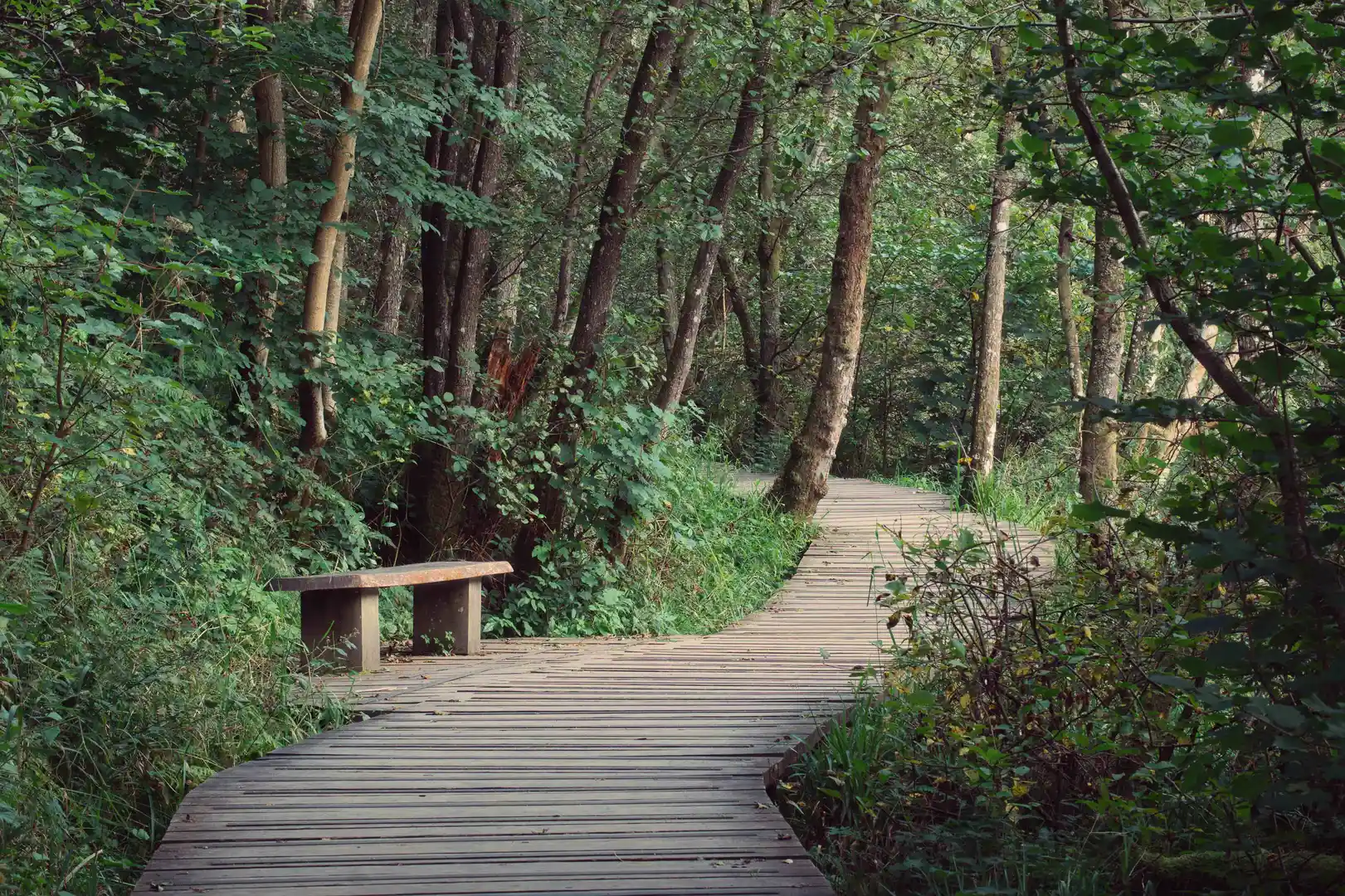
Wooded parks, canal towpaths, and riverside routes shaped by water, industry, and everyday life
Rivers, canals, and broad parkland shape Greater Glasgow & the Clyde Valley, where footpaths follow the River Clyde outward from the city through woodland, old estates, and quiet villages. Routes such as the Clyde Walkway link neighbourhood green spaces with open countryside, creating a landscape where movement flows easily between urban streets, riverside paths, and farmland on the edge of the Lowlands.
This is walking woven into daily life rather than escape. Trails begin beside railway stations, terraces, and cafés, then slip quickly into tree cover or along water, revealing a softer side of the city. Former towpaths, estate drives, and dismantled rail lines form natural corridors through the valley, allowing steady progress without traffic or steep ground.
Much of the region’s character comes from its network of parks and restored landscapes. Large green spaces such as Pollok Country Park and the woodlands around Kelvingrove Park provide quiet stretches of riverside and forest walking within the city itself. Further south and east, paths reach the gorge and waterfalls of the Falls of Clyde, where sandstone cliffs and mixed woodland create a more enclosed, rural atmosphere.
Walking here often follows the line of water. The Clyde and its tributaries guide routes past old mills, stone bridges, and remnants of the region’s industrial past, blending heritage and nature into the same journey. Distances are flexible and terrain gentle, making it easy to shape shorter sections or link several paths into longer days.
Rather than dramatic scenery, the appeal lies in continuity: parks leading to rivers, rivers leading to fields, and towns appearing naturally along the way. Progress feels gradual and grounded, with the landscape unfolding at a human pace.
This is a region best understood step by step: beside flowing water, through shaded parkland, and along quiet paths that connect city life with open countryside.
Routes & Landscapes Across the Region
The Clyde Walkway follows the River Clyde from central Glasgow to the Falls of Clyde, combining urban parkland, riverside woodland, and open valley scenery.
Paths within Pollok Country Park and Kelvingrove Park provide everyday woodland and river walks close to the city centre.
Riverside trails along the White Cart, Black Cart, and Calder Water explore quieter corners of the valley through woodland, estates, and farmland.
Canal and rail-path corridors connect suburbs with countryside, offering level, traffic-free movement across the wider region.
Areas of Greater Glasgow & The Clyde Valley
Glasgow’s park network, the lower Clyde Valley, Lanarkshire villages, and the wooded gorges around New Lanark each offer distinct combinations of river, woodland, heritage, and open farmland, forming natural bases for short or longer journeys.
Beginning to explore Greater Glasgow & The Clyde Valley
Greater Glasgow & the Clyde Valley forms a continuous chain of parks, waterways, and paths rather than a single destination. Following these routes reveals how closely city and countryside meet here, where walking becomes part of everyday movement rather than a separate escape.