
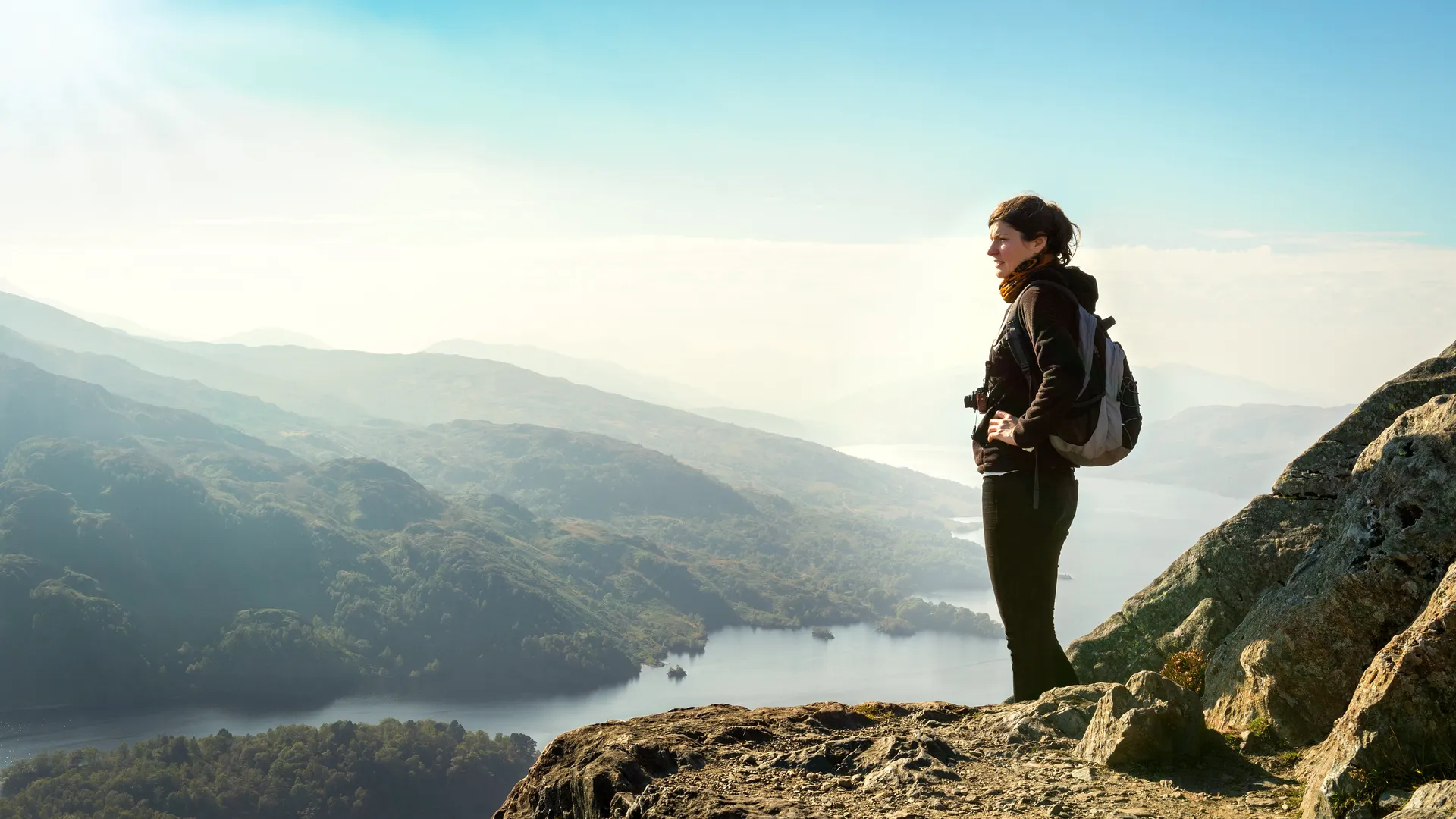
Wooded hills, broad lochs, and historic paths shaped by water, woodland, and settlement
Wooded hills, broad lochs, and quiet river valleys shape Central Scotland, where forest trails around Dunkeld, riverside paths near Stirling, and lochside routes within Loch Lomond and The Trossachs National Park link towns including Callander, Aberfoyle, and Perth, creating a landscape where movement flows easily between woodland, farmland, hill, and water.
This is a meeting point between Lowlands and Highlands. Rolling hills rise gradually from fertile valleys, broad lochs sit beneath wooded slopes, and glens cut quiet corridors through mixed forest and pasture. Routes often begin close to towns and villages yet quickly feel secluded, passing along old drove roads, estate tracks, and riverside paths that reveal castles, bridges, and historic waypoints along the way.
Much of the region’s character comes from its accessibility combined with protection. The eastern side of Loch Lomond and The Trossachs National Park provides lochside rambles, woodland circuits, and low hill routes with a distinctly Highland atmosphere but gentler terrain. Elsewhere, managed forests, river gorges, and hillfoot paths offer short and medium-distance walking that suits steady, unhurried days outdoors.
Water shapes many journeys. Rivers such as the Tay, Forth, and Braan guide paths through wooded valleys and farmland, while lochs reflect long skies and changing light. Around Dunkeld and the Hermitage, trails follow the River Braan through tall Douglas firs and narrow gorges, creating enclosed, immersive walking that contrasts with the openness of nearby hills.
Gradients are typically moderate and distances flexible. Settlements appear frequently, making it easy to link routes together or shape shorter stages between cafés, inns, and village centres. The rhythm feels relaxed rather than remote, ideal for exploring at a slower pace without committing to long transfers or exposed mountain terrain.
This is a region best understood step by step: beside quiet lochs, through shaded forest, and along ridgelines where Lowland and Highland landscapes meet.
Routes & Landscapes Across the Region
Paths in the Ochil Hills and along the Hillfoots north of Stirling combine rolling ridges, woodland tracks, and wide views across the Forth Valley.
Woodland and lochside trails on the eastern edges of Loch Lomond and The Trossachs National Park explore places such as Aberfoyle and Callander, linking forest paths with low Highland foothills.
Short but atmospheric routes around Dunkeld and the Hermitage follow the River Braan through towering trees, waterfalls, and rocky gorges.
Additional riverside and estate paths connect Perthshire villages, farmland, and small hills into easily combined day walks.
Areas of Central Scotland
Stirling, Perthshire, the Trossachs, the Ochils, and the Tay valley each offer distinct combinations of loch, forest, ridge, and historic settlement, providing natural bases for shorter or multi-day regional journeys.
Beginning to explore Central Scotland
Central Scotland forms a connected network of forest trails, lochside paths, and gentle upland routes rather than a single destination. Following its rivers and hills reveals a landscape that feels calm, accessible, and closely tied to everyday Scottish life — a place where travel slows naturally and discovery comes through detail.