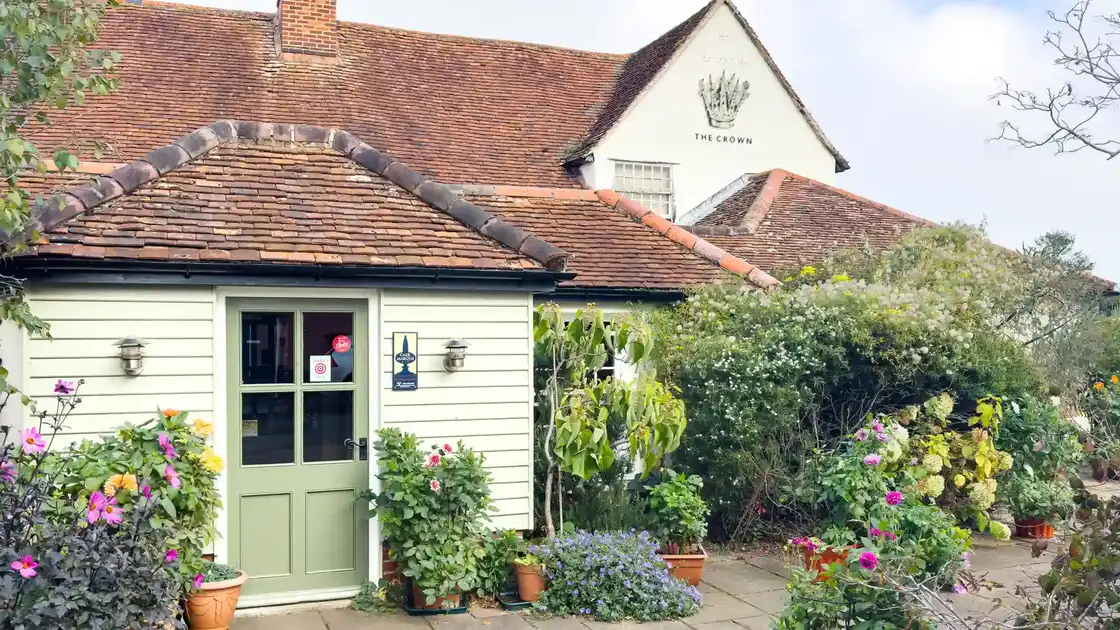

Medieval buildings, riverside meadows and the Stour Valley
Nayland is a historic village in southern Suffolk, situated beside the River Stour within Dedham Vale National Landscape. Known for its medieval timber-framed buildings, historic church and picturesque riverside setting, Nayland retains much of the character of a prosperous former wool-trading settlement. Its position along the Stour Valley Path and St Edmund Way makes it an appealing destination for exploring the landscapes, villages and countryside of the Stour Valley on foot.
Nayland developed as an important medieval market settlement, with much of its prosperity connected to the wool and cloth trades. The village retains an exceptional collection of historic buildings, including timber-framed merchants' houses, traditional cottages and former commercial premises dating back several centuries. Its narrow streets and varied architecture reflect the wealth generated by the cloth industry, while later buildings reveal how the village developed as agriculture, milling and river trade became increasingly important.
At the centre of Nayland, St James' Church is one of the village's most significant landmarks. The medieval church contains an altarpiece painted by John Constable, Christ Blessing the Bread and Wine, providing a direct connection with the artist whose work became closely associated with the landscapes of the Stour Valley. The church's architecture, historic interior and prominent position among the surrounding buildings make it a rewarding place to visit.
Nearby, Alston Court is one of Nayland's most remarkable historic buildings. The substantial medieval timber-framed house retains architectural features reflecting the prosperity of the village's merchants, including an elaborate oriel window and historic hall. Along the High Street, the Old Guildhall provides another connection with Nayland's medieval wealth and religious guilds. Together, these buildings make the historic centre particularly rewarding to explore on foot.
The River Stour flows along the southern edge of Nayland, where riverside paths lead through open meadows, grazing land and quiet countryside. The river has played an important role in the village's development, supporting milling, agriculture and the movement of goods through the valley. Today, its banks provide opportunities for peaceful walks, with views across traditional water meadows, riverside trees and the surrounding farmland.
The Stour Valley Path passes through Nayland on its journey between Newmarket and Cattawade, following the River Stour valley through historic settlements, farmland and riverside landscapes. The St Edmund Way, a pilgrimage route between Manningtree and Brandon, also passes through the village, providing further walking connections across the Suffolk countryside. Walkers can follow sections of these established routes towards Bures and Sudbury, or explore the countryside around Stoke-by-Nayland, where the landscape rises above the river valley.
Beyond Nayland, Dedham Vale National Landscape encompasses rolling farmland, ancient woodland, grazing meadows and historic villages. To the east, Stratford St Mary offers a traditional Suffolk village setting with its medieval church and riverside surroundings, while Dedham is known for its Georgian architecture, independent shops and connections with John Constable. Nearby Flatford is home to Flatford Mill, Willy Lott's Cottage and Bridge Cottage, providing opportunities to discover the historic buildings and landscapes that inspired some of Constable's best-known paintings.
Nayland is well suited to a relaxed day exploring its historic streets and riverside surroundings. Visitors can spend the morning discovering St James' Church, Alston Court and the village's medieval buildings, before enjoying lunch locally and following paths through the riverside meadows during the afternoon. Staying in the surrounding area allows more time to explore the historic villages, countryside paths and quieter corners of the Stour Valley.
Check availability
Select your dates to check current availability and prices.