
Exploring Shropshire
Shropshire lies in the western part of The Midlands, bordering Wales to the west, Cheshire to the north, Staffordshire to the east, Worcestershire to the south-east and Herefordshire to the south. Its landscapes include rolling hills, wooded valleys, farmland, river corridors and historic market towns, with some of the county's most distinctive countryside found in the Shropshire Hills.
The Shropshire Hills National Landscape covers a substantial area of southern Shropshire, including the Long Mynd, Stiperstones, Clee Hills and the wooded valleys around Church Stretton and Clun. Open hilltops, heathland, ancient woodland and quiet rural lanes provide opportunities for walking, with routes ranging from shorter valley paths to more demanding climbs across exposed ridges and summits.
The Long Mynd rises above Church Stretton, with walking routes crossing open moorland and descending through steep-sided valleys known locally as batches. Nearby, the Stiperstones form a distinctive quartzite ridge with rocky tors and extensive views across the surrounding countryside. Further south, the landscapes around Clun and Bishop's Castle offer quieter walking through farmland, wooded hills and small rural settlements.
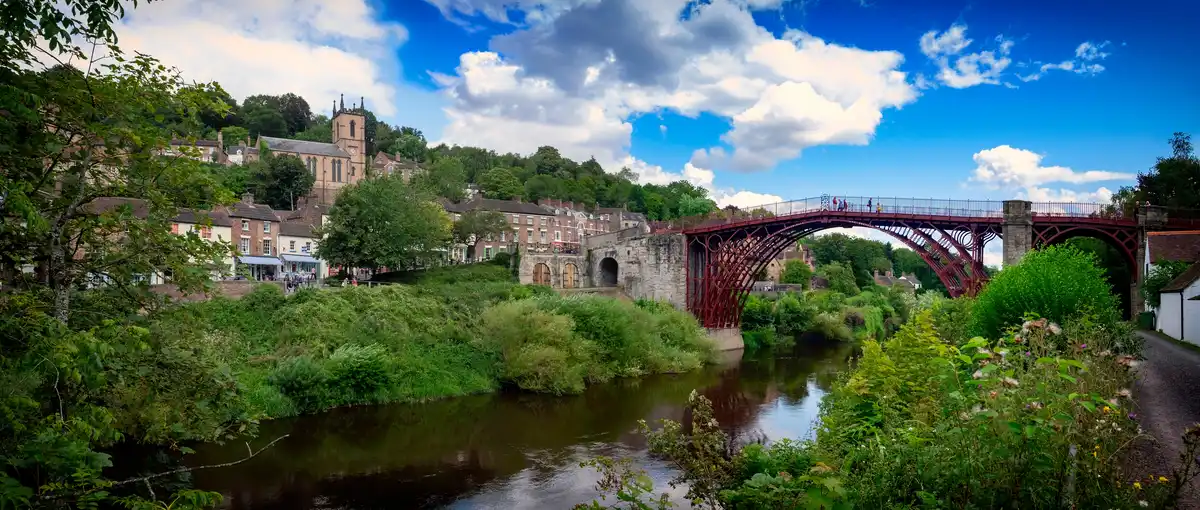
The River Severn crosses Shropshire from the Welsh border through Shrewsbury, Ironbridge and Bridgnorth, creating a varied corridor of riverside paths, woodland and historic settlements. Shrewsbury's medieval streets and riverside setting provide opportunities for exploring on foot, while the Ironbridge Gorge is known for its industrial heritage, wooded slopes and paths connecting the settlements along the valley.
Long-distance trails connect different parts of the county. The Shropshire Way forms an extensive network of walking routes through the Shropshire Hills, river valleys, market towns and countryside, while sections of the Offa's Dyke Path follow the border landscapes between England and Wales. The Severn Way follows the River Severn through Shropshire, linking riverside towns and villages with the surrounding countryside.
Away from the main trails, Shropshire's historic towns, villages and countryside provide opportunities for shorter walks and walking breaks. Ludlow sits beside the River Teme beneath the wooded slopes of the surrounding hills, while Much Wenlock, Church Stretton and Bishop's Castle offer access to local footpaths, historic streets and rural landscapes.
From the open hills of the Long Mynd and Stiperstones to the wooded valleys of the Severn and the countryside around its market towns, Shropshire can be explored through local walks and longer trails, with accommodation in villages, historic towns and rural locations across the county.
Check availability
Select your dates to check current availability and prices.