
Isle of Anglesey – Clifftop Coast, Sandy Bays, and Open Island Landscapes
Headlands, tidal shores, and low farmland shaped by sea, wind, and stone
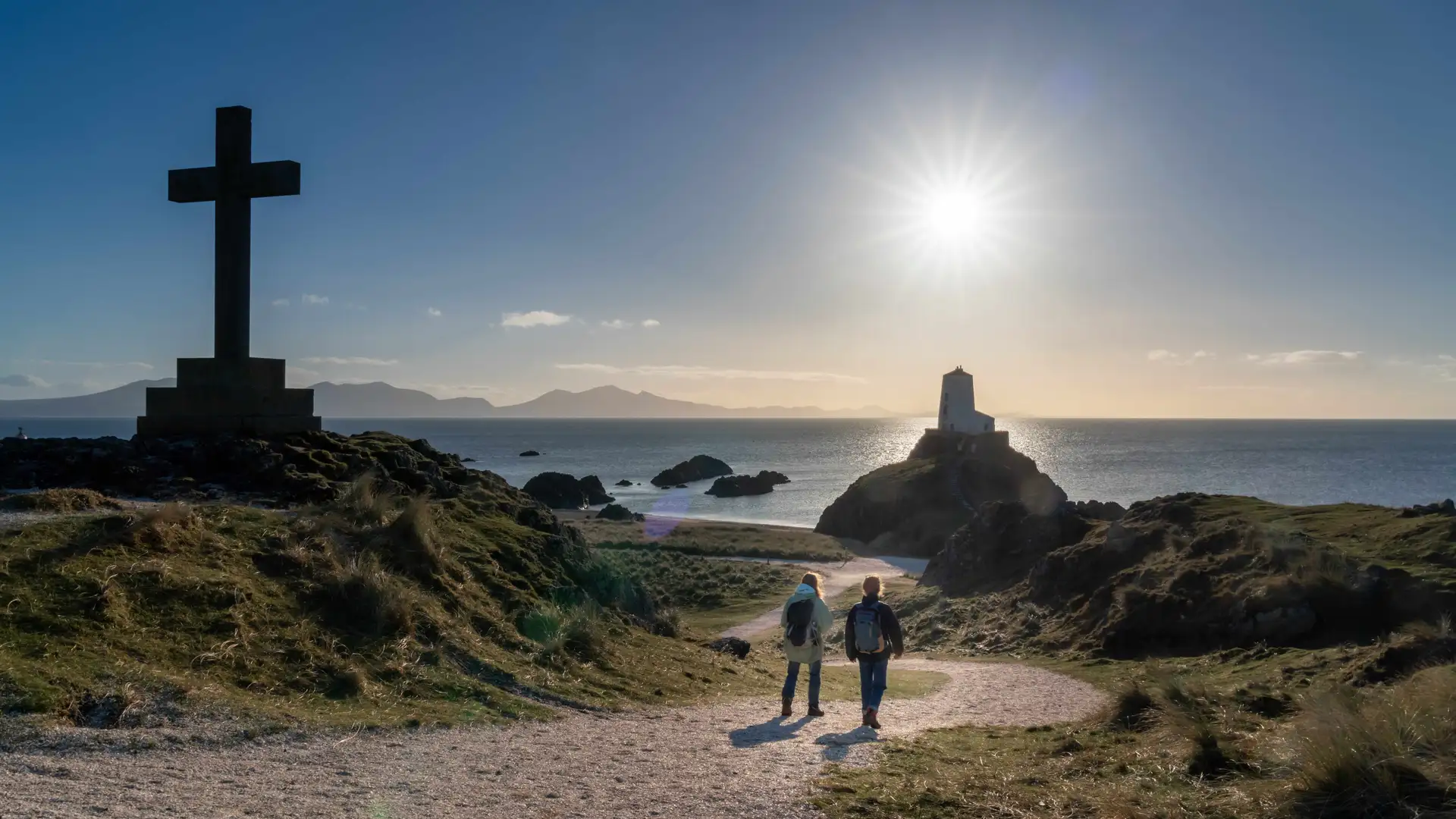
The Isle of Anglesey sits off the north-west coast of Wales, separated from the mainland by the Menai Strait yet closely tied to it by bridges, ferries, and long-established routes. Self-guided travel here follows walking paths around the shoreline and across open interior farmland, linking places such as Beaumaris, Moelfre, Amlwch, Rhosneigr, and Holyhead. The Anglesey Coast Path forms a continuous circuit of the island, connecting cliffs, beaches, estuaries, and small harbours in one complete loop shaped almost entirely by the sea.
The terrain is generally low and open. Much of the island consists of gently rolling pasture and fields divided by stone walls and hedgerows, while the coast alternates between rocky headlands, sandy bays, saltmarsh, and dunes. Views are wide and outward-facing, with constant reference to the Irish Sea, the Llŷn Peninsula, and the mountains of Eryri across the water.
Large sections of the shoreline fall within the Anglesey National Landscape, protecting heath, dunes, wetlands, and coastal grassland. Offshore islands and headlands support seabirds and marine wildlife, while inland routes pass through working farmland and quiet villages. Paths move easily between settlement and open ground, with little sense of separation between inhabited and natural space.
Movement across Anglesey tends to be linear or circular rather than inland-to-coast. Trails follow the edge of land and water, tracing the island’s perimeter or cutting short connections across fields and lanes between bays. Gradients are modest, and progress is steady, shaped more by distance and exposure to weather than by height or technical terrain.
Harbours, churches, and small market towns appear at regular intervals, creating natural stopping points and reinforcing the island’s compact scale.
Routes & Landscapes Across the Region
The Anglesey Coast Path circles the entire island for over 120 miles, following clifftops, beaches, dunes, and tidal estuaries as it links fishing villages, lighthouse headlands, and open farmland in a continuous coastal journey.
Around Holyhead Mountain and the north-west headlands, rockier ground and higher cliffs create more rugged walking, while the central and eastern shores soften into wide bays and low marshland, where dunes and saltmarsh shape gentler sections of trail.
Shorter inland paths and quiet lanes cut between settlements such as Beaumaris, Llangefni, and Rhosneigr, allowing circular routes that connect the coast with the island’s agricultural interior and woodland pockets.
Together, these shoreline and cross-island links form a compact network that makes Anglesey easy to navigate in stages or loops without retracing long distances.
Areas of the Isle of Anglesey
Holyhead and the western headlands, the north coast around Amlwch and Moelfre, the Menai Strait settlements including Beaumaris and Menai Bridge, and the sandy bays of the south-west near Rhosneigr each offer distinct variations of cliff, dune, and farmland within a relatively small area.
Beginning to explore the Isle of Anglesey
Anglesey works as a complete landscape in miniature. Following its perimeter paths and short inland links gradually reveals how sea, tide, and settlement shape movement around the edge of the island.