
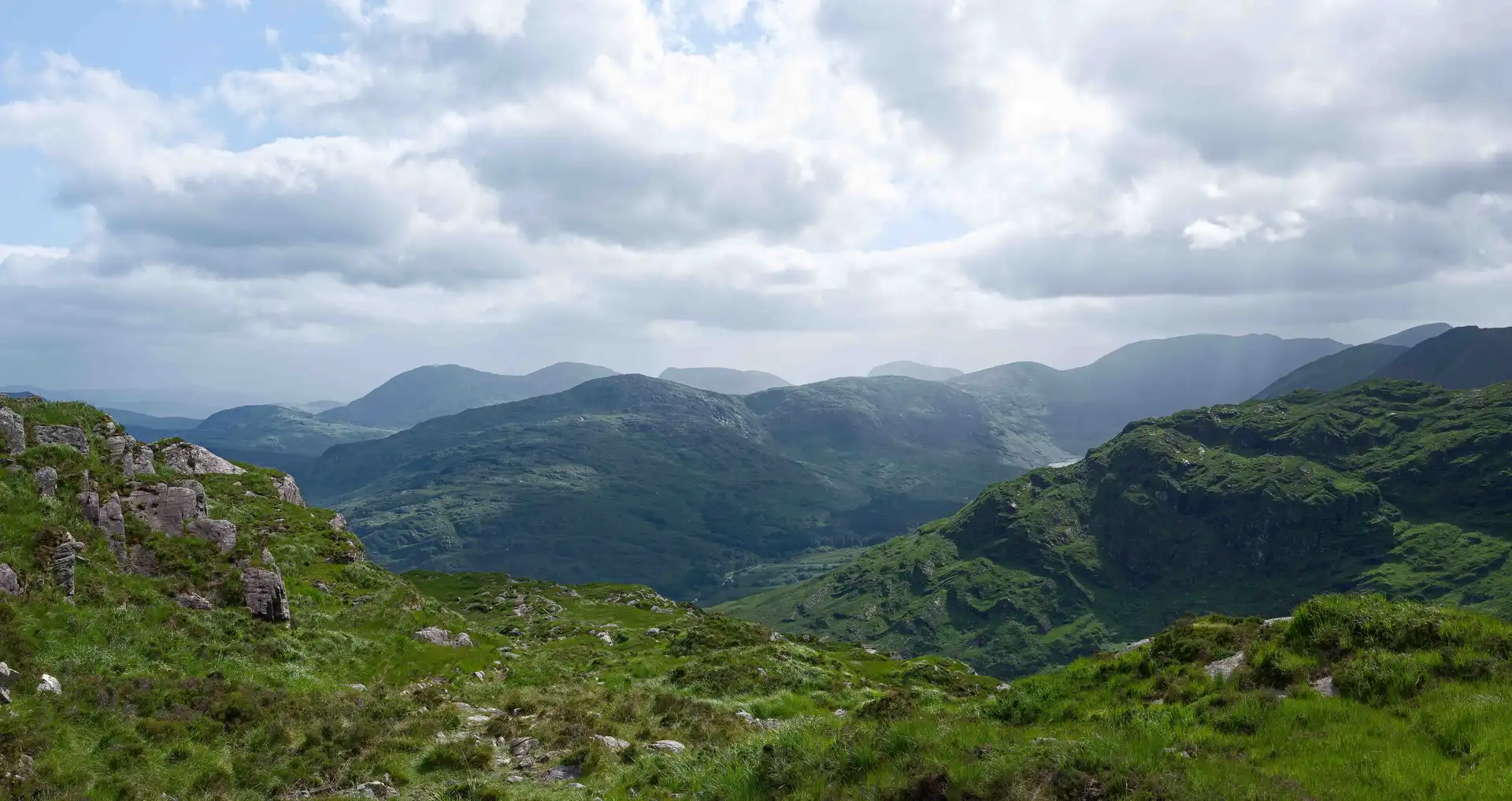
County Kerry – Mountains, Atlantic Coast, and Long Peninsulas
Mountain ranges, glacial valleys, and exposed Atlantic shoreline along Ireland’s south-west edge.
County Kerry is a coastal county of mountains, lakes, and peninsulas in south-west Ireland. Walking routes cross Killarney National Park and extend toward the Skellig Michael UNESCO World Heritage Site offshore, while the Kerry Way, Dingle Way, and Beara Way link places such as Killarney, Tralee, Dingle, Kenmare, and Cahersiveen across upland ridges, glacial valleys, and Atlantic headlands.
Much of the terrain is firm and varied underfoot. Hill paths, bog tracks, minor roads, beaches, and open moorland allow steady progress, with repeated short climbs and descents across passes and ridgelines rather than sustained ascent. Ground can be uneven or wet on peat and upland sections.
The landscape shifts between areas. The MacGillycuddy’s Reeks form steep valleys and lake basins around Killarney, while the Dingle, Iveragh, and Beara peninsulas extend west into the Atlantic with cliffs, farmland, and exposed headlands. Lower ground and broader valleys occur inland toward Tralee.
Towns and villages are spaced along coasts and valley floors, creating regular access points for shorter walks and longer point-to-point routes, with longer gaps across upland and peninsula interiors.
Trails and Routes Through County Kerry
Kerry Way
Circular long-distance route around the Iveragh Peninsula between Killarney, Glenbeigh, Cahersiveen, Waterville, and Kenmare through mountain and coastal terrain.
Dingle Way
Looped route around the Dingle Peninsula using beaches, farmland lanes, and low hills between Tralee and Dingle.
Beara Way
Long-distance route across the Beara Peninsula with upland passes and rocky shoreline between Kenmare and Castletownbere.
Killarney National Park Paths
Network of woodland, lakeshore, and foothill routes around Muckross, Torc, and the Gap of Dunloe.
Walking Character
- Mountain ridges and glacial valleys
- Atlantic cliffs, beaches, and headlands
- Moorland and peat ground
- Farm tracks and minor roads between villages
- Repeated short climbs and descents
- Settlements spaced along coasts and lakes
- Remote and exposed sections inland and offshore