
Cart
0
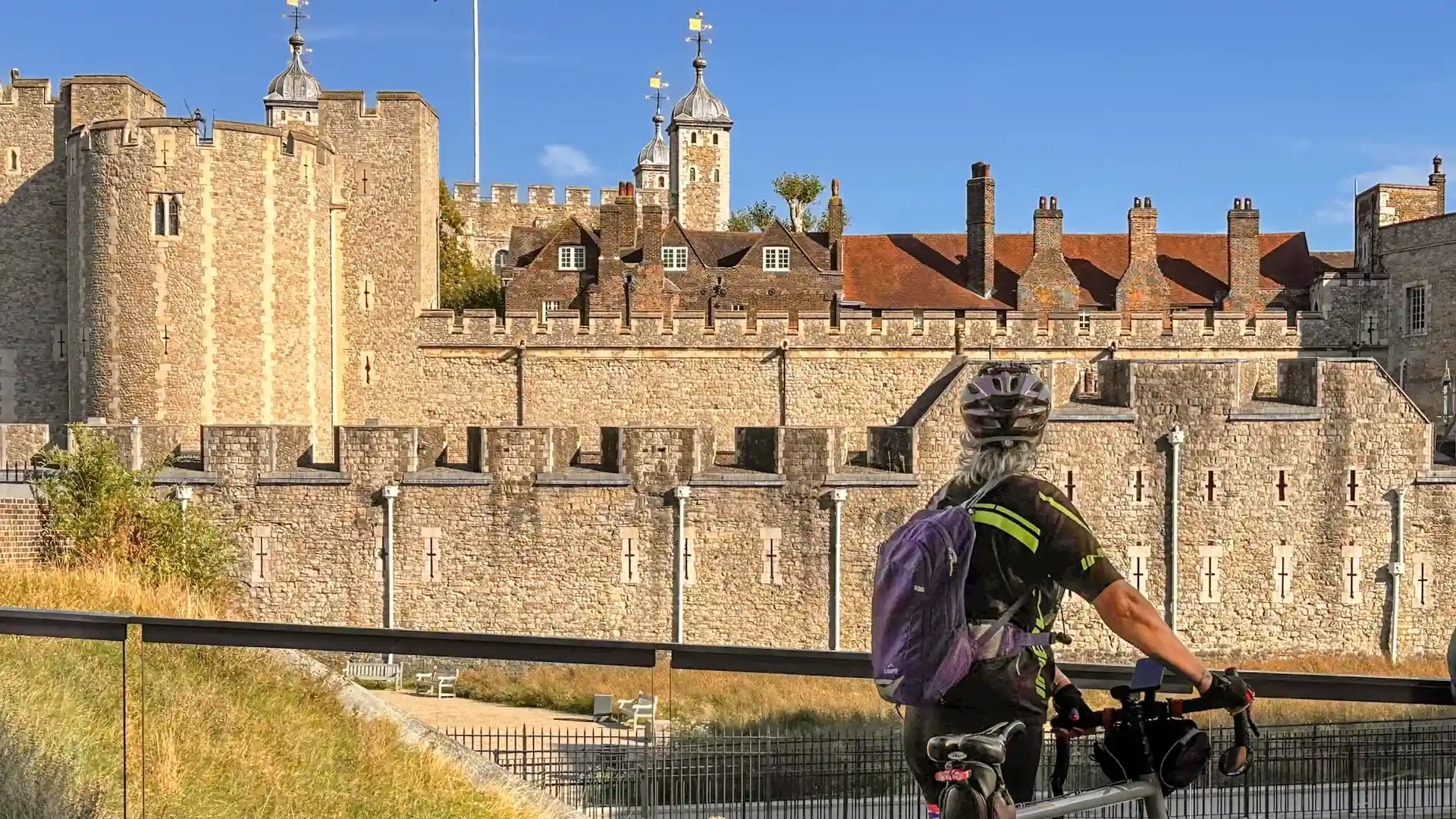
A cyclist pauses beside the Thames Path, looking toward the medieval stone walls and towers of the Tower of London on a bright, clear day.

Tower of London UNESCO World Heritage Site – Fortress Walls, Riverside Paths, and Urban History

Stone Ramparts, River Walks, and the Edge of the Thames

The Tower of London is one of England’s most distinctive places for self-guided travel, shaped by walking routes, historic landscapes, and riverside places along the Thames in central London. Footpaths along the Thames Path, quiet stretches around St Katharine Docks, and connecting streets through the City link the fortress with bridges, wharves, and historic neighbourhoods, allowing walkers to explore the area gradually rather than treating the Tower as a single stop.

Set directly beside the river, the landscape blends medieval stone with modern city life. High curtain walls rise above the water’s edge, cobbled lanes thread between warehouses and churches, and open quays provide wide views toward Tower Bridge and the skyline. Walking here shifts easily between enclosed historic spaces and broad riverside paths, with the Thames acting as a constant guide.

Despite its central location, the area feels surprisingly varied on foot. Quiet dockside loops, shaded moat walks, and long riverfront stretches create moments of calm within the city. Exploring slowly reveals how the Tower sits within a wider network of historic streets and waterfront routes that have shaped London for centuries.

About the UNESCO World Heritage Site

The Tower of London was inscribed as a UNESCO World Heritage Site in 1988 for its outstanding architectural and historical significance. Founded by William the Conqueror in the 11th century, the fortress served as royal residence, stronghold, armoury, mint, and prison, playing a central role in the history of England.

The White Tower, defensive walls, gates, and surrounding moat remain among the best-preserved examples of Norman military architecture in Europe. Together they form a rare historic complex that continues to shape the character of the surrounding district.

Today, the site remains an active historic landmark while public paths and riverside routes allow visitors to experience the wider setting on foot.

Where to Walk

Thames Path (Tower to London Bridge)

Level riverside walking past wharves, bridges, and historic quays with continuous views along the Thames.

St Katharine Docks Loop

A quieter circuit around the marina, linking waterside boardwalks, warehouses, and cafés.

Tower Bridge to Bermondsey Riverside

Longer stretches of waterfront paths beside former docklands and converted warehouses.

City of London Streets & Lanes

Short walks through medieval alleys, churchyards, and historic streets connecting the Tower with the Square Mile.

Highlights

  • A UNESCO-listed Norman fortress with over 1,000 years of history
  • Curtain walls, towers, and moat preserved beside the Thames
  • Direct access to the Thames Path
  • Views of Tower Bridge and London’s historic waterfront
  • Docklands, quays, and cobbled streets within walking distance
  • A rare combination of medieval architecture and living city landscape

Frequently Asked Questions

What makes the Tower of London a UNESCO World Heritage Site?

It is recognised for its exceptional Norman architecture and its central role in the political and royal history of England.

Can you explore the area without entering the Tower?

Yes. Riverside paths, the moat walk, and surrounding streets are freely accessible and provide excellent views of the fortress.

Is it suitable for walking routes?

Yes. The Thames Path and nearby streets allow for short or extended urban walks along the river.

Can it be linked with longer walks?

Yes. The Thames Path connects east toward Wapping and west toward London Bridge and the South Bank.

When is the best time to explore?

Early mornings and evenings are quieter, while weekends and holidays can be busy around the main entrance.