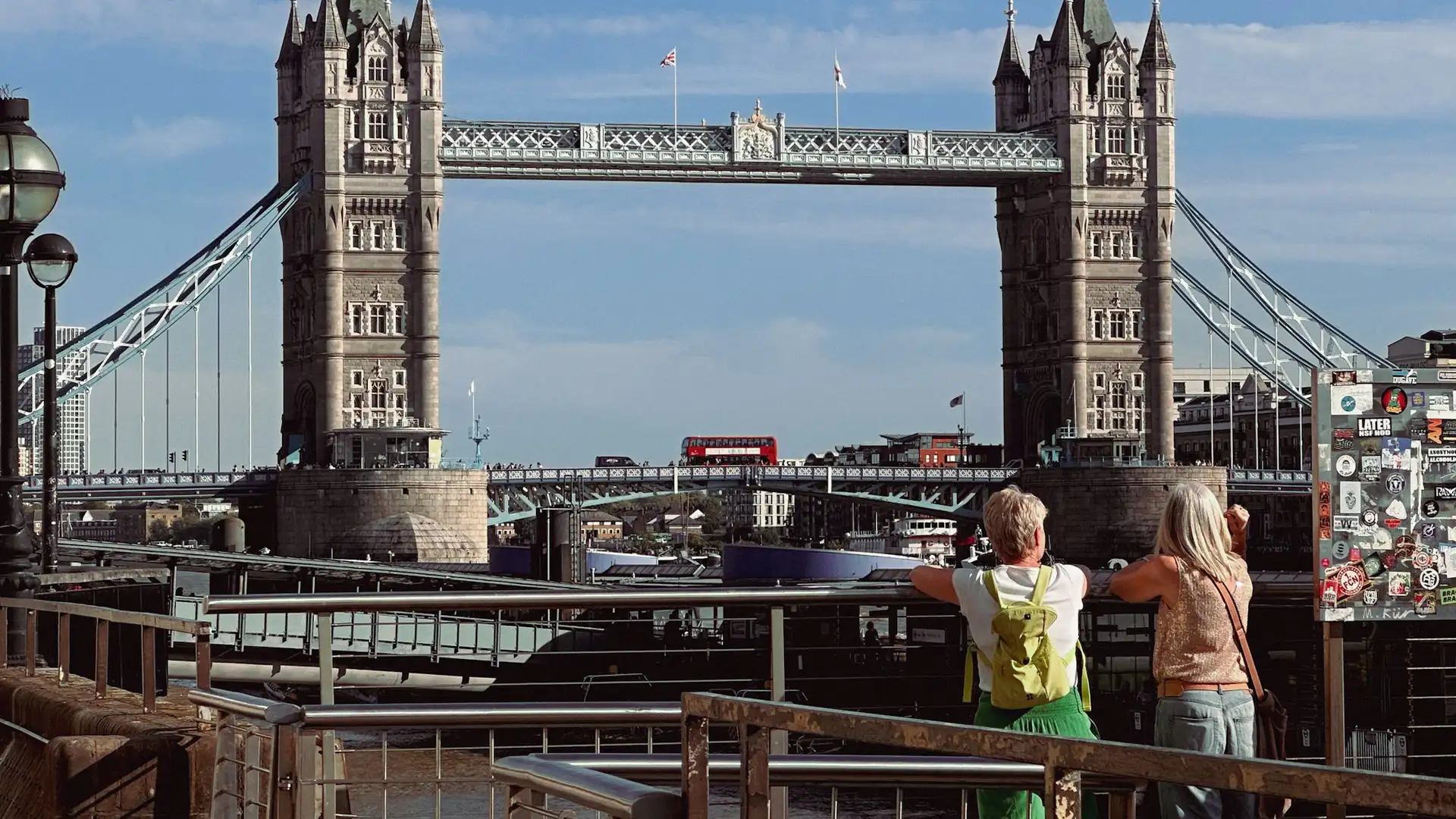
Two people standing by the River Thames looking toward Tower Bridge with a red London bus crossing.

Thames Path – Walking England’s Great River

Type of trail?
National Trail
Is it for me?
Easy-going long-distance walk
Gentle terrain with minimal ascent, well suited to first-time long-distance walkers or those looking for a calm, steady route.
What will I see?
Riverside meadows and towpaths
Locks, weirs, and quiet backwaters
Historic towns and riverside villages
Royal parks and estate landscapes
Woodland stretches and open farmland
Urban promenades and waterfront landmarks
What’s the vibe?
Peaceful and steady
Green and pastoral
Historic and place-led
Accessible and unhurried
River-focused and reflective

Meadows, towns, and city streets linked by the steady line of England’s most familiar river

The Thames Path is a long-distance self-guided walking route following the River Thames from its source near Kemble in the Cotswolds to the Thames Barrier in London, linking riverside routes, landscapes, and places through meadowland, market towns, countryside, and the capital. As one of England’s National Trails, it traces the full course of the river, revealing how water connects rural valleys, historic settlements, and urban neighbourhoods in one continuous journey on foot.

Walking here is defined by continuity rather than challenge. The terrain is largely flat and well surfaced, with towpaths, grassy banks, parkland paths, and quiet lanes allowing steady progress without sustained climbing. The river acts as a constant guide, shaping both direction and pace, so navigation feels natural and intuitive.

The character of the landscape shifts gradually as the Thames grows. Near its source, the river is narrow and quiet, crossing fields and water meadows through the Cotswolds. Further east, it widens through towns such as Lechlade, Abingdon, and Henley-on-Thames, where locks, bridges, and stone buildings reflect centuries of river life. Around Windsor and Hampton Court, royal parks and broad lawns line the banks, before the route enters London, where the same river threads past Richmond, Kew, Westminster, and Greenwich.

Despite passing through major settlements, long stretches feel calm and green. Willows, grazing meadows, and backwaters create space between towns, and even in the city the path often sits slightly apart from roads, following the quieter edge of the water.

Unlike upland or coastal trails, the appeal of the Thames Path lies in its steadiness. It is a route shaped by water, history, and everyday movement — a continuous walk that reveals England gradually, one bend of the river at a time.

Trail Overview

Distance
184 miles / 294 km

Typical time on foot
14–20 days (often walked in sections)

Start
Thames Head, near Kemble, Gloucestershire

Finish
Thames Barrier, Greenwich, London

Terrain
Towpaths, riverside paths, grassy meadows, parkland, promenades, and quiet lanes

Frequently Asked Questions

How difficult is the Thames Path?

It is one of the easiest National Trails, with mostly flat ground and well-defined paths suitable for most walkers.

Can I walk the route in sections?

Yes. Towns and rail connections along the river make it easy to divide the trail into shorter stages or day walks.

When is the best time to walk it?

It can be walked year-round, though spring through autumn offers greener landscapes and longer daylight.

Is the route well waymarked?

Yes. The Thames Path is clearly signed with the National Trail acorn symbol and generally follows the river closely.

What kinds of places does the trail pass through?

The route links villages, market towns, royal parks, and historic centres such as Oxford, Windsor, Richmond, and central London, creating regular places to stop and explore.