
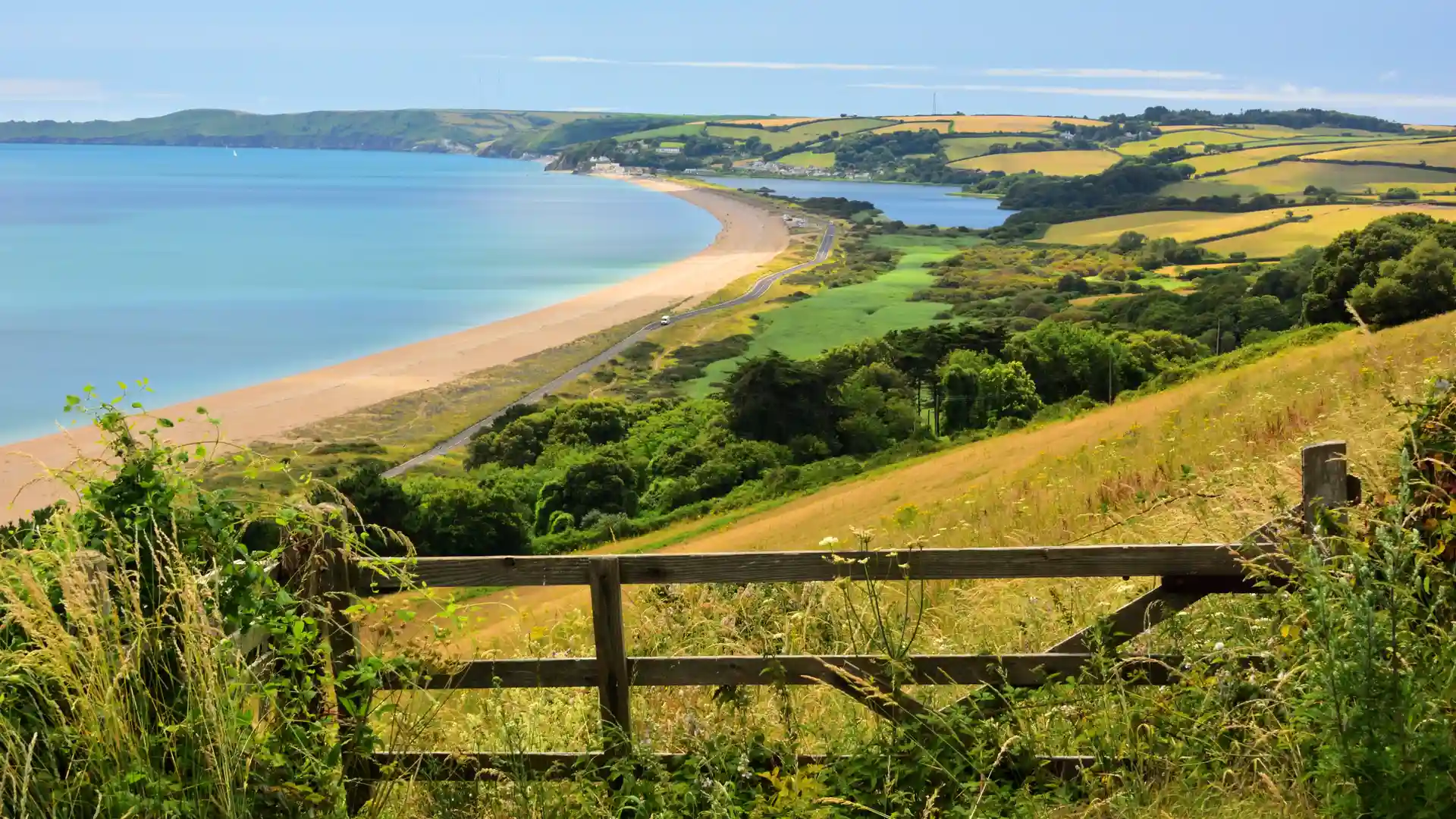

View over Start Bay and Slapton Sands on the South West Coast Path in South Devon, with rolling farmland, sandy beach, and sea cliffs.

South West Coast Path (South Devon) – Walking a Sheltered and Varied Coast

Type of trail?
National Trail
Is it for me?
Challenging long-distance walk
Long days with sustained elevation change, repeated climbs and descents, and a demanding physical rhythm.
What will I see?
Dramatic cliffs and headlands
Surf beaches and rocky coves
Seaside Towns & Fishing Harbours
Historic harbours and coastal towns
Panoramic Viewpoints
Rural Villages
What’s the vibe?
Adventurous and Challenging
Coastal heritage and culture
Peaceful and refreshing
Remote and Wild
Scenic and photogenic

Estuaries, rolling farmland, and historic harbour towns

The South Devon section of the South West Coast Path runs from Plymouth to Exmouth, around 120 miles of estuaries, sheltered bays, and gentle countryside backed by lively coastal towns. It’s less rugged than North Devon and Cornwall, but no less rewarding — perfect for walking holidays and outdoor adventures that combine ferries across broad rivers, sandy beaches, and traditional harbour life.

This part of the National Trail offers a balance of heritage and scenery: naval history at Plymouth, the pastel streets of Dartmouth and Salcombe, and the red cliffs of the Jurassic Coast near Exmouth. With rolling farmland, wooded river valleys, and dramatic headlands, the walking is varied and often easier underfoot, though the estuaries add extra mileage.

Trail Overview

  • Type: National Trail (waymarked with the Acorn symbol)
  • Distance: 120 miles (193 km)
  • Start: Plymouth, Devon
  • End: Exmouth, Devon
  • Time required: 8–12 days (for the section)
  • Terrain: Estuaries, sandy beaches, farmland, wooded valleys, clifftops
  • Difficulty: Moderate — long days with some steep climbs, plus estuary detours
  • Accessibility: Ferries provide shortcuts; many shorter day walks available

Explore the Route

Plymouth to Salcombe

Leaving Plymouth’s naval heritage behind, the path winds past Wembury’s beaches and Burgh Island before following the Erme estuary to the sailing town of Salcombe. Expect rolling farmland and sheltered coves.

Salcombe to Dartmouth

A particularly scenic stretch of South Devon, with clifftop trails, sandy bays, and river ferries. Dartmouth is a highlight — a historic port with castles, quays, and lively food spots.

Dartmouth to Torbay

The path continues through Brixham, Paignton, and Torquay, where fishing heritage meets Victorian seaside resorts. A lively and more urban part of the route, balanced by clifftop views.

Torbay to Exmouth

The final stretch passes the red sandstone cliffs of the English Riviera, through Dawlish and Teignmouth, before finishing at Exmouth, gateway to the Jurassic Coast World Heritage Site.

Stay and Explore

  • Seaside towns: Salcombe, Dartmouth, Brixham, Torquay, Exmouth
  • Historic harbours: Kingsbridge Estuary, River Dart, Brixham’s fishing port
  • Nature escapes: Farm stays and rural B&Bs in the rolling hills inland
  • Food & drink: Fresh seafood, riverside pubs, cream teas, and vineyard tours
  • Activities: Combine walking with sailing trips, kayaking, or birdwatching in estuaries

Adventure Highlights

  • Ferry crossings at the Erme, Avon, Dart, and Teign estuaries
  • Historic naval heritage in Plymouth and Dartmouth
  • The chic sailing town of Salcombe
  • Fishing heritage at Brixham
  • Red sandstone cliffs around Torbay and Dawlish
  • Gateway to the Jurassic Coast at Exmouth
  • Wildlife: estuary birdlife, seals, dolphins, and wildflowers

Frequently Asked Questions

Where does the South Devon section of the South West Coast Path go?

This section runs from Plymouth to Exmouth, covering around 120 miles of coastline in Devon. It passes through the South Devon National Landscape, the East Devon National Landscape, and finishes at the start of the Jurassic Coast World Heritage Site.

How long does it take to walk the South Devon section?

Walking the full section takes around 8 to 12 days, depending on pace and ferry timings. Many walkers choose to split it into shorter stages for weekend walking holidays.

How difficult is the South Devon Coast Path?

It is considered moderate difficulty. The walking is less rugged than Cornwall or North Devon, but still includes steep climbs, rolling farmland, and long estuary detours.

Do I need to use ferries on this section?

Yes. The South Devon Coast Path includes several estuary crossings by ferry, including the Erme, Avon, Dart, and Teign. Ferry services operate seasonally, so always check timetables in advance.

What is the most scenic part of the South Devon Coast Path?

The stretch between Salcombe and Dartmouth is often rated the most beautiful, with clifftop trails, sandy coves, and historic harbour towns. The red sandstone cliffs around Torbay, Dawlish, and Exmouth are also highlights.