
Cart
0

South Pennines National Landscape – Gritstone Moors, Reservoir Valleys and Pennine Walking

Open Moorland Ridges, Industrial Valleys, and Watershed Walking Across Northern England

The South Pennines National Landscape — formerly designated as an Area of Outstanding Natural Beauty — stretches across parts of West Yorkshire, Greater Manchester, Lancashire, and the northern edge of Derbyshire. Shaped by self-guided travel, walking, routes, landscapes, and places, the area links the Pennine Way, Calderdale Way, and settlements including Hebden Bridge, Todmorden, Haworth, Marsden, and Saddleworth across a broad network of gritstone moors, reservoir valleys, stone-built mill towns, and upland pasture.

Walking here is shaped by elevation and exposure. The ground varies between flagstone-paved paths, moorland tracks, grassy field routes, canal towpaths, and occasional rough peat sections on higher ground. Gradients are steady rather than abrupt, with long climbs onto broad ridgelines followed by extended traverses along watershed plateaus.

Long-distance routes give structure to movement through the landscape. The Pennine Way crosses the high moors along the central spine, while the Calderdale Way forms a circular route linking upland and valley settlements. Additional paths connect reservoirs, canal corridors, and historic packhorse routes, allowing combinations of ridge, valley, and town-based stages.

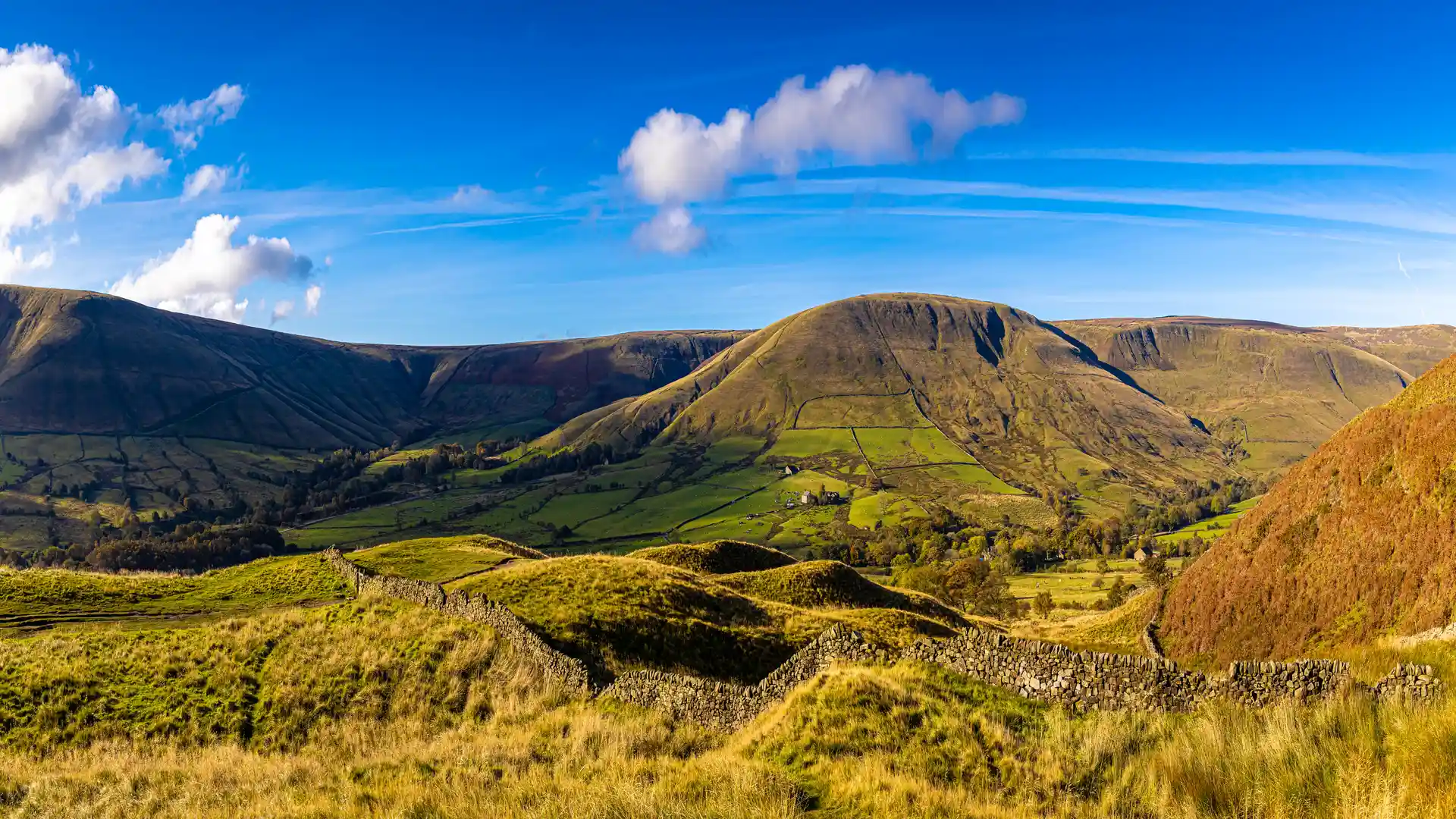
Walking in the South Pennines is defined by openness and continuity. On higher ground, heather moorland stretches across wide horizons broken by gritstone outcrops and edges. Lower down, valleys contain rivers, canals, wooded slopes, and closely spaced towns shaped by the textile industry. The landscape alternates between exposed upland and enclosed valley walking within relatively short distances.

Reservoir and watershed walking forms a natural focus across the area. Around Hollingworth Lake, Dovestone Reservoir, and the chain of reservoirs above Hebden Bridge and Marsden, firm tracks follow water margins before climbing onto moorland ridges. On the higher watershed between Lancashire and Yorkshire, long views extend across northern England in clear conditions.

Seasonal change strongly influences the experience. Spring and summer bring heather growth and longer daylight hours on the moors, autumn colours valley woodlands, and winter can introduce wind and exposed conditions across open ground.

Beyond walking, the landscape supports other quiet outdoor activity. Cycling follows canal towpaths and upland roads, wildlife is common on moorland and around reservoirs, and towns provide regular access points for shorter or staged journeys. The compact spacing of settlements makes linear walking straightforward using rail links.

Accommodation and services are widely available in Hebden Bridge, Todmorden, Haworth, Marsden, and surrounding towns, with rail connections linking Manchester, Leeds, and Bradford. This makes the area practical for car-free walking along both valley and upland routes.

For walkers seeking open moorland ridges, historic valley towns, and a connected network of long-distance routes across northern England, the South Pennines National Landscape offers a distinctive upland setting shaped by geology, water, and industrial history.

Where to Walk and Explore

Pennine Way (South Pennines Section)

A long-distance upland route crossing the watershed moors between Marsden, Hebden Bridge, and beyond.

Calderdale Way

A circular trail linking valley towns and upland edges across Calderdale.

Dovestone & Saddleworth Moor

Reservoir-edge tracks and moorland paths with broad views across Greater Manchester and West Yorkshire.

Hebden Bridge & Hardcastle Crags

Woodland valley walking along rivers and historic mill sites beneath surrounding moorland.

Haworth & Top Withens

Field paths and moorland tracks connecting village landscapes with open upland ground.

Landscape Highlights

• Long-distance walking on the Pennine Way
• Gritstone edges and open heather moorland
• Reservoir chains and canal corridors
• Industrial valley towns and stone-built settlements
• Watershed ridges with wide northern views
• Flagstone-paved upland paths
• Rail-linked towns supporting car-free routes

Frequently Asked Questions

Where is the South Pennines National Landscape?

Across parts of West Yorkshire, Greater Manchester, Lancashire, and northern Derbyshire in northern England.

Which long-distance walks pass through the area?

The Pennine Way and the Calderdale Way cross the landscape.

Can I visit without a car?

Yes. Rail connections serve Hebden Bridge, Todmorden, Marsden, and other valley towns.

What type of terrain should I expect?

Moorland tracks, stone-paved paths, reservoir routes, canal towpaths, and steady climbs onto exposed ridges.

When is the best time to walk here?

Spring through autumn offers longer daylight and drier conditions, though walking is possible year-round with appropriate clothing for exposed weather.