
Galloway Forest Park – Forest Trails, Granite Hills, and Quiet Upland Routes

Woodland, Lochs, Moorland, and Dark Sky Landscapes in South West Scotland

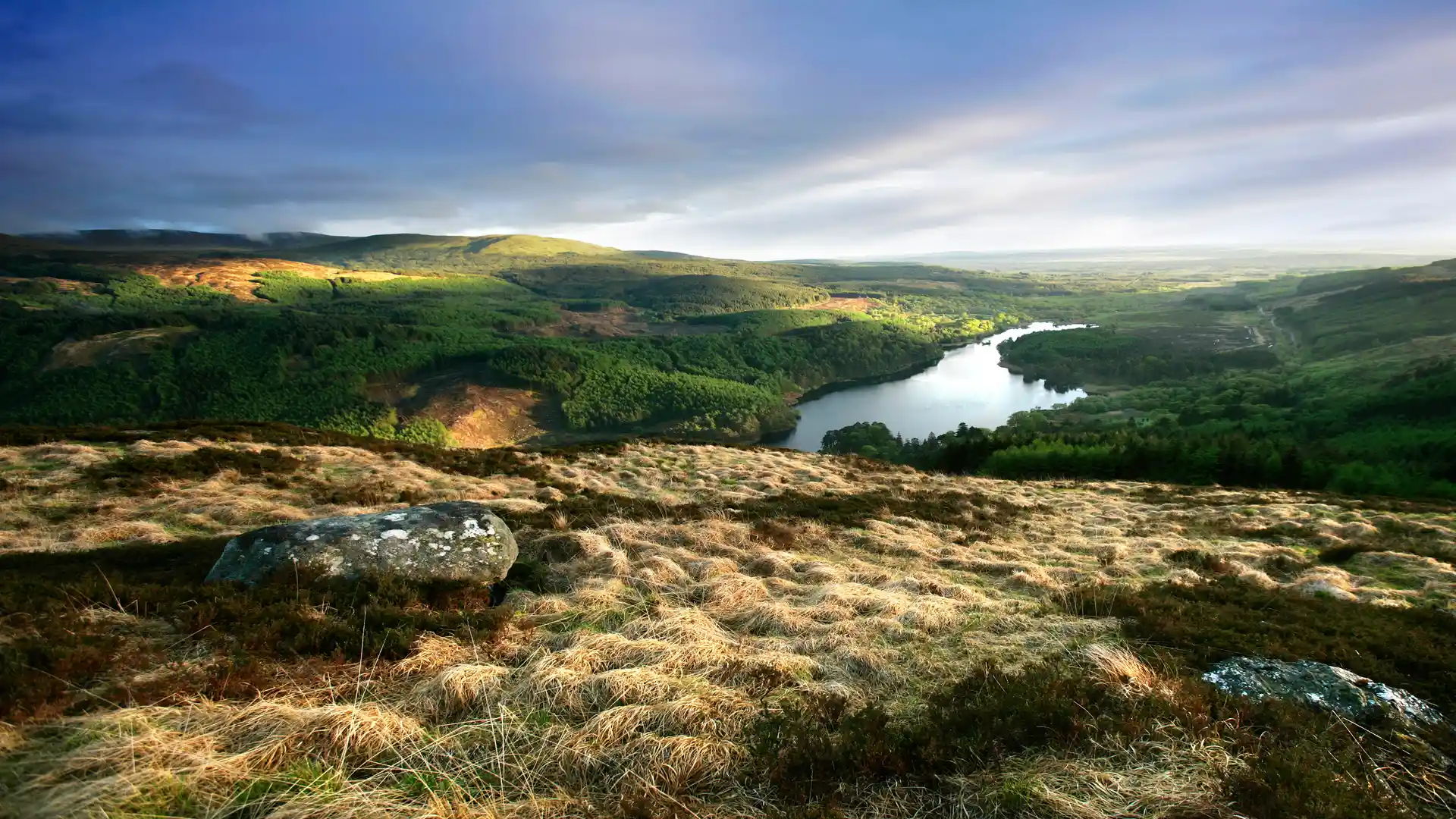
Galloway Forest Park brings together self-guided travel, walking routes, upland landscapes, and remote rural places across a wide area of forest, granite hills, lochs, and open moorland in Dumfries and Galloway. Extending between Newton Stewart, Glentrool, Clatteringshaws, and the Galloway Hills, it forms the largest forest park in the UK, where long tracks, quiet glens, and rounded summits create continuous walking through one of Scotland’s least populated interiors.

This is a landscape shaped by space and scale rather than dramatic elevation alone. Extensive conifer forest — dominated by Sitka spruce — alternates with open moorland and exposed granite ridges. Rounded hills rise above dark lochs, and long glens guide steady movement through sheltered valleys. Routes feel expansive and unhurried, with distance measured across miles of track and ridge rather than steep or technical climbing.

Walking here often begins on wide forestry roads and estate tracks before narrowing onto hill paths and open ground. Underfoot conditions vary between firm gravel, peat moor, grassland, and occasional rocky sections. Progress is generally steady and continuous, suited to full days outdoors or linked multi-day journeys between lochs, villages, and glens.

Water shapes much of the park’s character. Loch Trool lies at the heart of Glen Trool beneath Merrick, while Clatteringshaws Loch and Loch Doon sit within broad folds of forest and hill. Burns and rivers thread through woodland and moor, carving natural corridors that guide gentler routes. Shoreline paths and glen tracks provide quieter alternatives to higher ground, allowing flexible itineraries that balance ascent and distance.

The hills themselves are modest by Highland standards but feel remote and substantial. Merrick, the highest summit in southern Scotland, rises to 843 metres above sea level and anchors the Galloway Hills. Nearby summits such as Lamachan and the Rhinns of Kells provide sustained climbs and broad views across the Southern Uplands, the Solway Firth, and on clear days toward the Isle of Man. These are hills defined by exposure and weather rather than technical terrain.

Woodland dominates the lower ground. Large areas of commercial forest are interspersed with pockets of native oak and birch woodland, particularly in sheltered glens. Seasonal colour, wildlife movement, and changing light give the park depth throughout the year. Red deer, wild goats, and birds of prey are regularly seen across forest edge and open moor.

Human presence remains light. Settlements are sparse, and facilities are concentrated around trailheads and small communities such as Newton Stewart and Glentrool. Away from these access points, long stretches of path can feel entirely solitary, reinforcing the sense of travelling through a working landscape rather than a curated attraction.

Galloway is also recognised internationally for its dark skies. Much of the park forms part of the Galloway Forest Dark Sky Park, designated for its exceptionally low levels of light pollution. On clear evenings, the open uplands and forest clearings provide expansive views of the night sky, adding a distinct dimension to overnight stays and longer journeys.

Because of its size and low visitor pressure, the park suits flexible and extended exploration. Walkers can combine shorter forest and lochside circuits with higher hill routes, or link glens and summits over several days using nearby villages and stays as bases.

For those seeking quiet routes, wide landscapes, and long, uninterrupted days on foot through woodland and upland country, Galloway Forest Park offers one of Scotland’s most peaceful and rewarding environments for self-guided travel.

Where to Walk and Explore

Loch Trool and Glen Trool

Shoreline and glen walking beside water and woodland, with steady access onto surrounding hills including Merrick.

Clatteringshaws and Raiders’ Road

Forest and lochside tracks linking remote glens, reservoirs, and open moorland.

Merrick and the Galloway Hills

Higher ground and rounded granite summits with broad views across the Southern Uplands.

Forest Track Network

Extensive gravel roads and trails allowing long-distance, low-gradient walking through woodland and glens.

Glenhead and Rhinns of Kells

Quieter upland terrain with open moor and ridge routes away from the main forest corridors.

Landscape Highlights

  • Scotland’s largest forest park
  • Extensive woodland and lochside walking
  • Rounded granite hills and open moorland
  • Low visitor numbers and strong sense of remoteness
  • Wildlife-rich glens and forest edge
  • Designated Dark Sky Park with exceptional night skies
  • Ideal terrain for long, steady, self-guided routes

Frequently Asked Questions

Where is Galloway Forest Park located?

In Dumfries and Galloway in south-west Scotland, centred around Newton Stewart, Glentrool, and Clatteringshaws.

What defines walking here?

Long forestry tracks, lochside paths, and steady upland routes through forest, glen, and rounded hills.

Is it mountainous?

The hills are lower than the Highlands but still remote and substantial, with sustained climbs rather than steep or technical terrain.

Is it busy?

Generally very quiet. Away from main car parks and visitor centres, paths often feel lightly used.

Are there longer routes?

Yes. The size of the park and its track network allow extended multi-day journeys linking lochs, glens, and surrounding villages.