
Dee Valley National Landscape – River Gorges, Hillsides, and Borderland Walking Routes

Limestone Escarpments, Wooded Slopes, and the Wales–England Border Landscape

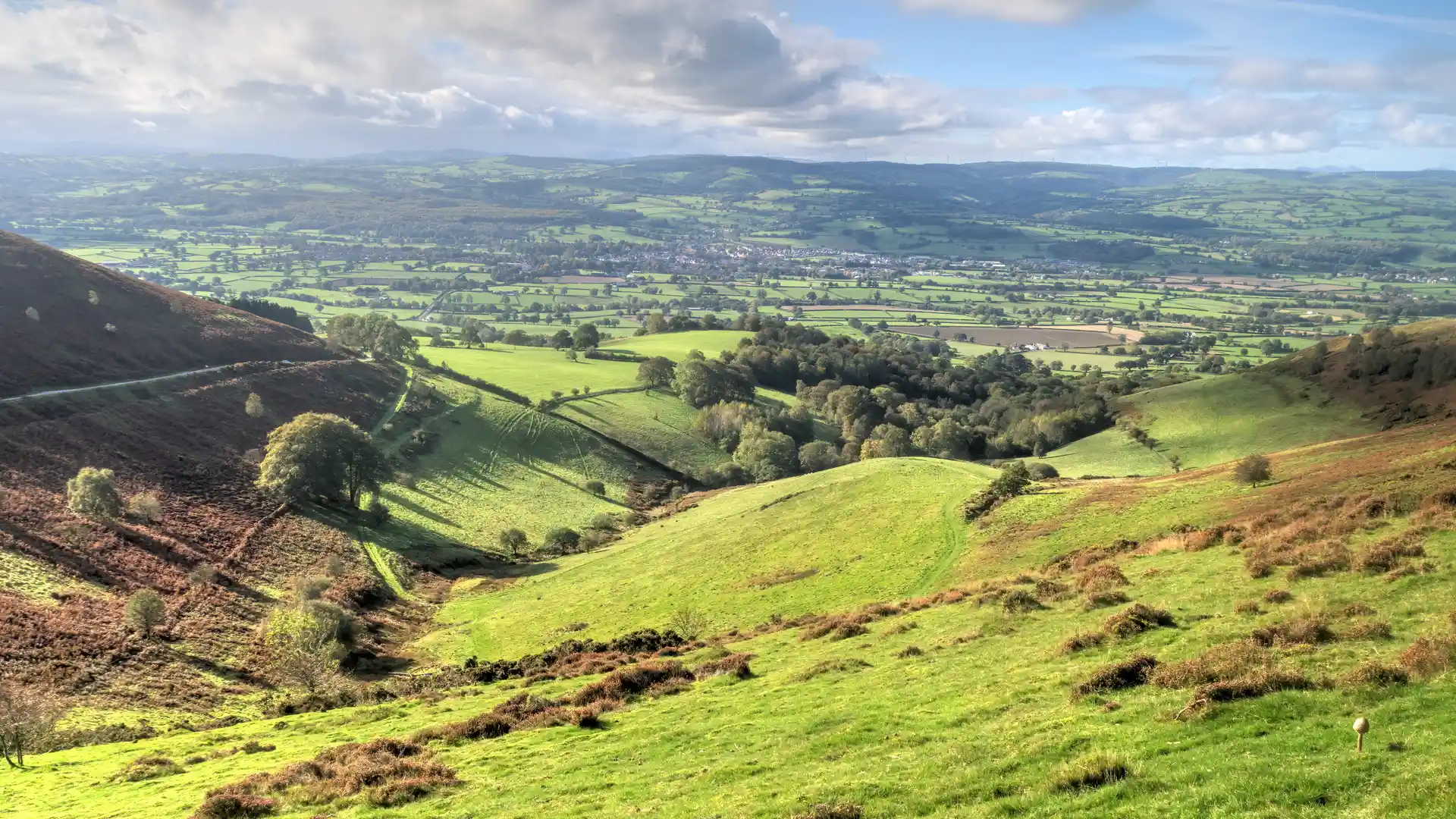
The Dee Valley National Landscape brings together walking routes, river landscapes, and historic places along one of the most distinctive valleys in north-east Wales. Following the River Dee from the Berwyn foothills near Corwen through Llangollen to the English border near Chirk, the protected landscape links wooded gorges, limestone escarpments, canals, pasture, and small settlements into a compact network of connected routes, landscapes, and places shaped by water, geology, and centuries of cross-border movement.

This is a valley defined by contrast. Steep valley sides rise quickly from the river, wooded slopes give way to open pasture and heath, and narrow gorges alternate with broader farmland and settled ground. Routes move between riverside paths, hillside tracks, and quiet lanes, creating journeys that feel enclosed and sheltered in places, then wide and elevated in others.

Walking here is guided by the River Dee itself. The valley floor provides steady, accessible progress beside water and meadow, while higher paths climb onto escarpments and ridges with longer views across the border hills. Gradients are short and purposeful rather than sustained, making the terrain varied without becoming strenuous. The area suits both shorter day walks and linked multi-day routes between villages.

Geology shapes much of the character. Limestone cliffs and escarpments rise above the river near Llangollen and Trevor — most notably at the Eglwyseg Rocks — while surrounding ground is formed of sandstone and mixed sedimentary hills. These transitions create a strong sense of sequence, with wooded gorge sections opening suddenly into broad valley views.

Historic infrastructure is woven closely into the landscape. The Llangollen Canal runs quietly along the valley side, forming one of the most continuous walking corridors in the region. It includes the Pontcysyllte Aqueduct World Heritage Site, a UNESCO-designated structure that carries the towpath high above the River Dee and stands as one of the most distinctive landmarks in Wales. Locks, bridges, and embankments reinforce the valley’s long history as a route of trade and travel.

Woodland adds depth and shelter. Oak, ash, and mixed deciduous woods line the riverbanks and lower slopes, creating shaded paths and seasonal colour. In spring and autumn especially, the valley feels enclosed and textured, with birdsong and flowing water close at hand.

Settlements sit naturally within the terrain. Towns and villages such as Llangollen, Chirk, and Glyn Ceiriog provide regular stopping points, with bridges, inns, and small streets clustered close to the river. These places act as practical bases rather than busy centres, encouraging steady movement through the valley rather than concentrated tourism.

Despite its proximity to larger towns, much of the landscape remains quiet. Away from the most popular canal sections and viewpoints, hillside routes and woodland paths often feel lightly used, giving the valley a calm, lived-in character.

Cycling, paddling, and canal-side travel complement walking. The flat towpaths and gentle lanes allow relaxed progress along the valley floor, while surrounding hills offer more varied terrain for longer days outdoors.

For walkers seeking river-led routes, varied but manageable terrain, and connected journeys through historic border country, the Dee Valley National Landscape offers one of Wales’s most compact and rewarding environments for slow, self-guided travel.

Where to Walk and Explore

River Dee Riverside Paths

Level and gently graded routes following the river through meadow, woodland, and small settlements.

Llangollen Canal Towpath

Continuous walking beside water, locks, and aqueducts, including the Pontcysyllte Aqueduct World Heritage Site.

Clifftop and Escarpment Trails

Higher ground above the gorge with broader views and more open hillside terrain around Llangollen and the Eglwyseg Rocks.

Valley and Village Links

Minor roads, field paths, and bridleways connecting Llangollen, Chirk, Glyn Ceiriog, and surrounding farms.

Border Hills and Heathland

Rolling upland terrain beyond the valley offering quieter, longer routes away from the river corridor, linking toward the Berwyn and Offa’s Dyke country.

Landscape Highlights

  • River gorge scenery and wooded valley sides
  • Limestone cliffs and escarpments
  • Canal towpaths and historic aqueducts
  • Pontcysyllte Aqueduct UNESCO World Heritage Site
  • Compact towns and stone-built villages
  • Varied but manageable gradients
  • Strong sense of quiet border countryside

Frequently Asked Questions

Where is the Dee Valley National Landscape located?

In north-east Wales, following the River Dee between the Berwyn foothills near Corwen, Llangollen, and the English border near Chirk.

What defines walking here?

River-led routes, canal towpaths, wooded slopes, and short hillside climbs linking towns and villages.

Is it suitable for beginners?

Yes. Many valley-floor and canal paths are level and easy to follow, with optional higher ground for more varied walking.

Are there long-distance routes?

Yes. The Llangollen Canal towpath forms a continuous corridor, and the valley links with regional trails including Offa’s Dyke Path and routes into the Berwyn hills and Shropshire border country.

Is it busy?

Busier near Llangollen and along popular canal sections, but generally quiet once away from main access points.