
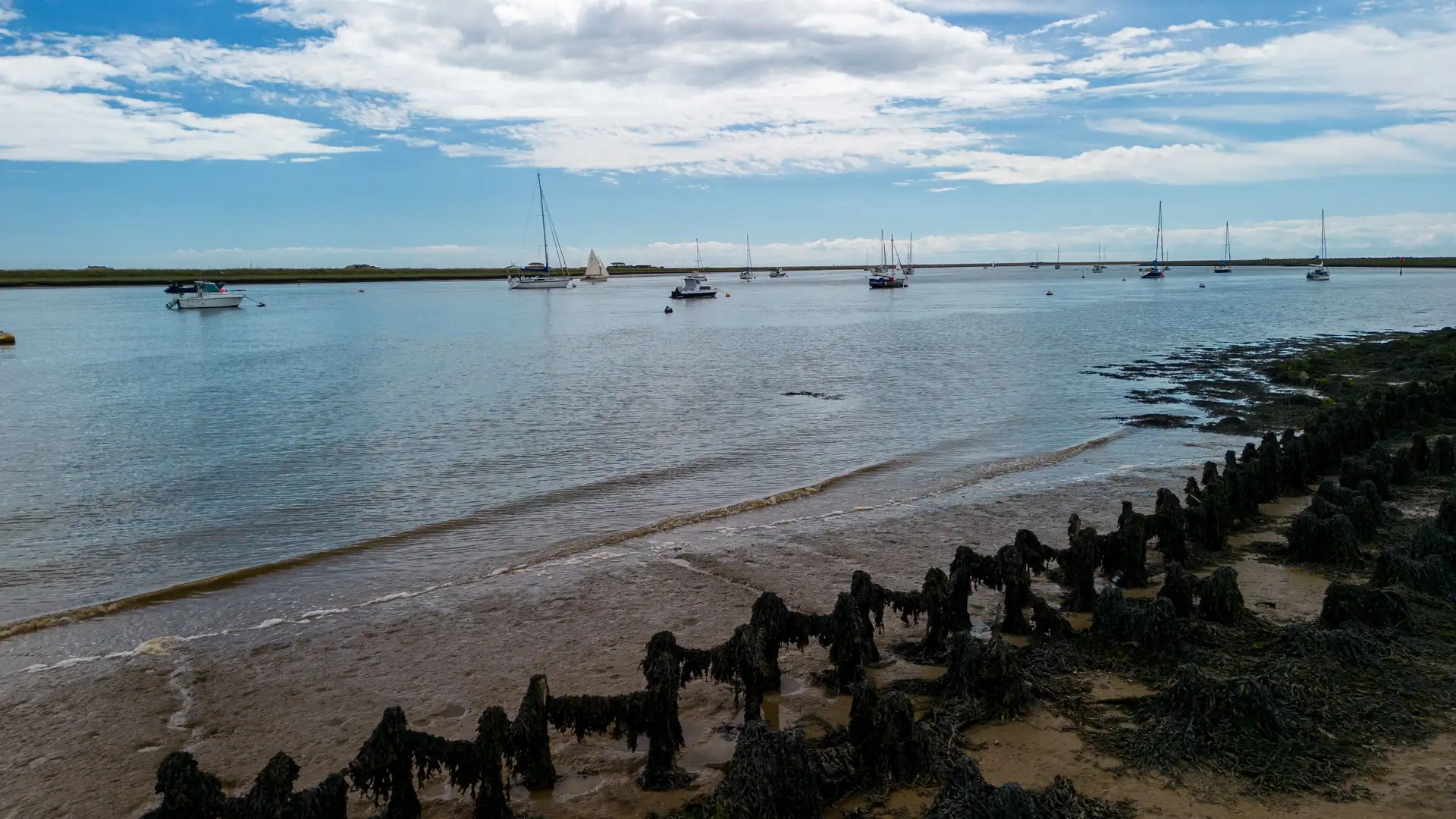

Autumn in Orford
Orford was one of the places we kept returning to while exploring the Suffolk Coast Path.
Partly because of its position on the route, partly because of the landscape surrounding it, but mostly because it seems to capture many of the things that make this stretch of coast distinctive. The estuary, the castle, the marshes, the shingle landscapes of Orford Ness, and the quiet pace of village life all come together in one place.
We spent time here during autumn while researching future routes, destinations, and journey ideas for Self Guided Travel. The season suited Orford. Morning mist drifted across the estuary, softening the outline of the castle and the river beyond, while the lower autumn sun brought warmth and colour to the marshes and reedbeds later in the day.
Orford Castle dominates the village skyline. Rising above the surrounding rooftops, it acts as both a landmark and a reminder of the village's long connection with the sea. Although Orford is quieter today than it was during its time as an important medieval port, there is still a sense that the landscape and settlement remain closely connected.
Much of our time was spent following paths along the estuary and exploring sections of the Suffolk Coast Path that pass through the wider Suffolk & Essex Coast & Heaths National Landscape. Looking across the river towards Orford Ness, it is easy to see why this coastline feels different from elsewhere in Suffolk. The combination of tidal water, shingle, saltmarsh, heathland, and open sky creates a landscape that constantly changes with weather, season, and light.
The National Landscape stretches across much of the Suffolk coast, protecting a diverse collection of estuaries, heathland, marshes, beaches, and historic settlements. Orford sits near the heart of it, making it one of the most rewarding places to understand how the different parts of the coastline connect together.
Autumn seemed to emphasise those connections. Migrating birds gathered on the estuary, reedbeds turned shades of gold and bronze, and the coastline felt quieter after the busiest months of summer had passed. The landscape appeared larger somehow, with fewer distractions between the path and the horizon.
As work continues on future journeys and route development along the Suffolk Coast Path, Orford remains one of the places that best demonstrates the appeal of this coastline. Not because it contains a single landmark or attraction, but because so many elements come together in one location.
The estuary, the castle, the village, the coast, the National Landscape, and the route itself all meet here.
By the time we left, the mist had lifted from the river and the evening light was catching the stonework of the castle. It felt like the sort of scene that has probably changed very little for centuries.