
Cart
0
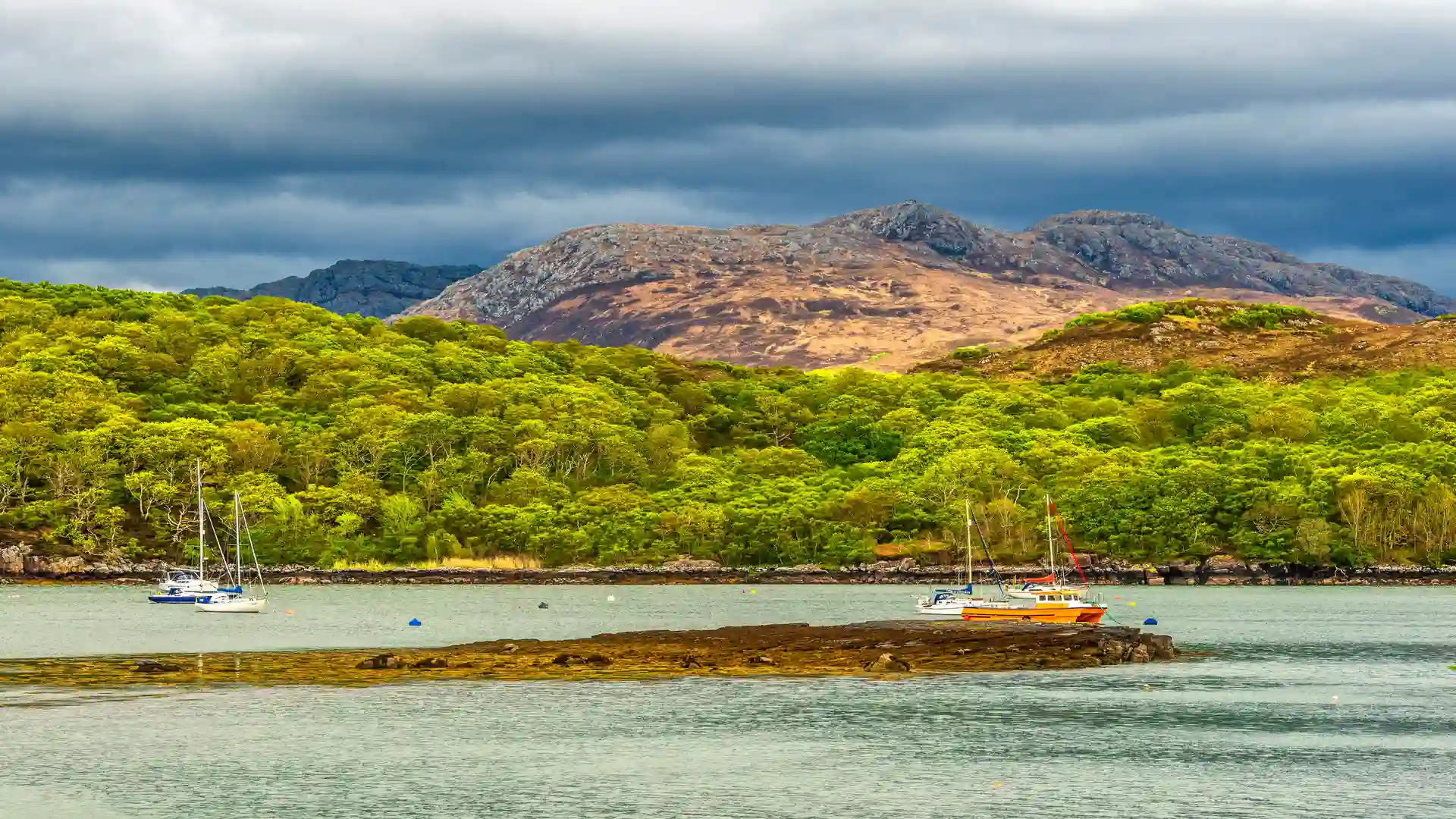
View across Gairloch towards the rugged mountains of Wester Ross in the Scottish Highlands, with yachts anchored in calm waters beneath dramatic skies.

Wester Ross – Torridon Mountains, Sea Lochs, and Remote Moorland

A north-west Highland area of steep mountains, long sea lochs, and sparsely settled coastal and inland terrain

Wester Ross is a Highland area of steep mountain massifs, sea lochs, and open moorland in north-west Scotland. Walking routes cross the North West Highlands UNESCO Global Geopark, follow sections of the Cape Wrath Trail and the Affric Kintail Way, and use estate tracks and coastal paths linking places such as Ullapool, Gairloch, Torridon, Poolewe, and Kinlochewe across rocky uplands, glens, and indented shoreline.

Much of the terrain is rough and uneven underfoot. Hill paths, stalkers’ tracks, and open moorland dominate, with boggy ground, stone pitching, and loose surfaces common. Gradients are often sustained, with steep ascents onto ridges and passes rather than gentle or rolling climbs. Lower ground around lochs and glens provides firmer progress but remains remote.

The landscape shifts between distinct sub-areas. Around Torridon and Liathach, sandstone peaks rise steeply from narrow glens. The Gairloch and Loch Maree area combines woodland, freshwater loch shore, and lower hills. North toward Ullapool, ground becomes broader and more open, with exposed moorland and long sea-loch inlets cutting inland.

Settlements are widely spaced and small, with long distances between services. Villages act as starting or finishing points for linear routes, while most walking takes place across open country with limited infrastructure.

Trails and Routes Through Wester Ross

Cape Wrath Trail (section)

An informal long-distance route crossing the interior via remote glens, passes, and stalkers’ paths between Kinlochewe, Torridon, and Ullapool.

Affric Kintail Way (western approach)

A coast-to-glen route linking Morvich with Drumnadrochit, passing through Glen Affric and connecting with routes near the western edge of Wester Ross.

Beinn Eighe and Torridon estate paths

Waymarked and estate tracks around Kinlochewe and Torridon providing structured access into mountain and glen terrain.

Coastal and lochside paths

Shorter local routes around Gairloch, Poolewe, and Loch Maree following shoreline and lower-level ground.

Walking Character

  • Steep sandstone and quartzite mountains
  • Deep glens and long sea lochs
  • Rough tracks, hill paths, and open moorland
  • Boggy and rocky surfaces common
  • Very sparse settlements and long gaps between services
  • Predominantly remote and upland/coastal

Frequently Asked Questions

Where is Wester Ross located?
Wester Ross lies in the north-west Scottish Highlands, west of Inverness and north of Skye, facing the Atlantic coast.
What defines walking here?
Mountain and remote terrain dominate, with steep ascents, rough ground, and long stretches without facilities or settlements.
Are there long-distance routes here?
Yes. Sections of the Cape Wrath Trail and connections to the Affric Kintail Way cross the area, alongside numerous estate and mountain paths.
Is the terrain steep?
Often. Many routes involve sustained climbs, exposed ridges, and uneven or boggy surfaces.
When is the best time to visit?
Late spring through early autumn offers longer daylight and more stable conditions. Weather can change quickly year-round, and winter brings snow and difficult ground at higher elevations.